 Post by
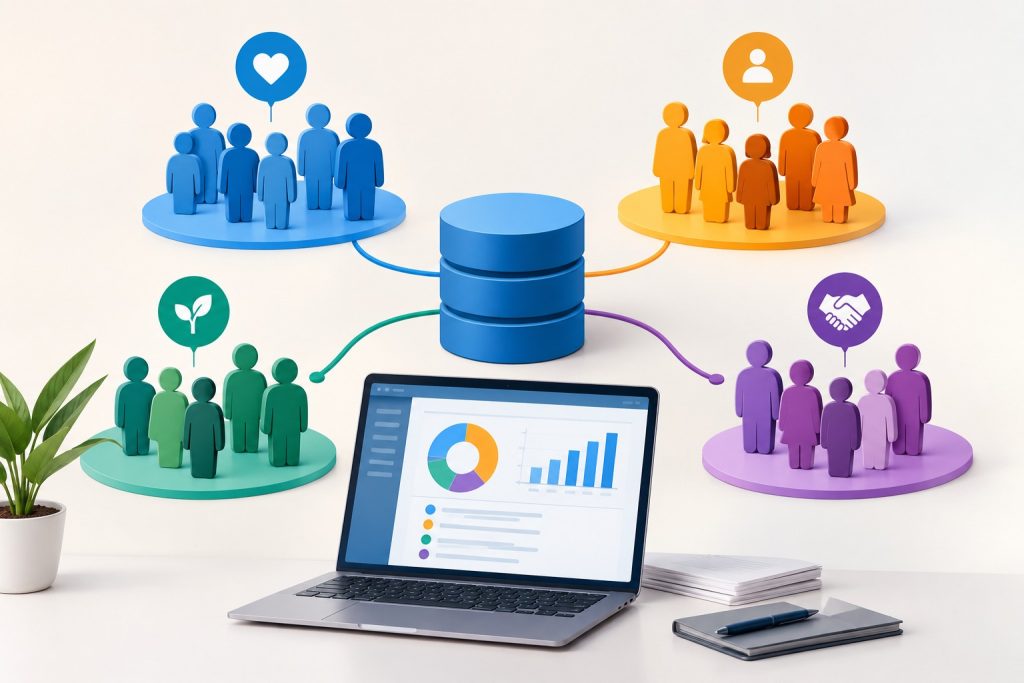
Not every donor supports a charity for the same reason, gives in the same way, or wants the same kind of communication. A first-time contributor, a recurring supporter, a major donor, and a volunteer who occasionally contributes may all have very different relationships with the same organisation.
This is why donor segmentation can be useful.
Donor segmentation is the process of grouping donors based on relevant characteristics, behaviours, interests, or relationships so that a charity can communicate with and engage different groups more appropriately.
For NGOs, charitable trusts, foundations, and community organisations, segmentation can make fundraising more organised and donor communication more relevant. Instead of sending exactly the same message to everyone, fundraising teams can consider what different groups already know, support, and care about.
The goal is not to treat donors as numbers. It is to understand donor relationships better.
What Is Donor Segmentation?
Donor segmentation means dividing a charity’s donor database into meaningful groups based on information that can help the organisation manage fundraising and communication more effectively.
A charity might segment donors according to:
- Donation frequency
- Contribution history
- Recency of support
- Supported welfare projects
- Donor interests
- Communication preferences
- Event participation
- Volunteer involvement
- Donor relationship stage
- Geographic area, where relevant
For example, an NGO could have separate groups for:
- First-time donors
- Recurring donors
- Previous donors who have not contributed recently
- Donors supporting education programmes
- Donors supporting healthcare activities
- Corporate or institutional supporters
- Volunteers who also contribute
These groups can then receive communication that is more relevant to their relationship with the organisation.
Why Is Donor Segmentation Important for Fundraising?
Donor segmentation helps charities organise their fundraising and communicate with supporters according to their relationship, interests, and engagement rather than treating every donor identically.
Consider two supporters.
One made their first contribution to an emergency relief campaign last month. Another has supported the organisation’s education programme regularly for several years.
Sending the same message to both may not be the most appropriate approach.
The first donor may need an introduction to the organisation and information about what happened after their contribution. The long-term supporter may be interested in progress, outcomes, upcoming activities, or continued involvement.
Segmentation gives the fundraising team a framework for making these distinctions.
What Are the Benefits of Segmenting Charity Donors?
The main benefits of donor segmentation include more relevant communication, better donor relationship management, clearer fundraising planning, and a better understanding of supporter behaviour.
1. More relevant communication
Different donor groups can receive information that relates to their interests or previous engagement.
2. Better donor relationships
Understanding where a donor is in their relationship with the organisation can help teams communicate more thoughtfully.
3. More organised fundraising
Fundraising teams can plan campaigns around specific groups rather than relying on one general donor list.
4. Better use of donor information
Segmentation turns basic donor records into information that can support practical decision-making.
5. Improved follow-up
A charity can identify donors who need acknowledgement, updates, follow-up, or re-engagement.
6. More focused reporting
Project-specific donor groups can make it easier to communicate relevant programme updates.
Segmentation does not automatically guarantee more donations. Its value comes from helping an organisation manage donor relationships more deliberately.
What Are the Best Ways to Segment Charity Donors?
The best segmentation approach depends on the organisation’s goals, donor information, fundraising model, and communication needs.
A charity does not need dozens of segments. It should start with categories that have a clear purpose.
1. Segment Donors by Donation Frequency
One of the simplest approaches is to group donors according to how often they contribute.
Possible groups include:
- One-time donors
- Occasional donors
- Recurring donors
- Regular annual supporters
This can help the organisation understand different types of contribution relationships.
A recurring supporter, for example, may need different communication from someone who has donated only once.
2. Segment Donors by Recency
Recency segmentation groups donors according to how recently they last supported the organisation.
A simple structure could include:
- Recent supporters
- Previous supporters
- Long-inactive supporters
The exact time periods should be determined by the charity based on its own fundraising cycle.
This type of segmentation can help identify donors who may need a relevant update or re-engagement communication.
3. Segment Donors by Contribution History
Contribution-history segmentation groups donors according to their previous giving patterns rather than looking only at their latest contribution.
An organisation might distinguish between:
- New supporters
- Consistent contributors
- Higher-contribution supporters
- Occasional contributors
This can help fundraising teams understand the broader relationship instead of focusing on one transaction.
However, contribution amount should not be treated as the only measure of a donor’s importance to the organisation. Time, engagement, advocacy, volunteering, and other forms of support can also matter.
How Can NGOs Segment Donors by Project or Interest?
NGOs can segment donors according to the welfare projects or causes they have previously supported or explicitly expressed interest in.
For example, imagine an NGO working across:
- Education support
- Healthcare assistance
- Food distribution
- Community development
- Emergency relief
A donor who consistently supports education initiatives may be interested in updates about education-related activities.
Another supporter may primarily engage with emergency relief campaigns.
Keeping this information organised can help the NGO make communications more relevant.
It can also connect fundraising with the organisation’s wider welfare activities.
Should Charities Segment Donors by Engagement?
Yes, charities can segment donors by engagement when the information is relevant and responsibly maintained.
Donation history is only one part of a supporter relationship.
A charity may have people who:
- Attend events
- Volunteer
- Share campaigns
- Respond to communications
- Participate in community activities
- Make donations
- Introduce other supporters
Someone who has not donated recently may still be actively involved in the organisation.
For this reason, a useful donor database should distinguish between financial contribution and overall engagement where practical.
How Can a Charity Segment First-Time Donors?
First-time donors can be treated as a distinct group because they may need more introductory communication and a clear understanding of the organisation’s work.
A practical first-time donor journey could include:
- Acknowledge the contribution.
- Thank the donor.
- Explain the relevant welfare activity.
- Share an appropriate update when available.
- Introduce the organisation’s broader work.
- Invite future engagement without excessive communication.
The purpose is to establish a relationship rather than immediately ask for another donation.
How Should NGOs Segment Recurring Donors?
Recurring donors can be managed as a distinct group because they have an ongoing contribution relationship with the organisation.
For these supporters, communication can focus on:
- Appreciation
- Programme progress
- Relevant updates
- Organisational developments
- Appropriate impact information
- Opportunities for continued engagement
Recurring supporters should not be contacted only when the organisation needs another contribution.
Regular, meaningful communication can help maintain a healthier relationship.
How Can Charities Identify Donors Who Need Re-Engagement?
Charities can identify potential re-engagement groups by reviewing donor activity and identifying supporters whose previous engagement has decreased or stopped.
For example, an organisation may have donors who previously supported several campaigns but have not interacted with it recently.
Rather than immediately sending another fundraising request, the organisation could consider:
- Sharing a meaningful project update
- Thanking them for previous support
- Explaining what their earlier contribution helped accomplish
- Inviting them to learn about current activities
Re-engagement should be based on the organisation’s actual relationship with the donor.
How Many Donor Segments Should an NGO Create?
An NGO should create only as many donor segments as it can manage meaningfully and consistently.
More segments do not automatically produce better fundraising.
A small organisation might begin with four or five practical groups:
- First-time donors
- Recurring donors
- Regular supporters
- Inactive or lapsed supporters
- Project-specific supporters
As the organisation gains experience, it can add more relevant categories.
The important test is simple:
Does this segment lead to a meaningful difference in communication, engagement, reporting, or fundraising activity?
If the answer is no, the segment may not be necessary.
Can Donors Belong to More Than One Segment?
Yes. A donor can belong to multiple segments when different characteristics are relevant to the organisation’s fundraising and communication.
For example, one supporter could be:
- A recurring donor
- An education-project supporter
- A long-term donor
- An event participant
Another could be:
- A first-time donor
- An emergency-relief supporter
- A volunteer
This layered approach can provide a more complete understanding of the donor relationship.
However, organisations should avoid creating unnecessary complexity. Segmentation should make donor management easier, not harder.
How Can a Charity Use Donor Segmentation in Fundraising Campaigns?
A charity can use donor segments to design campaign messages and follow-up activities that are more relevant to specific supporter groups.
For example, imagine a community organisation launching an education-support campaign.
Instead of sending one identical message to everyone, the organisation could consider:
First-time donors
Introduce the organisation and explain the purpose of the programme.
Previous education supporters
Provide information about the new education initiative and its relevance to their previous interests.
Recurring supporters
Share how the programme fits into the organisation’s continuing work.
Volunteers
Invite them to participate in activities as well as consider financial support if appropriate.
This approach gives fundraising teams more context when planning communication.
What Information Does a Charity Need for Donor Segmentation?
A charity needs reliable donor information that allows it to identify meaningful differences between supporters without collecting unnecessary personal information.
Useful information may include:
- Contribution history
- Contribution frequency
- Date of last contribution
- Campaign or project supported
- Communication preferences
- Engagement history
- Event participation
- Volunteer involvement
- Relevant geographic information
The quality of segmentation depends on the quality of the underlying data.
If donor records are incomplete or inconsistent, segments may also be inaccurate.
How Can NGOs Keep Donor Segmentation Data Accurate?
NGOs can maintain accurate segmentation by updating donor records regularly, standardising data entry, reviewing duplicates, and recording changes consistently.
For example, if a donor who previously supported education begins supporting healthcare initiatives, the organisation should have a process for recording that change.
Useful practices include:
- Review donor records periodically.
- Keep campaign and project names consistent.
- Check for duplicate donor profiles.
- Record relevant engagement accurately.
- Update communication preferences.
- Avoid maintaining separate unofficial donor lists.
- Assign responsibility for data quality.
Segmentation is only useful when the underlying donor data can be trusted.
How Can Technology Help With Donor Segmentation?
Technology can help charities organise donor information, apply relevant categories, review contribution history, and connect donor segments with fundraising and communication activities.
A digital donor-management process can make it easier to answer questions such as:
- Which donors supported this project?
- Who are our recurring supporters?
- Which donors contributed recently?
- Which supporters have not engaged recently?
- Which donors have participated in specific activities?
- What communication has already been sent?
The technology does not decide what the organisation should communicate. It provides organised information that helps the team make better operational decisions.
What Are the Common Donor Segmentation Mistakes?
Common mistakes include creating too many segments, relying on poor-quality data, focusing only on donation amount, and sending repetitive fundraising messages without considering the donor relationship.
Creating too many segments
A complicated system can become difficult for staff to maintain.
Segmenting only by donation amount
Financial contribution is important, but it is not the only form of supporter engagement.
Ignoring donor interests
A donor’s previous project interests can provide useful context.
Using outdated information
Old donor records can lead to irrelevant communication.
Treating every segment as a fundraising list
Segmentation should support relationships and communication, not just requests for money.
Forgetting privacy and responsible data use
Donor information should be handled carefully, with access and communication based on legitimate organisational needs and applicable requirements.
How Can Donor Segmentation Improve the Donor Experience?
Donor segmentation can improve the donor experience by helping organisations communicate information that is more relevant to each supporter rather than sending identical messages to everyone.
A donor who supports education initiatives may appreciate education-related updates.
A volunteer may be more interested in opportunities to participate.
A long-term supporter may value meaningful information about organisational progress.
A first-time donor may need more context about the organisation and its work.
The objective is not to make communication more complicated. It is to make it more thoughtful.
How Does Donor Segmentation Fit Into Welfare Governance?
Donor segmentation is one part of a broader welfare governance process that connects fundraising, contributions, welfare projects, beneficiaries, outcomes, reporting, and continued engagement.
A charity’s work can be viewed as a connected journey:
Donors → Contributions → Funds → Welfare Projects → Beneficiaries → Outcomes → Reporting → Continued Support
Donor segmentation helps organise the first part of this journey, but its value increases when it connects with the rest of the organisation’s work.
For example, an NGO running an education-support programme could identify donors interested in that programme, record their contributions, manage the project, maintain appropriate beneficiary information, track activities, and communicate relevant updates.
This is broader than fundraising alone.
It is part of Welfare Governance — the structured management of an organisation’s welfare activities, resources, people, projects, beneficiaries, accountability, reporting, and impact.
How Can a Small NGO Start Donor Segmentation?
A small NGO can start donor segmentation with a few simple categories based on information it already maintains.
A practical starting point is:
Step 1: Review existing donor data
Understand what information is already available.
Step 2: Identify the organisation’s fundraising goals
Decide what segmentation is actually intended to improve.
Step 3: Choose a few useful categories
Start with categories such as:
- New donors
- Recurring donors
- Previous supporters
- Project-specific supporters
- Volunteers and other engaged supporters
Step 4: Clean the data
Remove duplicates and correct obvious errors.
Step 5: Create communication approaches
Decide how communication should differ between groups.
Step 6: Review results and processes
After each campaign, assess whether the segments were useful and update the approach.
Start simple. Segmentation can become more sophisticated as the organisation’s donor management practices mature.
Frequently Asked Questions
What is donor segmentation?
Donor segmentation is the process of grouping donors according to relevant characteristics such as contribution history, engagement, interests, or relationship stage.
Why should charities segment their donors?
Charities can use donor segmentation to organise fundraising, make communication more relevant, improve follow-up, and better understand supporter relationships.
What are common ways to segment donors?
Common approaches include segmenting donors by donation frequency, recency, contribution history, project interests, engagement, and relationship stage.
How many donor segments should an NGO have?
There is no fixed number. An NGO should create only the segments it can maintain and use meaningfully. Smaller organisations can start with a few practical groups.
Can one donor belong to multiple segments?
Yes. A donor can simultaneously be a recurring supporter, an education-project donor, a volunteer, and a long-term supporter.
How can technology help with donor segmentation?
Technology can organise donor records, contribution history, project interests, communication records, and engagement information so that relevant donor groups can be managed more systematically.
Does donor segmentation increase donations?
Segmentation does not guarantee increased donations. It helps organisations communicate and manage donor relationships more appropriately, which can support more organised fundraising.
Is donor segmentation useful for small NGOs?
Yes. Small NGOs can start with simple segments such as first-time donors, recurring donors, project-specific supporters, and previous donors who have become inactive.
NidhiMax Conclusion
Building a Better Welfare Governance System
Effective donor segmentation begins with good donor information, but it should not exist in isolation.
For a charitable organisation, donor relationships are connected to contributions, fundraising campaigns, welfare projects, beneficiaries, reporting, and ongoing communication. Managing these activities as connected parts of a wider system can help organisations maintain better visibility across their welfare operations.
NidhiMax — Welfare Governance Platform is designed to help charitable organisations, NGOs, trusts, community organisations, and welfare institutions move toward a more organised digital welfare-management ecosystem.
Depending on the organisation’s needs, a broader welfare governance approach can bring areas such as fundraising management, donor management, contribution tracking, welfare project management, communication, reporting, transparency, and accountability into a more connected operational framework.
Every welfare organisation has different processes. The right technology should therefore support those processes rather than add unnecessary complexity.
To learn more about building a more organised approach to welfare management, explore NidhiMax.com.