 Post by
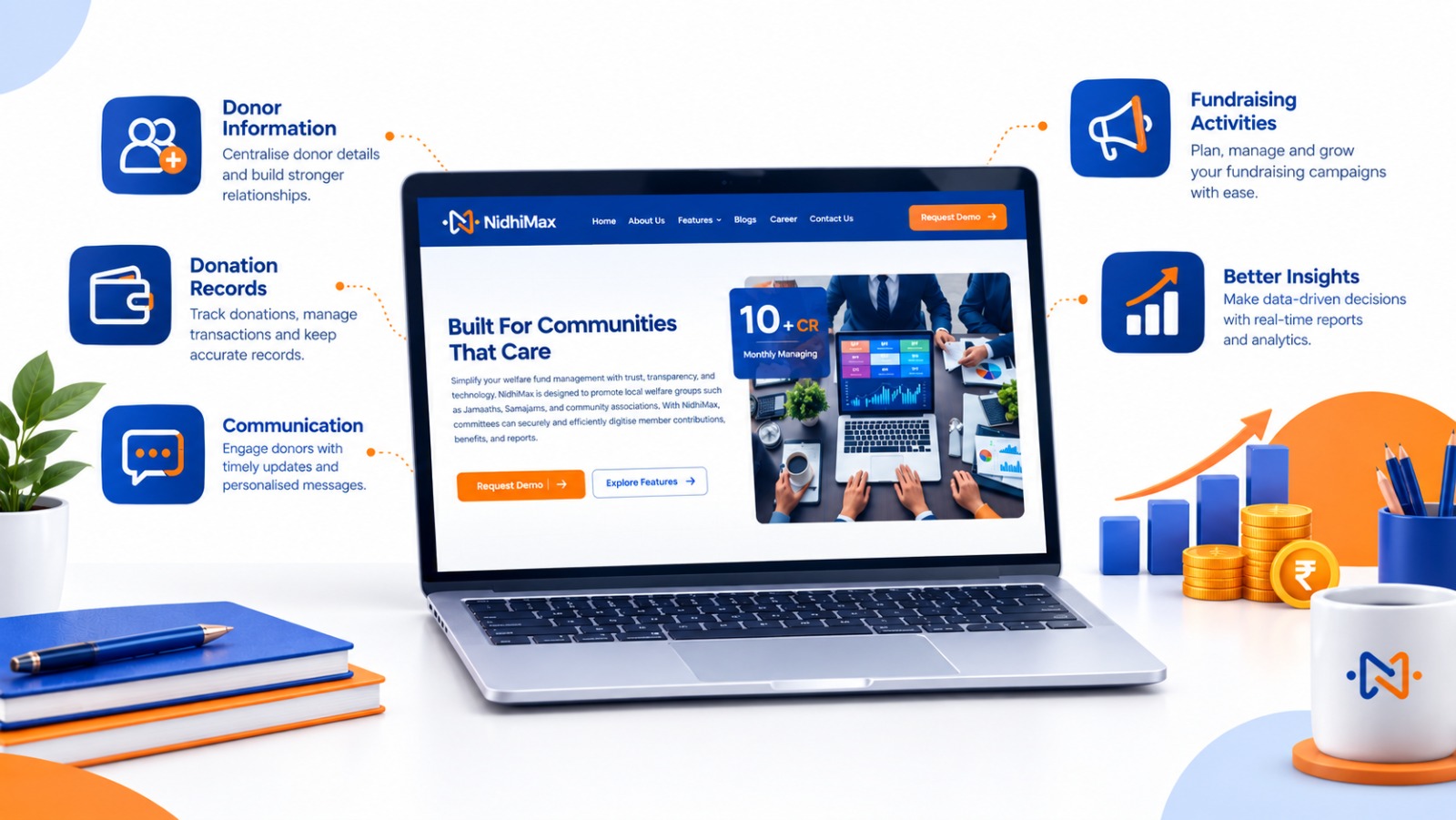
Managing donors is about much more than recording names and donation amounts. For an NGO or charitable organisation, donor information can influence communication, fundraising, reporting, relationship-building, and long-term support.
As an organisation grows, spreadsheets, paper records, email inboxes, and separate payment records can become difficult to manage. Donor management software can bring this information into a more organised system—but choosing the right software requires careful consideration.
The right solution should fit the organisation’s actual fundraising and welfare processes, be simple enough for staff and volunteers to use, protect important donor information, and provide useful information for better decision-making.
So, what should NGOs look for when choosing donor management software?
Let’s explore the most important factors.
What Is Donor Management Software?
Donor management software is a digital system that helps charities and NGOs organise donor information, donation records, communication, and related fundraising activities in one place.
Depending on the system, it may help an organisation maintain donor profiles, record contributions, track communication, understand donor activity, manage fundraising campaigns, and generate reports.
For example, instead of maintaining separate records for:
- Donor names and contact details
- Donation history
- Campaign participation
- Communication history
- Follow-up activities
- Contribution records
- Donor preferences
an organisation can manage relevant information through a structured digital system.
The goal is not simply to store more data. It is to make donor information easier to understand and use responsibly.
Why Do NGOs Need Donor Management Software?
NGOs need donor management software when donor information becomes too difficult to manage accurately through disconnected systems.
A small organisation may initially manage donations using a spreadsheet and a few folders. As the number of donors, campaigns, projects, and communications grows, the same approach can create problems.
Common challenges include:
- Duplicate donor records
- Missing contact information
- Difficulty finding previous donations
- Forgotten follow-ups
- Limited visibility into donor activity
- Time-consuming reporting
- Inconsistent communication
- Difficulty understanding donor engagement
- Important information being held by only one staff member or volunteer
A structured donor management system can help create a more consistent process.
However, software should solve an existing organisational problem rather than create unnecessary complexity.
What Should NGOs Look for in Donor Management Software?
NGOs should look for donor management software that combines useful donor records, contribution tracking, communication support, reporting, security, ease of use, and scalability.
The most important consideration is whether the software fits the organisation’s real workflow.
Here are the key areas to evaluate.
1. Is the Donor Database Easy to Manage?
A good donor management system should make it easy to create, update, search, and maintain donor records.
A donor profile may include information such as:
- Name
- Contact details
- Donation history
- Campaign participation
- Communication history
- Donor preferences
- Relevant notes
- Engagement history
The system should also make it possible to identify duplicate or outdated records.
For an NGO, the value of a donor database comes from keeping information organised and useful—not simply collecting as much information as possible.
2. Can It Track Donation History?
Donation history is one of the most important parts of donor management.
The software should help an organisation understand:
- When a contribution was received
- Which campaign or purpose it related to
- How frequently a donor contributes
- Whether the donor has supported multiple initiatives
- What communication may have followed the contribution
For example, imagine an organisation that runs education-support activities for children.
One donor may contribute to the education programme several times during the year, while another may support emergency relief activities. Keeping these contributions connected to the relevant donor record can give the organisation a clearer picture of its fundraising activity.
3. Does It Support Donor Communication?
Donor management is also relationship management.
NGOs should therefore consider whether the software helps staff keep track of communication with donors.
Useful capabilities may include recording:
- Thank-you messages
- Follow-up conversations
- Campaign updates
- Event invitations
- Project updates
- Donor requests
- Important communication notes
The objective is to help an organisation communicate consistently without making every interaction feel automated.
Technology should support relationships, not replace genuine human communication.
4. Can the Software Help With Donor Segmentation?
Different donors may have different interests, histories, and levels of engagement.
Donor segmentation allows an NGO to organise donors into meaningful groups.
For example, an organisation could distinguish between:
- First-time donors
- Repeat donors
- Regular contributors
- Inactive donors
- Campaign-specific supporters
- Event participants
- Volunteers who also donate
- Donors interested in a particular welfare project
Segmentation can help organisations communicate more appropriately.
A donor who regularly supports education initiatives may be more interested in updates about education activities than a general fundraising message.
5. Does It Provide Useful Reports?
Reporting should be an important part of the evaluation process.
NGOs should ask whether the software can provide clear information about donor activity and fundraising performance.
Useful reports may help answer questions such as:
- How much was contributed during a particular period?
- Which campaigns received support?
- How many new donors joined?
- How many donors contributed more than once?
- Which donors have become inactive?
- What types of fundraising activities generated engagement?
Reports should be understandable to non-technical users.
A complicated dashboard is not necessarily a useful dashboard. The best reports are those that help an organisation make practical decisions.
How Important Is Ease of Use for NGO Staff?
Ease of use is extremely important because donor management software is only useful when staff and volunteers can use it consistently.
An organisation may have a technically capable system, but if entering information takes too long or users find the interface confusing, records may quickly become incomplete.
Before selecting software, NGOs should consider:
- Is the interface easy to understand?
- Can new staff learn it quickly?
- Can volunteers use the relevant functions?
- Is searching for a donor straightforward?
- Can information be updated without unnecessary steps?
- Are reports easy to access?
- Does the system match the organisation’s existing workflow?
A practical system that staff actually use can be more valuable than a complicated system with many functions that an organisation does not need.
How Should NGOs Evaluate Data Security and Privacy?
Donor information should be handled responsibly because donor records can contain personal and contribution-related information.
NGOs should ask software providers how donor data is protected and who can access it.
Important questions include:
- Who can access donor records?
- Can access permissions be assigned to different users?
- How is data protected?
- How are backups handled?
- What happens if an employee or volunteer leaves?
- Can the organisation control access to sensitive information?
- Can donor records be exported when necessary?
- What policies govern the handling of stored information?
The exact security requirements will vary depending on the organisation and the information it manages. NGOs should review the provider’s documentation and obtain appropriate professional advice where necessary.
Should NGOs Choose Cloud-Based Donor Management Software?
Cloud-based software can allow authorised users to access organisational information through an internet-connected system rather than relying on a single computer.
For NGOs with staff working across locations or with volunteers supporting operations, this can make collaboration easier.
However, organisations should evaluate cloud software carefully rather than choosing it simply because it is cloud-based.
Consider:
- Data access controls
- Backup practices
- Security measures
- User permissions
- Reliability
- Data export options
- Support arrangements
- Internet dependency
- Provider policies
The technology should serve the organisation’s workflow and operational needs.
Can Donor Management Software Support Fundraising?
Yes. Donor management software can support fundraising by helping organisations understand donor history, organise supporter information, track campaign participation, and maintain communication records.
For example, suppose an NGO is organising a fundraising campaign to support an education programme.
A structured donor system can help the team understand:
Donors → Contributions → Fundraising Campaign → Welfare Project → Beneficiaries → Updates → Continued Engagement
This provides a broader view than simply looking at the amount raised.
Fundraising becomes part of an ongoing relationship rather than an isolated transaction.
Should Donor Management Software Connect Donors With Welfare Projects?
Where relevant, NGOs should consider whether their systems can connect fundraising activity with the welfare work it supports.
A donor may want to know what their contribution helped the organisation accomplish.
For example:
An NGO receives contributions for an education-support initiative. The organisation can organise information about the fundraising activity, project activities, beneficiary needs, updates, and reporting.
This creates a clearer connection between the contribution and the welfare work.
It does not mean every donor needs access to every internal record. Rather, it means the organisation should have an organised internal view of how resources move through its welfare activities.
How Can Donor Management Software Improve Transparency?
Donor management software can support transparency by helping organisations maintain organised records and generate consistent reports.
Transparency is not simply about publishing information. It also depends on having reliable internal records.
A charity should be able to answer questions such as:
- What contributions were received?
- Which fundraising activity generated them?
- Who is responsible for recording them?
- What communication was sent?
- Which project was associated with the fundraising effort?
- What reporting was completed?
Well-organised information can make these processes easier to manage.
What Integrations Should NGOs Consider?
Integrations can reduce repetitive data entry, but NGOs should only choose integrations that are relevant to their operations.
Depending on the organisation’s needs, it may be useful to consider connections with:
- Donation collection systems
- Payment systems
- Email communication tools
- Messaging platforms
- Accounting systems
- Reporting tools
- Website forms
- Event registration systems
Before choosing a system, ask whether integrations genuinely reduce work.
A large list of integrations can look impressive, but the important question is whether the specific integrations your organisation needs are available and reliable.
Can Small NGOs Benefit From Donor Management Software?
Yes. Small NGOs can benefit from donor management software if it addresses a genuine organisational need and remains affordable and manageable.
A small organisation does not necessarily need a complicated system.
It may start with a few essential capabilities:
- Organised donor records
- Contribution tracking
- Communication history
- Basic segmentation
- Simple reporting
- Appropriate access controls
As the organisation grows, its requirements can grow with it.
The objective should be to establish good donor-management practices early rather than accumulating years of disconnected records.
What Should NGOs Ask Before Buying Donor Management Software?
Before selecting a platform, an NGO should create a practical evaluation checklist.
Ask the following questions:
Does the software fit our workflow?
A system should reflect how the organisation actually manages donors and fundraising.
Is it easy for our team to use?
Consider staff, administrators, volunteers, and other people who may need access.
Can we manage complete donor records?
Check whether the system supports the information the organisation genuinely needs.
Can we track contributions accurately?
Understand how donation records are created, updated, searched, and reported.
Can we communicate with donors effectively?
Look for tools that support organised donor communication without replacing personal interaction.
Can we generate useful reports?
Reports should help the organisation understand fundraising and donor activity.
Can the system grow with us?
Consider whether the software will remain useful as donor numbers, projects, staff, and fundraising activities increase.
What happens to our data?
Understand data ownership, access, export, backup, and security practices.
What support is available?
Consider documentation, onboarding, training, technical support, and response processes.
What Common Mistakes Should NGOs Avoid?
Choosing donor management software based only on the number of features can lead to unnecessary complexity.
Some common mistakes include:
Choosing software without defining the problem
An NGO should first identify what is difficult about its current donor-management process.
Prioritising features over usability
A system with many features is not necessarily better if staff cannot use them effectively.
Ignoring data quality
Poorly entered or duplicated information can reduce the value of any donor-management system.
Treating donor management as only fundraising
Donor relationships involve communication, appreciation, engagement, trust, and reporting—not just asking for contributions.
Failing to establish internal processes
Software cannot fix every operational problem. Teams still need clear responsibilities and procedures.
Collecting unnecessary donor information
Organisations should collect information for legitimate operational purposes and handle it responsibly.
How Can NGOs Prepare Before Moving to a Donor Management System?
Preparing donor data before implementation can make the transition much easier.
An NGO can begin by:
- Listing all current donor data sources.
- Identifying duplicate records.
- Standardising names and contact information.
- Reviewing old or incomplete records.
- Separating active and inactive records where appropriate.
- Identifying the information the organisation actually needs.
- Defining who should have access to different types of information.
- Documenting the organisation’s donor-management workflow.
- Deciding which reports are genuinely useful.
- Training staff and volunteers on consistent data entry.
This preparation can be just as important as selecting the software itself.
How Does Donor Management Fit Into Welfare Governance?
Donor management is one part of a broader welfare-management process.
A charitable organisation does not operate only around donations. Its work may involve fundraising, resource management, welfare projects, beneficiaries, staff, volunteers, communication, reporting, and impact.
This can be understood as a connected chain:
Donors → Contributions → Funds → Welfare Projects → Beneficiaries → Outcomes → Reporting → Continued Support
Donor management helps organise the beginning of this chain, but the information becomes more useful when it connects with the organisation’s wider welfare activities.
This broader approach is part of Welfare Governance: the structured management of an organisation’s welfare activities, resources, people, projects, beneficiaries, accountability, reporting, and impact.
For an NGO, this means asking a bigger question:
How can our systems help us manage the complete journey from donor support to welfare outcomes?
What Does a Good Donor Management Process Look Like?
A good donor management process should be organised, consistent, transparent, and practical for the people using it.
A simple process could look like this:
- Record the donor
Create an accurate donor profile.
- Record the contribution
Capture relevant contribution information correctly.
- Connect the contribution to the relevant activity
Where appropriate, associate it with a fundraising campaign or welfare project.
- Communicate appropriately
Send acknowledgement, updates, or other relevant communication.
- Maintain the relationship
Understand donor engagement and communicate based on genuine relevance.
- Report internally
Review fundraising and donor information.
- Connect resources to welfare work
Where possible, understand how fundraising supports projects and beneficiaries.
- Learn and improve
Use reliable information to improve future fundraising and welfare operations.
This process helps move donor management from simple record-keeping toward organised welfare management.
How Can NGOs Choose Software Based on Their Actual Needs?
The best way to evaluate donor management software is to start with the organisation’s needs rather than starting with a list of software features.
Create three lists:
Essential
Functions the organisation cannot operate effectively without.
Useful
Functions that could improve efficiency but are not immediately necessary.
Future
Capabilities that may become important as the organisation grows.
Then compare available systems against these categories.
It is also useful to test the software with real-life scenarios.
For example:
“A donor contributes to our education project. We need to record the contribution, send an acknowledgement, track the donor’s previous support, connect the fundraising activity to the project, and later prepare a report.”
If the system can support this workflow without unnecessary complexity, it may be worth further consideration.
What Should an NGO Remember When Selecting Donor Management Software?
The most important consideration is fit.
An NGO should choose donor management software that supports its people, processes, donor relationships, fundraising activities, reporting needs, and broader welfare objectives.
Before making a decision, evaluate:
- Ease of use
- Donor database capabilities
- Contribution tracking
- Communication support
- Segmentation
- Reporting
- Data security
- Access controls
- Scalability
- Integrations
- Data management
- Support
- Overall suitability for the organisation
Software should make good organisational practices easier—not make the organisation change its entire approach simply to accommodate the software.
Frequently Asked Questions
What is donor management software?
Donor management software is a digital system that helps NGOs and charities organise donor information, contribution records, communication, fundraising activity, and related reporting.
Why should NGOs use donor management software?
NGOs can use donor management software to reduce fragmented record-keeping, improve access to donor information, organise communication, track contributions, and support fundraising and reporting.
What features should donor management software have?
Important areas to consider include donor profiles, contribution tracking, communication records, segmentation, reporting, user access controls, data management, security, and scalability.
Is donor management software useful for small NGOs?
Yes. Small NGOs can use donor management software when it addresses a genuine need. They can begin with essential functions such as donor records, contribution tracking, communication, and basic reporting.
How does donor management software help fundraising?
It can help fundraising teams understand donor history, organise supporter information, track campaign activity, identify engagement patterns, and maintain more consistent donor communication.
How can NGOs keep donor information organised?
NGOs can keep donor information organised by maintaining consistent records, reducing duplicates, defining data-entry procedures, assigning appropriate access, and using a structured donor management system.
Is donor management the same as fundraising management?
No. Donor management focuses primarily on organising and maintaining donor relationships and information, while fundraising management covers the broader process of planning, running, tracking, and evaluating fundraising activities.
How does donor management relate to Welfare Governance?
Donor management is one part of Welfare Governance. It can help organise the connection between donors and contributions, while broader welfare governance considers funds, projects, beneficiaries, outcomes, reporting, accountability, and impact.
How NidhiMax Can Help
Choosing donor management software is ultimately about choosing a system that fits the way an organisation works.
For charities, NGOs, trusts, community organisations, and welfare institutions, donor information is only one part of a much larger ecosystem. Fundraising, contributions, welfare projects, beneficiaries, communication, reporting, transparency, and accountability are connected.
NidhiMax — Welfare Governance Platform is designed to help charitable organisations move toward a more organised digital welfare-management ecosystem.
For organisations evaluating technology, the broader objective is not simply to maintain a better donor database. It is to build a clearer and more connected way of managing welfare activities and resources.