
 Post by
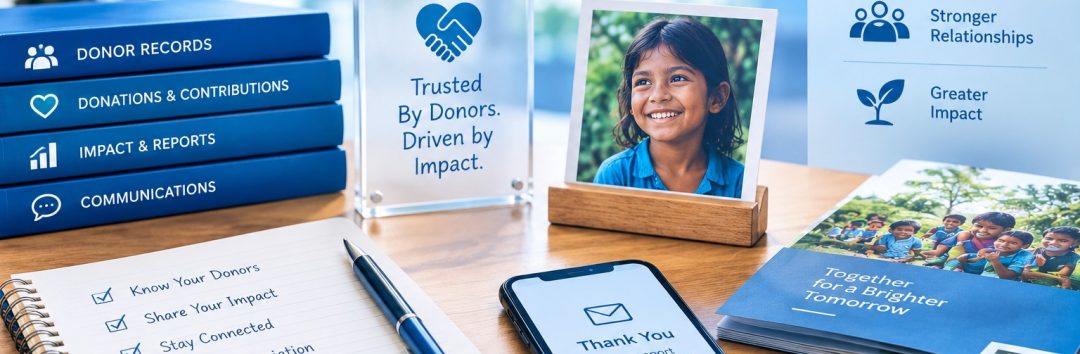

Getting a donor to contribute once is valuable. Building a relationship that keeps them connected to the organisation over time requires a different approach.
For charities and NGOs, donor retention is closely connected to trust, communication, transparency, donor experience, and the organisation’s ability to demonstrate meaningful progress. Supporters are more likely to remain engaged when they understand the work, receive appropriate updates, feel appreciated, and have clear opportunities to participate.
Increasing donor retention does not mean asking supporters to donate more often. It means creating a better relationship around the entire donor journey—from the first contribution to communication, reporting, engagement, and continued support.
What Is Donor Retention?
Donor retention is the ability of a charity or nonprofit organisation to maintain relationships with existing donors and encourage continued engagement over time.
A retained donor may:
- Make another contribution
- Become a recurring donor
- Attend an organisation’s events
- Volunteer
- Respond to updates
- Share the organisation’s work
- Participate in community activities
- Support future fundraising campaigns
Retention should therefore be viewed more broadly than simply getting another donation.
Why Is Donor Retention Important for Charities?
Donor retention matters because existing supporters already have some familiarity with the organisation and its work. Maintaining those relationships can help create a more consistent donor community.
A strong retention approach can help charities:
- Build donor trust
- Improve communication
- Understand supporter interests
- Create stronger donor relationships
- Encourage recurring engagement
- Reduce dependence on constantly finding new supporters
- Improve fundraising planning
- Strengthen community participation
The focus should be on the quality of the relationship rather than treating retention as a simple fundraising target.
What Causes Donors to Stop Supporting a Charity?
Donors can become inactive for many different reasons. Understanding those reasons is an important first step toward improving retention.
Poor communication
If donors rarely hear from an organisation after contributing, they may feel disconnected from its work.
Unclear impact
Donors may want to know what happened after their contribution. If project updates and reporting are limited, they may struggle to understand the value of their support.
Too many fundraising requests
If nearly every message asks for money, the relationship can begin to feel transactional.
Lack of appreciation
A simple and timely acknowledgement can make a donor feel recognised. When appreciation is missing, the donor experience may feel incomplete.
Irrelevant communication
Sending every campaign to every donor can make communication less useful.
Outdated donor information
Incorrect contact details, duplicate records, or missing contribution history can make it difficult to communicate appropriately.
Changing personal circumstances
A donor may stop contributing because their own circumstances or priorities have changed. This does not necessarily mean they have lost interest in the organisation.
How Can a Charity Increase Donor Retention?
A charity can improve donor retention by building a consistent donor experience around appreciation, communication, transparency, relevance, and meaningful engagement.
A practical retention strategy can include the following steps.
1. Thank Donors Promptly
The relationship begins immediately after a contribution.
A charity should acknowledge the donor and express genuine appreciation.
A good thank-you message can:
- Recognise the contribution
- Explain what the donor’s support is connected to
- Reinforce the organisation’s purpose
- Provide an appropriate next step
The message does not need to be lengthy. It needs to be timely, accurate, and sincere.
2. Continue Communicating After the Donation
One of the most common mistakes is treating the donation acknowledgement as the end of the donor journey.
Instead, continue sharing relevant information such as:
- Project progress
- Welfare activities
- Community updates
- Impact reports
- Upcoming events
- Volunteer opportunities
- Organisational developments
Not every communication needs to contain a fundraising request.
3. Show Donors Where Their Support Fits
Donors should be able to understand how their contribution connects to the organisation’s broader work.
For example, imagine a community organisation running an education-support programme.
Instead of simply sending a message saying, “Thank you for your donation,” the organisation could later explain:
- What the education programme is doing
- What activities have been conducted
- What resources are being provided
- What the organisation is working on next
This gives the donor a clearer picture of the journey from contribution to welfare activity.
How Can Transparency Improve Donor Retention?
Transparency can strengthen donor relationships by helping supporters understand how an organisation operates and communicates about its work.
Useful transparency practices include:
- Clear project descriptions
- Honest progress updates
- Appropriate financial information
- Relevant impact reporting
- Clear explanations when plans change
- Consistent communication
Transparency does not mean overwhelming donors with internal information. It means providing the information they reasonably need to understand the organisation’s work.
How Can Donor Communication Improve Retention?
Donor communication should be regular enough to maintain a relationship but thoughtful enough that supporters do not feel overwhelmed.
A balanced communication calendar can include:
Communication | Purpose |
Thank-you message | Recognise the donor’s support |
Project update | Show ongoing work |
Impact report | Explain progress and outcomes |
Organisation update | Keep donors connected |
Event invitation | Encourage participation |
Volunteer opportunity | Offer another form of engagement |
Fundraising appeal | Invite support for a relevant need |
Feedback request | Understand donor preferences |
This creates a relationship in which fundraising is one part of communication rather than its entire purpose.
How Can Personalisation Increase Donor Retention?
Personalisation helps charities communicate with donors according to their previous relationship and interests.
A charity might consider:
- Previous donation history
- Project interests
- Recurring contribution status
- Event participation
- Volunteer involvement
- Communication preferences
- Previous interactions
For example, someone who previously supported healthcare assistance may be more interested in updates about related welfare activities than a campaign unrelated to their previous engagement.
Personalisation does not require a completely different message for every donor. Even simple segmentation can make communication more relevant.
How Should NGOs Segment Donors for Better Retention?
NGOs can segment donors according to meaningful characteristics and use those groups to plan more relevant communication.
Possible segments include:
First-time donors
Focus on welcoming them, explaining the organisation’s work, and helping them understand how their support contributes to welfare activities.
Recurring donors
Provide consistent updates and acknowledge their ongoing involvement.
Project-specific donors
Share information connected to the programme they previously supported.
Inactive donors
Focus initially on reconnecting, sharing current work, and understanding whether they still want to remain involved.
Highly engaged supporters
Offer opportunities such as volunteering, events, community participation, or deeper involvement where appropriate.
Segmentation should remain manageable. A small organisation does not need an overly complicated system to begin.
How Can Charities Build a Strong Donor Onboarding Process?
Donor retention starts with the first interaction.
A simple onboarding journey might include:
- Donation acknowledgement
- Thank-you communication
- Introduction to the organisation
- Explanation of the relevant programme
- Follow-up project update
- Invitation to stay connected
- Relevant future communication
This helps a first-time donor understand what happens after making a contribution.
What Should Charities Send Donors Besides Fundraising Requests?
Charities can share many forms of useful communication that do not ask for another donation.
These can include:
- Project progress
- Beneficiary programme updates
- Educational information
- Volunteer stories
- Community activities
- Event invitations
- Impact reports
- Organisation news
- Staff or programme insights
- Requests for feedback
This helps donors understand that their relationship with the organisation is broader than financial support.
How Can Charities Show the Impact of Donations?
Charities can demonstrate impact by connecting donor contributions with activities, beneficiaries, progress, outcomes, and reporting.
A useful framework is:
Donors → Contributions → Funds → Welfare Projects → Beneficiaries → Outcomes → Reporting → Continued Support
For example, a food-distribution organisation could communicate information about the programme’s purpose, activities, operational process, and progress rather than simply saying that donations are needed.
The information should always reflect what the organisation can genuinely support with its records.
Share Beneficiary Stories Responsibly
Stories can make impact reporting more understandable, but charities should protect beneficiary dignity and privacy.
Before sharing photographs, names, personal details, or identifiable stories, organisations should obtain appropriate permission and consider whether the information is necessary.
Impact communication should inform rather than exploit.
How Can NGOs Re-Engage Donors Who Have Become Inactive?
Inactive donors can be re-engaged by reviewing their previous relationship, acknowledging their support, and providing a relevant reason to reconnect.
A simple process is:
- Identify inactive donors.
- Review their previous contributions and interactions.
- Segment them where appropriate.
- Share a useful project or organisational update.
- Thank them for their earlier support.
- Offer a simple opportunity to reconnect.
- Record the response.
- Follow up appropriately.
The first re-engagement message does not have to ask for another donation.
For example:
“Thank you for supporting our community programme in the past. We wanted to share an update about the work we are continuing and invite you to stay connected with our progress.”
Should Charities Ask Donors for Recurring Contributions?
Recurring giving can be one way to maintain an ongoing donor relationship, but the invitation should be appropriate to the donor and the organisation’s needs.
Before making such a request, explain:
- What the recurring support would contribute toward
- Why ongoing support is useful
- How the programme operates
- How donors will receive updates
The decision should remain with the donor. Avoid presenting recurring support as the only meaningful way to participate.
How Can Donor Appreciation Improve Retention?
Donor appreciation should continue throughout the relationship rather than appearing only immediately after a donation.
Charities can recognise supporters through:
- Personal thank-you messages
- Project updates
- Donor appreciation communications
- Invitations to appropriate events
- Volunteer opportunities
- Milestone updates
- Annual communications
The most important part is authenticity.
A short message that accurately recognises someone’s contribution can be more meaningful than a highly polished message that feels generic.
How Can Technology Help Increase Donor Retention?
Technology can help charities organise donor information and make relationship management more consistent.
A structured donor management system can help teams keep track of:
- Donor profiles
- Contribution history
- Project interests
- Communication records
- Engagement history
- Follow-up activities
- Recurring support
- Donor segments
The purpose is not to replace human communication. Technology can instead help staff access reliable information and reduce the confusion created by disconnected spreadsheets, paper records, messaging histories, and separate databases.
For smaller NGOs, even a simple and well-maintained donor database can provide a stronger operational foundation.
How Should NGOs Manage Donor Data for Better Retention?
Accurate donor data is essential for meaningful communication.
An organisation should create a consistent process for:
- Recording donor information
- Avoiding duplicate records
- Updating contact details
- Recording contribution history
- Tracking relevant communication
- Recording donor preferences where appropriate
- Restricting access to sensitive information
- Reviewing records regularly
Good data helps an organisation remember the relationship rather than treating every interaction as a new one.
Donor information should also be collected and managed responsibly, with appropriate attention to privacy and organisational requirements.
How Can Charities Measure Donor Retention?
Charities can measure retention by reviewing how many existing supporters continue to engage with the organisation over a defined period.
Useful indicators can include:
- Repeat contributions
- Recurring donor participation
- Donor responses
- Event participation
- Volunteer engagement
- Campaign engagement
- Donor reactivation
- Communication engagement where available
Organisations should choose measures that fit their size and systems.
It is also useful to ask qualitative questions:
Are donors responding to our communication?
Do they understand our work?
Are inactive donors reconnecting?
Which types of communication generate meaningful engagement?
These questions can reveal opportunities that a single fundraising number may not show.
What Are the Common Donor Retention Mistakes?
Several common mistakes can make it harder to maintain donor relationships.
Only asking for donations
A donor relationship becomes weaker when every communication is a fundraising request.
Forgetting to say thank you
A donation should always receive an appropriate acknowledgement.
Communicating too little
Long periods without updates can leave donors disconnected.
Communicating too much
Frequent, repetitive messages can also reduce engagement.
Treating every donor the same
Different donors may have different interests, histories, and communication preferences.
Ignoring donor feedback
If supporters provide useful feedback, organisations should consider it when improving their communication approach.
Failing to track donor history
Without organised records, staff may not know what a donor previously supported or how they have interacted with the organisation.
Measuring only financial value
A donor who volunteers, attends an event, or advocates for the organisation may be highly engaged even when they are not currently making financial contributions.
How Can a Small NGO Improve Donor Retention?
A small NGO can begin with a simple retention process rather than attempting to implement a complicated programme immediately.
Step 1: Organise donor information
Create one reliable place for donor profiles and contribution records.
Step 2: Improve the thank-you process
Make sure every donor receives an appropriate acknowledgement.
Step 3: Plan regular updates
Create a simple calendar for project updates, reports, events, and fundraising communication.
Step 4: Segment donors
Start with a few useful groups such as first-time, recurring, project-specific, and inactive donors.
Step 5: Track engagement
Record meaningful donor interactions and follow-ups.
Step 6: Share impact
Explain what the organisation is doing and how projects are progressing.
Step 7: Review and improve
Look at donor responses and adjust communication based on what the organisation learns.
Consistency is more important than complexity.
How Does Donor Retention Connect to Welfare Governance?
Donor retention is part of a broader welfare ecosystem. A donor’s relationship with an organisation does not exist separately from the work that organisation performs.
The wider chain can be understood as:
Donors → Contributions → Funds → Welfare Projects → Beneficiaries → Outcomes → Reporting → Continued Support
This means an organisation needs more than a system for collecting donations. It also needs organised processes for managing projects, beneficiaries, communications, reporting, accountability, and donor relationships.
Welfare Governance can be understood as the structured management of an organisation’s welfare activities, resources, people, projects, beneficiaries, reporting, accountability, and impact.
When these areas are better connected, an organisation can develop a clearer view of the relationship between donor support and welfare activities.
Frequently Asked Questions
What is donor retention?
Donor retention is the process of maintaining relationships with existing supporters and encouraging continued engagement with a charity or nonprofit organisation over time.
How can charities increase donor retention?
Charities can improve retention through timely appreciation, regular communication, transparent reporting, personalised engagement, relevant updates, good donor management, and meaningful opportunities to participate.
Why do donors stop supporting charities?
Donors may become inactive because of poor communication, unclear impact, repetitive fundraising requests, outdated information, changing interests, or changes in their personal circumstances.
How often should charities communicate with donors?
There is no universal frequency. Organisations should communicate consistently while balancing project updates, appreciation, impact reporting, events, and fundraising messages.
What should charities send to donors besides asking for donations?
They can share project updates, impact reports, thank-you messages, event invitations, volunteer opportunities, organisational news, educational content, and feedback requests.
How can technology improve donor retention?
Technology can help charities organise donor information, contribution history, communication records, engagement data, segmentation, and follow-up activities.
How can NGOs re-engage inactive donors?
NGOs can review a donor’s previous relationship, acknowledge their earlier support, share relevant current updates, and offer a simple way to reconnect.
Is donor retention only about repeat donations?
No. Retention can include continued communication, volunteering, event participation, feedback, advocacy, community involvement, recurring contributions, and other forms of supporter engagement.
Building a Better Welfare Governance System
Improving donor retention is ultimately about improving the relationship between an organisation and the people who support its work.
That relationship becomes stronger when donor management is connected with the wider welfare process—from contributions and fundraising to welfare projects, beneficiaries, reporting, transparency, and accountability.
NidhiMax — Welfare Governance Platform is designed to help charitable organisations, NGOs, trusts, community organisations, and welfare institutions move toward a more organised digital welfare-management ecosystem.
For organisations working to strengthen donor relationships, a broader approach can help connect donor management with fundraising, contribution tracking, welfare projects, communication, reporting, transparency, and accountability.
NidhiMax can be explored as part of that wider approach to organised welfare management.
Visit NidhiMax.com to learn more about building a welfare governance system around your organisation’s actual needs.