 Post by

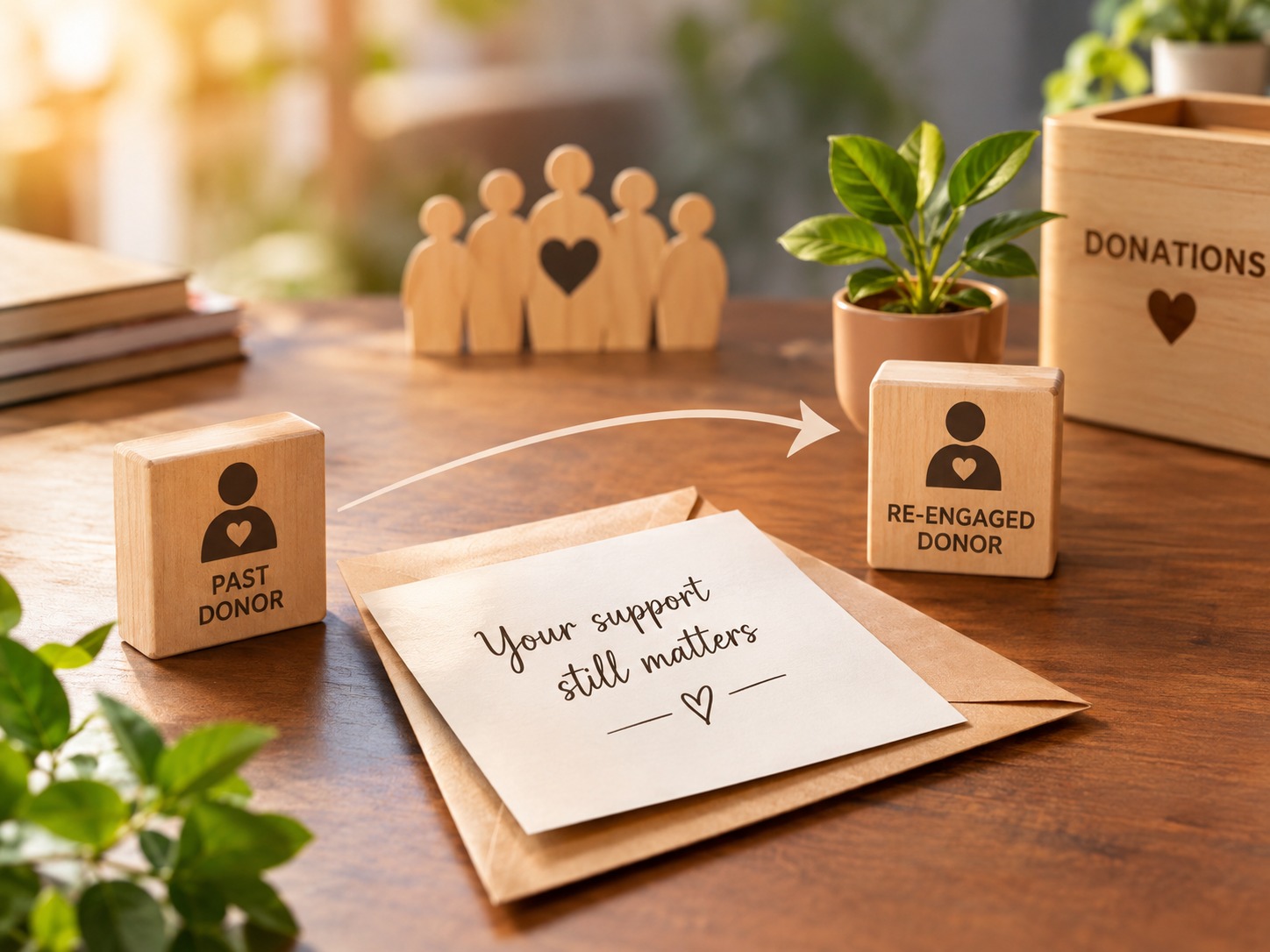
A previous donor is someone who has already shown that they believe in your organisation’s work. Yet, over time, donors may stop contributing because they become less engaged, lose track of your activities, change their priorities, or simply stop hearing from the organisation.
For charities and NGOs, re-engaging these supporters can be an important part of building long-term donor relationships. The goal is not simply to ask for another donation. It is to understand why the relationship became inactive, communicate relevant updates, demonstrate how previous contributions were used, and give the donor a meaningful reason to reconnect.
A thoughtful donor re-engagement strategy can help an organisation build stronger relationships while creating a more consistent approach to fundraising and donor management.
What Does Donor Re-Engagement Mean?
Donor re-engagement means reconnecting with people who previously supported a charity but have not donated or interacted with the organisation for some time.
An inactive donor is not necessarily a lost donor. They may still care about the organisation but have become disconnected from its work.
Re-engagement can include:
- Sharing updates about welfare projects
- Sending personalised messages
- Showing the outcomes of previous support
- Inviting donors to events or community activities
- Asking for feedback
- Sharing relevant campaigns
- Providing project or impact reports
- Offering opportunities to volunteer or participate
- Making it easy to support a current initiative
The important distinction is that re-engagement should focus on rebuilding the relationship rather than repeatedly sending donation requests.
Why Do Previous Charity Donors Become Inactive?
Previous donors can become inactive for many different reasons, and charities should avoid assuming that every inactive donor has the same motivation.
Common reasons include:
Donors stopped hearing from the organisation
If a donor contributes and then receives little communication, they may become uncertain about what happened after their contribution.
Regular, useful communication helps donors understand that the organisation is continuing its work.
Donors did not see enough impact
People often want to understand how their support contributed to a welfare project. If an organisation does not communicate outcomes clearly, the donor may feel disconnected from the work.
Their personal circumstances changed
A donor may have changed jobs, moved, experienced a change in financial circumstances, or developed different priorities.
In such cases, inactivity does not necessarily indicate dissatisfaction with the organisation.
The organisation’s communication became repetitive
If every message is simply another donation request, donors may stop paying attention.
A healthy communication strategy should include updates, stories, project information, appreciation, invitations, and opportunities to participate.
Donor information is incomplete or outdated
An organisation may have old email addresses, incorrect phone numbers, duplicate records, or insufficient information about a donor’s previous involvement.
Poor donor data can make meaningful re-engagement difficult.
How Can a Charity Identify Previous Donors to Re-Engage?
A charity can begin by reviewing its donor records and identifying people who have previously contributed but have not donated or engaged recently.
Instead of treating every previous donor as one group, create meaningful segments based on available information.
Useful categories can include:
Donor Group | Possible Re-Engagement Approach |
Previous one-time donors | Share recent work and invite them to reconnect |
Former recurring donors | Ask how their experience has been and share current priorities |
High-value previous donors | Provide personalised project updates |
Event participants | Invite them to upcoming activities |
Project-specific donors | Share updates from the project they supported |
Long-inactive donors | Start with a simple relationship-focused message |
Donors who opened recent messages | Provide relevant updates or opportunities |
The exact categories should depend on the organisation’s size, donor history, and available data.
How Can NGOs Re-Engage Previous Donors?
The most effective approach is usually a combination of good donor data, relevant communication, genuine appreciation, and a clear reason to reconnect.
Here is a practical process an NGO can follow.
1. Review the Donor’s Previous Relationship
Before contacting a previous donor, understand their history with your organisation.
Ask:
- When did they first donate?
- How many times have they contributed?
- Which projects did they support?
- Have they attended an event?
- Have they volunteered?
- When was their last interaction?
- What communication channels have they used?
- Have they previously expressed a particular interest?
Even basic information can make communication more relevant.
For example, a donor who previously supported an education programme should receive an update about education-related work rather than a completely unrelated campaign.
2. Segment Donors Before Contacting Them
A single message sent to every previous donor may not produce meaningful engagement.
Instead, divide donors into smaller groups based on factors such as:
- Recency of previous donation
- Frequency of donations
- Contribution history
- Project interests
- Communication engagement
- Event participation
- Volunteer involvement
- Previous recurring support
Segmentation allows an organisation to communicate with greater relevance without requiring every message to be individually written.
3. Start With Appreciation
A re-engagement message does not always need to begin with a fundraising request.
Start by recognising the donor’s previous support.
For example:
“Thank you for supporting our education programme in the past. Your contribution was part of the support that helped us continue working with children and families in the community.”
The message should be accurate and based on the organisation’s records.
4. Show What Has Happened Since Their Previous Support
Donors should have a reason to care about the organisation’s current work.
Share information such as:
- What the organisation is currently working on
- How a welfare project has developed
- What activities have taken place
- What challenges remain
- What the organisation plans to do next
Keep the information clear and specific.
Instead of saying:
“We are changing lives every day.”
A charity could explain:
“Our education-support team is continuing its learning support activities and is currently preparing the next phase of the programme.”
The second approach gives the donor something concrete to understand.
How Can Charities Show Donors the Impact of Their Previous Support?
Charities can demonstrate impact by connecting contributions with activities, beneficiaries, outcomes, and project updates.
Consider the full relationship:
Donors → Contributions → Funds → Welfare Projects → Beneficiaries → Outcomes → Reporting → Continued Support
This helps donors see that a contribution is part of a larger welfare process.
For example, imagine a community organisation running an education-support programme for children.
Instead of simply saying that donations are important, the organisation could communicate:
- What the education programme aims to address
- What activities were conducted
- How the programme was managed
- What resources were provided
- What the organisation learned
- What the next phase involves
This type of reporting creates a clearer connection between donor support and welfare activities.
Use Stories Carefully
Stories can make communication more human, but organisations should respect privacy and obtain appropriate permission before sharing personal information, photographs, or identifiable beneficiary details.
A useful story should explain the programme and its significance without exploiting the beneficiary’s circumstances.
What Should a Charity Include in a Donor Re-Engagement Message?
A good re-engagement message should be short, relevant, personal where appropriate, and easy to understand.
A useful structure is:
- Acknowledge the previous relationship
- Thank the donor
- Share a relevant update
- Explain what is happening now
- Offer a simple next step
The next step does not always need to be a donation.
It could be:
- Read a project update
- Attend an event
- Volunteer
- Share the organisation’s work
- Respond to a survey
- Learn about a current programme
- Make another contribution
Giving donors different ways to reconnect can make the relationship feel less transactional.
Which Communication Channels Can NGOs Use?
The right channel depends on the donor’s previous relationship with the organisation and the contact information available.
Possible channels include:
- SMS
- Phone calls
- Newsletters
- Events
- Community meetings
- Social media
- Printed communication where appropriate
The organisation should respect donor preferences and applicable communication requirements.
For example, a donor who regularly interacts through email may respond better to a concise email update than to repeated messages through another channel.
How Can WhatsApp Help With Donor Re-Engagement?
WhatsApp can support donor communication when it is used thoughtfully and when the organisation has appropriate permission and contact information.
A charity could use WhatsApp to share:
- Short project updates
- Event invitations
- Thank-you messages
- Campaign information
- Impact updates
- Important announcements
However, WhatsApp should not become a channel for constant donation requests.
A useful message should provide value to the recipient and make the purpose of the communication immediately clear.
How Often Should a Charity Contact Inactive Donors?
There is no single communication frequency that works for every charity.
The appropriate frequency depends on the organisation, the donor relationship, the type of communication, and the donor’s preferences.
A practical approach is to create a communication calendar that balances:
- Project updates
- Donor appreciation
- Impact reporting
- Events
- Important organisational news
- Relevant fundraising campaigns
The objective should be meaningful communication rather than maximum communication.
If donors only hear from an organisation when money is needed, the relationship can become purely transactional.
Should NGOs Ask Inactive Donors for Another Donation?
Yes, a re-engagement campaign can eventually include a fundraising request, but the timing and context matter.
A donor should first have a clear understanding of the organisation’s current work and why their support could be relevant.
For example, an organisation might first share a project update, followed later by an invitation to support the next phase.
The fundraising message should clearly explain:
- What the campaign supports
- Why the funds are needed
- How the organisation plans to use them
- What action the donor can take
Avoid creating artificial urgency or making promises that the organisation cannot substantiate.
How Can Charities Personalise Donor Re-Engagement?
Personalisation does not mean writing a completely different message for every donor.
It can simply mean using reliable donor information to make communication more relevant.
For example:
Generic communication:
“Please support our latest fundraising campaign.”
More relevant communication:
“You previously supported our community education activities. We are now preparing the next phase of this work and would like to share what has changed since your earlier contribution.”
Useful donor information may include:
- Name
- Previous contribution history
- Project interests
- Communication preferences
- Event participation
- Volunteer history
- Previous interactions
The organisation should only use information that it has legitimately collected and can appropriately manage.
How Can an NGO Know Whether Re-Engagement Is Working?
An NGO can measure re-engagement by tracking meaningful actions rather than looking only at the amount of money raised.
Useful indicators can include:
- Number of inactive donors contacted
- Message delivery
- Email opens or responses where available
- Donor replies
- Event participation
- Volunteer sign-ups
- Website or campaign engagement
- Donors who make another contribution
- Donors who become recurring supporters
The exact metrics will depend on the organisation’s communication channels and systems.
A simple review can answer three questions:
Who did we contact?
How did they respond?
What should we do differently next time?
What Are the Common Mistakes in Donor Re-Engagement?
Several mistakes can make re-engagement less effective.
Treating every donor the same
A first-time donor from two years ago may require a different message from someone who supported the organisation every month for several years.
Asking for money too quickly
A donor may need to reconnect with the organisation before being presented with another fundraising request.
Ignoring previous donor history
If an organisation already knows what a donor supported, sending completely unrelated messages can make communication feel impersonal.
Sending too many messages
Frequent messages can cause donors to disengage further.
Using outdated information
Incorrect names, contact details, duplicate records, or old preferences can damage trust.
Failing to communicate outcomes
Donors need to understand what their previous support contributed to and what the organisation is doing now.
Measuring only donations
A donor who attends an event, volunteers, responds to a survey, or shares an organisation’s work may be becoming re-engaged even before making another contribution.
How Can Technology Improve Donor Re-Engagement?
Technology can help charities organise donor information, communication history, fundraising activities, and welfare projects in a more structured way.
A donor management system can make it easier to identify:
- Previous donors
- Recent contributions
- Donor communication history
- Project interests
- Recurring supporters
- Inactive donor groups
- Follow-up activities
The benefit is not technology for its own sake. The real value comes from having reliable information available when an organisation needs to make a thoughtful decision.
For smaller organisations, even a simple and well-maintained donor database can be a significant improvement over scattered spreadsheets, paper records, messaging applications, and individual staff notes.
How Should NGOs Maintain Accurate Donor Records?
Good re-engagement starts with good donor data.
An organisation should establish a basic process for:
- Recording new donor information consistently
- Avoiding duplicate records
- Updating outdated contact information
- Recording relevant communication history
- Connecting contributions with campaigns or projects
- Recording donor preferences where appropriate
- Restricting access to sensitive information
- Reviewing records periodically
Data should be collected and managed responsibly. Donor trust depends partly on how carefully an organisation handles information entrusted to it.
How Does Donor Re-Engagement Fit Into Welfare Governance?
Donor re-engagement is more than a fundraising activity. It is part of the broader relationship between an organisation, its supporters, its welfare projects, and its beneficiaries.
A strong welfare governance approach connects:
Donor relationships → Contributions → Fund allocation → Welfare projects → Beneficiaries → Outcomes → Reporting → Continued engagement
When these activities are disconnected, an organisation may struggle to answer basic questions such as:
- Which donors supported this project?
- What was their previous involvement?
- What communication have they received?
- What project updates should they receive?
- Which supporters have become inactive?
- What outcomes should be reported?
- What follow-up is required?
Organised welfare management helps bring these activities into a clearer operational structure.
How Can a Small NGO Start Re-Engaging Previous Donors?
A small NGO does not need a complicated system to begin.
Start with a manageable process:
Step 1: Create a list
Identify donors who previously contributed but have not interacted recently.
Step 2: Clean the records
Remove duplicates and update available contact information.
Step 3: Group the donors
Create a few practical categories based on donation history or interests.
Step 4: Prepare useful content
Create one or two genuine project updates that explain what the organisation is currently doing.
Step 5: Contact donors thoughtfully
Start with appreciation and an update instead of immediately asking for money.
Step 6: Record responses
Track who responded, who requested information, who participated, and who showed interest.
Step 7: Follow up appropriately
Use the information from the first interaction to determine the next relevant communication.
This creates a repeatable process without overwhelming a small fundraising team.
What Does a Good Donor Re-Engagement Strategy Look Like?
A good donor re-engagement strategy is consistent, relevant, respectful, and connected to the organisation’s actual work.
It should combine:
- Accurate donor records
- Meaningful segmentation
- Personalised communication
- Clear project updates
- Transparent reporting
- Appropriate fundraising requests
- Multiple ways to participate
- Responsible data management
- Regular review of results
Most importantly, the strategy should recognise that donors are people with changing circumstances and interests—not simply entries in a fundraising database.
Frequently Asked Questions
How do charities re-engage inactive donors?
Charities can re-engage inactive donors by reviewing their previous relationship, segmenting them appropriately, sharing relevant updates, expressing appreciation, and providing meaningful opportunities to reconnect.
Why do previous donors stop donating?
Donors may become inactive because of changing personal circumstances, lack of communication, unclear impact reporting, changing interests, or repeated fundraising messages.
Should a charity contact old donors again?
Yes. Previous donors can be contacted with relevant updates, appreciation messages, invitations, impact reports, or fundraising opportunities, provided the communication is appropriate and respectful.
How can NGOs personalise donor communication?
NGOs can use accurate information such as previous donation history, project interests, event participation, and communication preferences to make messages more relevant.
How can technology help charities re-engage donors?
Technology can help organisations organise donor records, contribution history, communication information, segmentation, follow-ups, and reporting so that teams can manage donor relationships more consistently.
How often should charities contact previous donors?
There is no universal schedule. Charities should use a communication calendar that balances useful updates, appreciation, impact reporting, events, and fundraising messages without overwhelming donors.
What should a charity say to an inactive donor?
A charity can begin by thanking the donor for their previous support, sharing a relevant update about current work, and offering a simple opportunity to reconnect.
Is donor re-engagement only about getting another donation?
No. Re-engagement can include reading an update, attending an event, volunteering, providing feedback, sharing the organisation’s work, or eventually making another contribution.
Building a Better Welfare Governance System
Re-engaging previous donors works best when it is connected to the organisation’s wider welfare activities. Donor communication, fundraising, contribution tracking, welfare projects, beneficiaries, reporting, and follow-up should not operate as completely separate activities.
This is where a structured approach to Welfare Governance becomes useful.
NidhiMax — Welfare Governance Platform is designed to help charitable organisations, NGOs, trusts, community organisations, and welfare institutions move toward a more organised digital welfare-management ecosystem.
For organisations working to improve donor management and welfare operations, the focus should be on creating clearer processes around fundraising, contributions, welfare projects, beneficiaries, communication, reporting, transparency, and accountability.
NidhiMax can be explored as part of that broader approach to organised welfare management.
Visit NidhiMax.com to learn more about building a structured welfare governance system around your organisation’s actual needs.