 Post by
A monthly donation program can help an NGO build a more consistent relationship with supporters while creating a more organised approach to ongoing fundraising. Instead of depending only on occasional campaigns, an NGO can invite donors to make smaller, regular contributions that support continuing welfare activities.
However, building a successful monthly donation program involves more than adding a “Donate Monthly” option to a website. NGOs need a clear purpose, an easy donor experience, reliable contribution tracking, regular communication, and a transparent way of showing how support connects to welfare activities.
For an NGO working in education, healthcare assistance, food distribution, community development, or other welfare areas, monthly giving can become part of a broader system of donor management and welfare governance.
What Is a Monthly Donation Program?
A monthly donation program is a fundraising model in which supporters commit to making a contribution to an NGO on a recurring monthly basis.
The amount can vary according to the donor’s preference and the organisation’s fundraising structure. The important distinction is that the donor is choosing an ongoing contribution rather than making only a one-time donation.
For an NGO, a monthly donation program can help create a more structured relationship with supporters and make ongoing fundraising activities easier to organise.
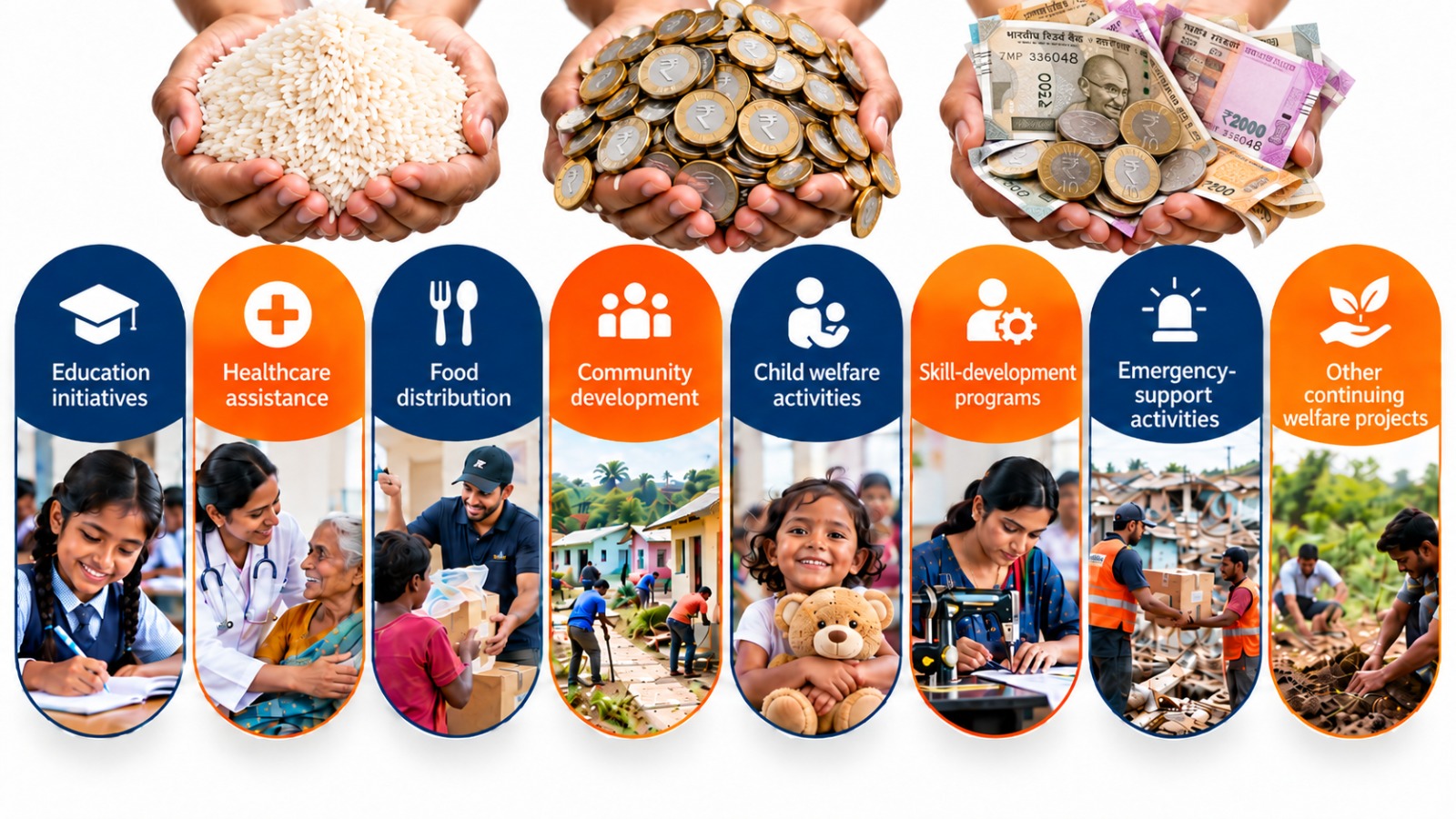
A monthly giving program may be used to support:
- Education initiatives
- Healthcare assistance
- Food distribution
- Community development
- Child welfare activities
- Skill-development programs
- Emergency-support activities
- Other continuing welfare projects
The organisation should clearly explain what the program is intended to support rather than presenting recurring donations as an undefined source of funds.
Why Should NGOs Consider a Monthly Donation Program?
NGOs can consider monthly giving because regular contributions can support more consistent fundraising and donor engagement.
A one-time donation provides support at a particular point in time. A monthly donor relationship creates an opportunity for the organisation to stay connected with a supporter over a longer period.
A structured monthly donation program can help an NGO:
- Build ongoing donor relationships
- Plan fundraising activities more systematically
- Maintain a regular communication cycle
- Understand donor participation over time
- Connect contributions with continuing welfare projects
- Develop better donor-management practices
- Create opportunities for regular impact reporting
It is important to remember that recurring giving does not automatically guarantee financial stability. Donors can change, pause, or stop their contributions. A monthly program therefore needs ongoing management.
How Can an NGO Start a Monthly Donation Program?
An NGO can start a monthly donation program by defining its purpose, identifying the right audience, creating simple contribution options, establishing a reliable tracking process, and communicating regularly with supporters.
A practical process can be divided into several steps.
1. Define the Purpose of the Program
Start by answering a basic question:
Why should someone donate every month instead of donating once?
The answer should be connected to a genuine ongoing need.
For example, an NGO supporting children’s education may explain that regular contributions help it plan continuing education-support activities.
A healthcare-focused organisation may communicate the ongoing nature of assistance it provides.
A community organisation may use monthly support to maintain a continuing welfare initiative.
The purpose should be specific enough for donors to understand but flexible enough to reflect the organisation’s actual operations.
2. Identify the Right Monthly Giving Audience
Not every supporter will want to become a monthly donor.
An NGO can begin by looking at people who already show interest in its work, such as:
- Existing individual donors
- Long-term supporters
- Volunteers
- Community members
- Previous campaign participants
- People who regularly engage with the organisation’s communications
This does not mean assuming that every existing supporter will become a monthly donor. Instead, these groups can be approached with a clear and respectful invitation.
3. Create Simple Monthly Contribution Options
The monthly donation process should be easy to understand.
An NGO might present a few suggested contribution amounts alongside an option for supporters to choose their own amount.
For example:
Monthly Support
- ₹250 per month
- ₹500 per month
- ₹1,000 per month
- Custom amount
These amounts are only examples. Each organisation should determine appropriate options based on its fundraising strategy and donor audience.
The key is to avoid overwhelming supporters with too many choices.
How Should NGOs Explain Monthly Donations to Supporters?
NGOs should explain monthly giving in terms of the ongoing work it helps support.
Instead of simply saying:
“Donate every month.”
the organisation can explain:
“Choose monthly support to help us continue our education-support activities throughout the year.”
A strong monthly-donation message should answer three basic questions:
- Why is ongoing support needed?
- What does the contribution help support?
- How will the organisation keep supporters informed?
Clear answers can make the request easier for donors to understand.
How Can NGOs Encourage Existing Donors to Become Monthly Donors?
Existing donors can be invited to consider monthly giving after they have already interacted with the organisation.
For example, after a donor makes a one-time contribution, the NGO could provide an option to continue supporting the organisation through a monthly contribution.
The message should focus on continuity rather than pressure.
An NGO might communicate:
“Thank you for supporting our work. If you would like to continue supporting this initiative throughout the year, you can choose a monthly contribution.”
This approach recognises the donor’s previous support while introducing an ongoing option.
Other suitable opportunities may include:
- After a successful fundraising campaign
- Following a project update
- During an annual appeal
- After sharing a beneficiary-focused story
- During volunteer or community engagement activities
How Important Is Trust in a Monthly Donation Program?
Trust is fundamental to monthly giving because donors are making an ongoing commitment to an organisation.
A supporter may reasonably want to know:
- What the NGO does
- What its welfare projects involve
- How contributions are used
- How activities are progressing
- How the organisation communicates with donors
- What kind of reporting supporters can expect
Trust is built through consistent actions rather than through a single fundraising message.
An NGO should therefore treat transparency and accountability as ongoing responsibilities.
How Can NGOs Show Donors the Impact of Monthly Contributions?
NGOs can demonstrate impact by connecting donor contributions with actual welfare activities and reporting progress clearly.
Imagine a community organisation running an education-support program for 100 children.
Rather than communicating only that donations were received, the organisation can structure its reporting around:
- The education program
- Planned activities
- Resources required
- Beneficiary groups
- Activities completed
- Progress made
- Challenges encountered
- Future activities
This creates a more useful connection between donations and outcomes.
The objective is not to claim that every individual donation produced one specific outcome when the organisation cannot establish that connection. Instead, the NGO can explain how collective support contributes to the broader welfare project.
What Should NGOs Include in Monthly Donor Communications?
Monthly donors should receive useful communication that keeps them connected to the organisation’s work.
Depending on the organisation, communication may include:
- Project updates
- Welfare activity reports
- Beneficiary-focused stories
- Photos or videos where appropriate and responsibly obtained
- Progress updates
- Upcoming activities
- Milestones
- Organisational news
- Impact reports
Not every message needs to ask for another donation.
A monthly donor who receives useful information about the organisation’s work may have a clearer understanding of why their continuing support matters.
How Can NGOs Manage Monthly Donors Efficiently?
NGOs should maintain an organised donor-management process that allows them to understand who their monthly supporters are and how they interact with the organisation.
Relevant donor information may include:
- Donor name
- Contact details
- Contribution history
- Monthly contribution amount
- Donation date
- Relevant campaign or project
- Communication history
- Donor preferences
- Acknowledgement information
- Follow-up requirements
The organisation should collect and maintain information responsibly and only to the extent needed for legitimate operational purposes.
A structured donor-management process also makes it easier to identify missing information, maintain accurate records, and communicate appropriately with supporters.
How Can Technology Support a Monthly Donation Program?
Technology can help NGOs organise recurring fundraising by bringing donor, contribution, communication, and project information into a more structured digital workflow.
Depending on an organisation’s needs, technology may support processes such as:
- Donor management
- Contribution tracking
- Fundraising management
- Donor communication
- Project management
- Reporting
- Beneficiary management
- Internal coordination
The objective is not simply to replace spreadsheets with software. It is to make information easier to organise and connect.
For example, an NGO should ideally be able to understand the relationship between a monthly donor, their contribution, the relevant fundraising activity, the welfare project receiving support, the beneficiaries involved, and the resulting reporting.
That is a broader operational question than simply tracking a payment.
What Is the Role of Welfare Governance in Monthly Giving?
Welfare governance refers to the structured management of an organisation’s welfare activities, resources, projects, beneficiaries, accountability, reporting, and impact.
Monthly fundraising is one component of that larger system.
Consider the complete journey:
Donors → Contributions → Funds → Welfare Projects → Beneficiaries → Outcomes → Reporting → Continued Support
A monthly donation program begins with the donor and contribution, but its value ultimately depends on what happens afterward.
The NGO needs processes for managing funds, coordinating welfare projects, supporting beneficiaries, recording activities, communicating progress, and reporting appropriately.
This is why modern charity management needs to look beyond fundraising alone.
What Are the Common Challenges in Running a Monthly Donation Program?
NGOs can encounter several operational challenges when managing recurring donors.
Payment interruptions
A recurring contribution may stop or fail because of payment-related issues or because a donor chooses to change their contribution.
The NGO needs a clear process for identifying and responding to such situations.
Incomplete donor records
If donor information is spread across spreadsheets, email accounts, messaging platforms, and paper records, it can become difficult to maintain an accurate picture of supporter activity.
Irregular communication
A donor who receives no meaningful updates may gradually feel disconnected from the organisation.
Excessive fundraising messages
Constant requests for additional contributions can make communication feel transactional.
Weak reporting processes
If the organisation cannot easily connect fundraising activity with welfare projects and reporting, communicating impact becomes more difficult.
Manual administration
As the number of monthly donors increases, manually checking contributions and maintaining communication records can consume considerable staff time.
How Can NGOs Keep Monthly Donors Engaged?
NGOs can keep monthly donors engaged by treating them as long-term supporters rather than simply recurring transactions.
A practical engagement approach can include:
- Acknowledge their support.
- Explain what their ongoing support contributes to.
- Share relevant project updates.
- Communicate progress regularly.
- Report responsibly on welfare activities.
- Invite supporters to learn more about the organisation.
- Respect their communication preferences.
- Make it easy to update or stop their contribution.
The goal is to create a relationship based on clarity and respect.
How Can a Small NGO Build a Monthly Donation Program?
A small NGO can begin with a simple monthly-giving model rather than trying to build a complex program immediately.
A practical starting framework is:
Define one clear ongoing need
Choose a welfare activity where continuing support genuinely matters.
Build a simple donor message
Explain why monthly contributions are useful.
Provide straightforward contribution choices
Keep the process easy for supporters to understand.
Maintain a donor list
Record relevant donor and contribution information systematically.
Establish a communication routine
Decide what kind of updates monthly supporters should receive and how often.
Track welfare activities
Record what the organisation is doing with the resources available to it.
Review the program
Periodically assess donor engagement, contribution continuity, communication, and internal administration.
This gives the NGO a foundation that can grow with the organisation.
What Should NGOs Avoid When Building Monthly Giving Programs?
A monthly donation program should be built around trust and a positive supporter experience.
NGOs should avoid:
- Using unclear claims about how contributions are used
- Pressuring donors through excessive emotional appeals
- Sending repetitive fundraising messages
- Making the contribution process unnecessarily complicated
- Ignoring donor preferences
- Failing to acknowledge contributions
- Keeping inconsistent donor records
- Providing no meaningful updates
- Making it unnecessarily difficult to change or stop contributions
- Treating recurring donors only as sources of money
A sustainable donor relationship requires transparency, respect, communication, and responsible administration.
How Can NGOs Measure the Health of a Monthly Donation Program?
NGOs can review a monthly donation program using operational and donor-engagement information rather than focusing on one number alone.
Useful areas to monitor may include:
- Number of active monthly donors
- Contribution activity over time
- Donor communication activity
- Payment interruptions
- Donor cancellations
- Donor engagement
- Fundraising campaign performance
- Welfare activities supported
- Reporting completed
The purpose of tracking these areas is to understand what is working operationally and where improvements may be needed.
An NGO can then adjust its communication, fundraising process, donor-management practices, or project coordination based on what it learns.
FAQ
How can an NGO start a monthly donation program?
An NGO can start by identifying an ongoing welfare need, defining a clear monthly-giving message, offering simple contribution options, organising donor records, and establishing a regular communication and reporting process.
How can NGOs get monthly donors?
NGOs can invite existing supporters, volunteers, community members, and other relevant audiences to consider monthly giving while clearly explaining why ongoing support is needed.
What should a monthly donation program include?
A monthly donation program should generally include a clear purpose, simple contribution options, reliable donation tracking, donor communication, appropriate acknowledgement, and a process for reporting welfare activities.
How can NGOs retain monthly donors?
NGOs can encourage continued engagement by communicating consistently, showing how ongoing support contributes to welfare activities, maintaining accurate donor records, and treating supporters with transparency and respect.
How can NGOs track monthly donations?
NGOs can use an organised donor-management process or digital system to maintain donor information, contribution history, recurring contribution details, communication records, and relevant project information.
Can small NGOs run monthly donation programs?
Yes. A small NGO can start with a simple recurring-giving process and expand its donor-management and reporting practices as its supporter base grows.
Why is transparency important for monthly donors?
Transparency helps supporters understand the organisation’s activities, how their contributions relate to welfare projects, and how the NGO communicates its progress and accountability.
How can technology help NGOs manage monthly donors?
Technology can help organise donor information, contribution records, fundraising activities, communication, welfare projects, and reporting so that the organisation has a more structured view of its ongoing donor relationships.
How NidhiMax Can Help
Building a monthly donation program is ultimately about more than collecting recurring contributions. An NGO needs to connect fundraising with donor relationships, welfare projects, beneficiaries, communication, reporting, and accountability.
NidhiMax — Welfare Governance Platform is designed to support charitable organisations, NGOs, trusts, community organisations, and welfare institutions as they move toward a more organised digital welfare-management ecosystem.
For organisations developing recurring fundraising, this broader approach can help them think about how donor management, contribution tracking, fundraising activities, welfare projects, communication, transparency, and reporting fit together.
Every NGO has its own processes, priorities, and operational challenges. Technology should support those real-world workflows rather than add unnecessary complexity.