 Post by
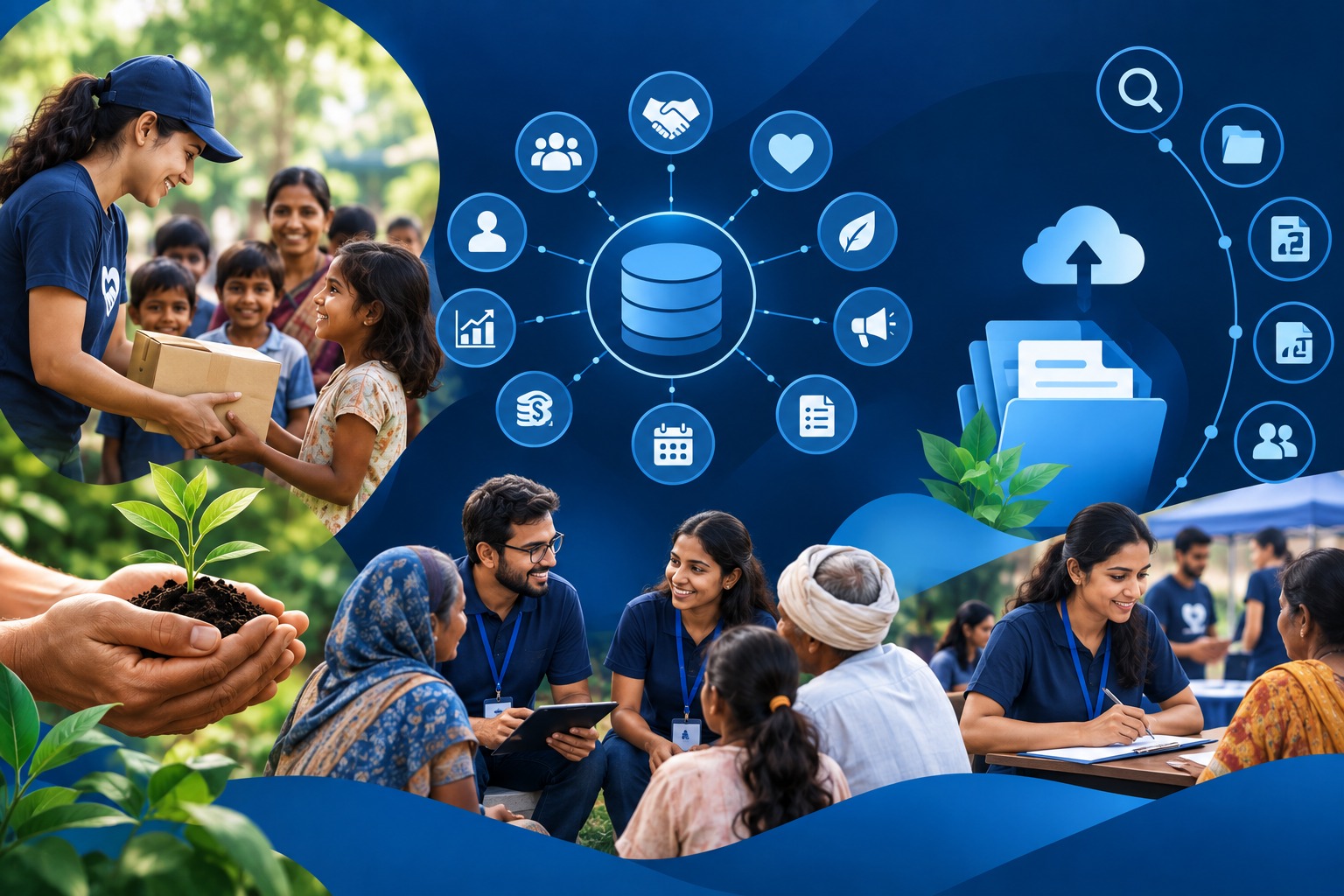
Charities and NGOs have always depended on people: donors who contribute, volunteers who serve, teams who coordinate activities, and communities who benefit from welfare programs. But as charitable organisations grow, managing all these moving parts becomes increasingly difficult.
A charity may need to maintain donor records, coordinate volunteers, manage beneficiaries, monitor welfare projects, track contributions, communicate with supporters, prepare reports, and demonstrate how resources are being used. When these activities are handled through disconnected spreadsheets, paper records, messaging apps, and individual files, important information can become difficult to find and even harder to manage consistently.
This is where technology can play an important role in modern charity management.
Technology does not replace the human purpose behind charitable work. Instead, it can help organisations organise information, reduce repetitive administrative work, improve coordination, strengthen transparency, and make it easier to understand what is happening across their welfare activities.
For an NGO or charitable organisation, the real question is therefore not simply, “Should we use technology?” It is:
How can technology help us manage our people, resources, projects, beneficiaries, donors, and impact more effectively?
What Is Technology in Charity Management?
Technology in charity management refers to the use of digital tools and systems to organise, coordinate, monitor, and improve the different activities carried out by a charitable organisation.
These activities can include:
- Donor and supporter management
- Fundraising management
- Contribution tracking
- Beneficiary management
- Welfare project management
- Volunteer coordination
- Communication
- Documentation
- Reporting
- Financial and operational record-keeping
- Impact tracking
- Internal coordination
The technology used does not have to be complicated. A small community organisation may begin with simple digital tools, while a larger NGO may require a more integrated management platform.
The important point is that technology should support the organisation’s actual welfare processes rather than create unnecessary complexity.
Why Is Technology Important for Modern Charities?
Technology is important because charitable organisations increasingly need to manage more information while remaining accountable to donors, trustees, beneficiaries, volunteers, and other stakeholders.
A digital system can help bring information into a more structured environment, making it easier for teams to understand what has happened, what needs attention, and where resources are being directed.
For example, consider an NGO running several community welfare programs. Its team may need to know:
- Which donors contributed to a particular campaign?
- What funds were received?
- Which project received those resources?
- What activities were completed?
- Which beneficiaries were supported?
- What outcomes were achieved?
- Which donors need an acknowledgement?
- What information is required for internal reporting?
When these answers exist in different notebooks, spreadsheets, email conversations, and messaging applications, managing the organisation becomes more difficult.
Technology can help connect these pieces of information into a more organised workflow.
How Can Technology Improve Charity Management?
Technology can improve charity management by creating better systems for information, communication, coordination, and reporting.
Some of the most important areas are discussed below.
1. Donor Management
Donors are an important part of the charitable ecosystem. Maintaining accurate and useful donor information can help organisations communicate more responsibly and build long-term relationships.
A structured donor-management process can help an organisation organise information such as:
- Supporter details
- Contribution history
- Campaign participation
- Communication history
- Acknowledgements
- Relevant follow-up information
Instead of searching through multiple files whenever a donor needs to be contacted, authorised team members can work from a more organised source of information.
Good donor management is not simply about asking people for more donations. It is about understanding supporter relationships and communicating with them appropriately.
How Does Technology Help With Fundraising?
Technology can support fundraising by making it easier to plan campaigns, communicate with supporters, record contributions, and connect fundraising activity with the welfare projects it is intended to support.
Digital fundraising can take many forms, including:
- Online donation campaigns
- Website-based fundraising
- Social media campaigns
- Messaging-based campaigns
- Recurring contribution programs
- Event-based fundraising
- Community fundraising
However, collecting donations is only one part of fundraising management.
A charity should also be able to answer:
Where did the contribution come from?
Which campaign was it associated with?
What project was it intended to support?
What happened after the funds were received?
This is where technology can help fundraising become part of a broader management process.
How Can Technology Improve Beneficiary Management?
Beneficiary management involves maintaining appropriate information about the people or communities receiving support through welfare programs.
A structured digital system can help authorised teams organise relevant beneficiary information and connect it with the programs or services being delivered.
For example, a community organisation providing education support might need to manage information about:
- Children enrolled in the program
- Families receiving assistance
- Support provided
- Program participation
- Project activities
- Follow-up requirements
- Outcomes
The exact information collected should always depend on the organisation’s purpose and should be handled responsibly, particularly when information relates to vulnerable people.
Technology should make beneficiary management more organised without treating beneficiaries merely as data records. The human purpose of the welfare program must remain central.
How Can Technology Help Charities Manage Welfare Projects?
Technology can help charities organise welfare projects by bringing planning, activities, resources, beneficiaries, and reporting into a more structured workflow.
For example, an NGO may operate separate programs for:
- Education
- Healthcare assistance
- Food distribution
- Community development
- Emergency relief
Without a structured system, information about these programs can become scattered.
A project-management approach can help teams keep track of:
- Project objectives
- Activities
- Responsible team members
- Beneficiaries
- Resources
- Contributions
- Progress
- Outcomes
- Reports
This can make it easier for leadership teams to understand the organisation’s overall welfare activity.
How Does Technology Improve Transparency and Accountability?
Technology can support transparency and accountability by making organisational information easier to record, organise, review, and report.
Transparency does not mean putting every piece of organisational information publicly online. It means having appropriate processes that allow an organisation to explain what it is doing, how resources are being managed, and what outcomes are being achieved.
For example, a charity may want to connect:
Contribution → Welfare Project → Activity → Beneficiary → Outcome → Report
This connection can make reporting more meaningful.
Instead of simply saying:
“The campaign was successful.”
the organisation can work toward reporting what the campaign supported and what activities took place.
Accurate records also help internal teams review their own work and identify gaps.
Can Technology Help Volunteers Work More Effectively?
Yes. Technology can support volunteer coordination by making communication, task allocation, scheduling, and documentation more organised.
Volunteers may be involved in:
- Community visits
- Food distribution
- Fundraising events
- Educational programs
- Healthcare initiatives
- Emergency relief
- Administrative activities
If volunteer information is maintained informally by several individuals, the organisation can lose visibility into who is doing what.
A structured digital process can help authorised coordinators understand volunteer participation and responsibilities.
The goal is not to turn volunteering into a bureaucratic process. It is to reduce avoidable confusion so volunteers can spend more time contributing to the actual mission.
How Can Technology Improve Communication With Donors?
Technology can make donor communication more timely and organised.
A charity may use digital channels to:
- Share campaign announcements
- Send acknowledgements
- Provide project updates
- Communicate events
- Share impact reports
- Request feedback
- Maintain supporter relationships
However, more communication is not automatically better communication.
Organisations should avoid overwhelming supporters with unnecessary messages. Communication should be relevant, respectful, and connected to the relationship the supporter has with the organisation.
The quality of communication matters more than simply increasing its frequency.
What Role Does Data Play in Charity Management?
Data helps charity leaders make better-informed operational decisions.
For a welfare organisation, useful information might include:
- Number of active projects
- Contributions by campaign
- Donor engagement
- Beneficiary participation
- Project activities
- Resource allocation
- Volunteer involvement
- Outcomes and impact
- Pending activities
- Reporting requirements
The value of data depends on its quality.
If information is incomplete, duplicated, outdated, or stored inconsistently, digital systems cannot magically turn it into useful insight.
Therefore, organisations should establish basic data practices such as:
- Decide what information is actually needed.
- Define who is responsible for maintaining it.
- Keep records consistent.
- Review information periodically.
- Restrict access where appropriate.
- Use information for meaningful organisational decisions.
What Are the Benefits of Digital Record-Keeping for NGOs?
Digital record-keeping can make information easier to store, search, update, and share with authorised team members.
Compared with relying entirely on paper files, digital records can offer practical advantages such as:
- Faster information retrieval
- Better organisation
- Easier reporting
- Reduced duplication
- Improved coordination
- Easier historical reference
- Better visibility across activities
However, digital records also introduce responsibilities around access control, security, backups, privacy, and data quality.
Moving from paper to digital is therefore not simply a technical change. It is also an organisational change.
How Can Technology Reduce Administrative Work?
Technology can reduce repetitive administrative work by standardising tasks that would otherwise have to be completed manually.
For example, a charity may repeatedly need to:
- Record contributions
- Update donor information
- Maintain project records
- Prepare internal summaries
- Track activities
- Organise beneficiary information
- Communicate updates
When these processes are structured digitally, staff may spend less time searching for information or duplicating the same work across multiple documents.
The objective should not be to eliminate human involvement.
The objective is to allow people to spend more time on activities that require human judgement, relationships, care, and community engagement.
What Challenges Do Charities Face When Adopting Technology?
Technology can solve problems, but introducing technology without planning can create new ones.
Common challenges include:
Resistance to change
Staff and volunteers who are comfortable with existing processes may initially find a new system difficult.
Limited technical skills
Not every team member will have the same level of digital confidence.
Poor data quality
Moving inconsistent or duplicate records into a new system does not automatically fix them.
Cost considerations
Charities need to evaluate technology based on their actual requirements and available resources.
Privacy and security
Organisations may manage sensitive information about donors, beneficiaries, staff, and volunteers. Appropriate safeguards are essential.
Overcomplication
A system with unnecessary processes can make everyday work harder.
The best technology is often the technology that people can realistically use.
What Should an NGO Consider Before Choosing Charity Management Technology?
An NGO should first understand its operational needs before selecting a digital system.
A useful checklist includes:
1. What problem are we trying to solve?
Do not start with a technology product. Start with the operational problem.
2. Which processes are currently manual?
Identify repetitive activities that consume time.
3. Where is information currently stored?
Map spreadsheets, paper records, emails, messaging platforms, and other sources.
4. Who needs access?
Different teams may require different levels of access.
5. What information needs to be connected?
For example, donor information may need to connect with fundraising campaigns and welfare projects.
6. How will the system be maintained?
Technology requires ownership. Someone should be responsible for keeping information accurate.
7. Can the team actually use it?
A technically powerful system is of limited value if the people responsible for daily operations cannot use it comfortably.
What Does Digital Transformation Mean for a Charity?
Digital transformation is more than replacing paper forms with digital forms. It means rethinking how an organisation uses technology to improve the way its work is managed.
For a charity, this could mean connecting previously separate processes.
For example:
Old approach:
Donor spreadsheet → Separate project file → Paper beneficiary records → Individual reports
More organised approach:
Donors → Contributions → Welfare Projects → Beneficiaries → Activities → Outcomes → Reporting
The second approach creates a clearer organisational picture.
Digital transformation therefore involves both technology and process design.
A Practical Example: A Community Education Organisation
Imagine a community organisation running an education-support program for children.
The organisation receives contributions from individuals and uses those resources to conduct educational activities.
Without an organised system, the team might maintain:
- Donor information in one spreadsheet
- Contribution information in another file
- Beneficiary information on paper
- Project activities in WhatsApp conversations
- Reports in separate documents
As the program grows, finding connections between these records becomes difficult.
A more structured digital approach could help the organisation understand:
Donors → Contributions → Education Project → Beneficiaries → Activities → Outcomes → Reporting
The fundraising team can focus on supporter relationships.
The welfare team can focus on program delivery.
The leadership team can review progress.
The organisation can prepare more structured reports.
The technology does not create the impact. The people and welfare activities do. Technology simply provides a better framework for managing the work around them.
How Can Technology Support Impact Tracking?
Impact tracking helps an organisation move beyond recording activities to understanding what those activities achieved.
There is an important difference between:
Activity: An educational session was conducted.
and:
Outcome: The organisation records the relevant result or change associated with the program.
The appropriate measures will vary significantly by project.
An education initiative may track participation and relevant learning outcomes. A food-distribution program may track distribution activities and households reached. A community-development initiative may use entirely different indicators.
Technology can help organisations organise these records, compare project information, and prepare reports.
But technology cannot determine meaningful impact by itself. Organisations need to decide what outcomes matter for each welfare project.
How Does Technology Connect Fundraising With Welfare Work?
This is one of the most important ideas in modern charity management.
Fundraising should not exist separately from the welfare work it enables.
A contribution begins a longer organisational journey:
Donors → Contributions → Funds → Welfare Projects → Beneficiaries → Outcomes → Reporting → Continued Support
Each stage creates information that can be useful to the next.
For example, fundraising generates contribution information. Welfare teams use resources for projects. Project teams record activities and beneficiary support. The organisation then communicates appropriate outcomes to stakeholders.
When these processes are disconnected, leadership may see only individual pieces.
When they are organised together, the organisation can develop a clearer view of its welfare ecosystem.
What Is Welfare Governance?
Welfare governance is the structured management of an organisation’s welfare activities, resources, people, projects, beneficiaries, accountability, reporting, and impact.
It goes beyond fundraising or accounting alone.
For a modern charitable organisation, welfare governance can bring together several connected areas:
- Fundraising
- Donor relationships
- Contributions
- Welfare projects
- Beneficiary management
- Volunteers and teams
- Activities
- Resources
- Communication
- Reporting
- Accountability
- Impact
Technology can provide the infrastructure needed to organise these processes, but governance also depends on people, policies, responsibilities, and organisational discipline.
This broader perspective is particularly useful as charities move from small, informal operations toward more structured welfare organisations.
What Are the Best Practices for Using Technology in Charity Management?
Charities can get more value from technology when they introduce it thoughtfully.
Start small
Begin with the most important operational problem instead of trying to digitise everything at once.
Create clear processes
Technology works better when staff know how information should be entered, reviewed, and updated.
Keep information relevant
Do not collect unnecessary information simply because a system allows it.
Assign responsibility
Someone should be responsible for maintaining important records.
Train the team
Even a simple system needs clear guidance.
Review regularly
Technology and organisational requirements change over time. Review whether the system is still helping.
Keep the human purpose visible
The purpose of technology is to support welfare work, not to make the organisation revolve around software.
What Is the Future of Technology in Charity Management?
The future of charity management is likely to involve increasingly connected digital systems that help organisations manage information across fundraising, welfare programs, beneficiaries, communication, and reporting.
Emerging technologies may create new possibilities around:
- Automation
- Data analysis
- Digital fundraising
- Online communication
- Workflow management
- Reporting
- Artificial intelligence
- Mobile-first services
However, technology adoption should always be guided by organisational purpose.
A charity should ask:
Does this technology help us serve people better?
Does it improve accountability?
Does it reduce unnecessary administrative work?
Does it help our team make better decisions?
Does it strengthen our ability to understand and report our impact?
If the answer is no, adopting the technology simply because it is new may not be worthwhile.
Frequently Asked Questions
How does technology help charity management?
Technology helps charities organise donors, contributions, beneficiaries, welfare projects, communication, records, reporting, and other operational activities. It can reduce repetitive administrative work and improve visibility across the organisation.
Why is technology important for NGOs?
Technology can help NGOs manage increasing amounts of information, coordinate teams, maintain records, communicate with supporters, monitor welfare projects, and improve organisational accountability.
What technology do charities use?
Charities may use tools for donor management, fundraising, accounting, communication, project management, beneficiary management, volunteer coordination, data management, reporting, and online engagement.
Can technology improve transparency in charities?
Yes. Structured digital records can make it easier to track contributions, activities, projects, beneficiaries, and reports. Transparency still depends on good organisational processes and responsible reporting.
How can NGOs manage donors digitally?
NGOs can use structured digital donor-management processes to maintain relevant supporter information, contribution history, campaign participation, communication records, acknowledgements, and follow-up activities.
How does technology help beneficiaries?
Technology can help authorised teams organise beneficiary information, connect beneficiaries with relevant welfare programs, track activities, and support appropriate reporting. Organisations should handle beneficiary information carefully and responsibly.
What is digital transformation in a charity?
Digital transformation means using technology to improve and connect organisational processes rather than simply converting paper records into digital files. It can involve fundraising, donor management, welfare projects, beneficiaries, reporting, and communication.
What is welfare governance?
Welfare governance is the structured management of an organisation’s welfare activities, resources, people, projects, beneficiaries, accountability, reporting, and impact. Technology can support this structure by connecting relevant information and workflows.
Building a Better Welfare Governance System
Technology has become an important part of modern charity management, but technology itself is not the goal.
The goal is better welfare work.
A charitable organisation needs to understand its donors, manage contributions responsibly, coordinate welfare projects, support beneficiaries, organise its teams, communicate with stakeholders, and understand the outcomes of its work.
When these activities operate independently, leadership can struggle to see the complete picture. When they are connected through appropriate processes and technology, an organisation can work toward a more organised and accountable welfare ecosystem.
This is the thinking behind NidhiMax — Welfare Governance Platform.
NidhiMax is designed to help charitable organisations, NGOs, trusts, community organisations, and welfare institutions move toward a more organised digital welfare-management ecosystem. The broader approach focuses on connecting the different parts of welfare operations rather than treating fundraising, beneficiaries, projects, communication, and reporting as completely separate activities.
For organisations evaluating technology, the starting point should always be the same: understand the actual welfare processes first, then choose technology that supports them.