 Post by
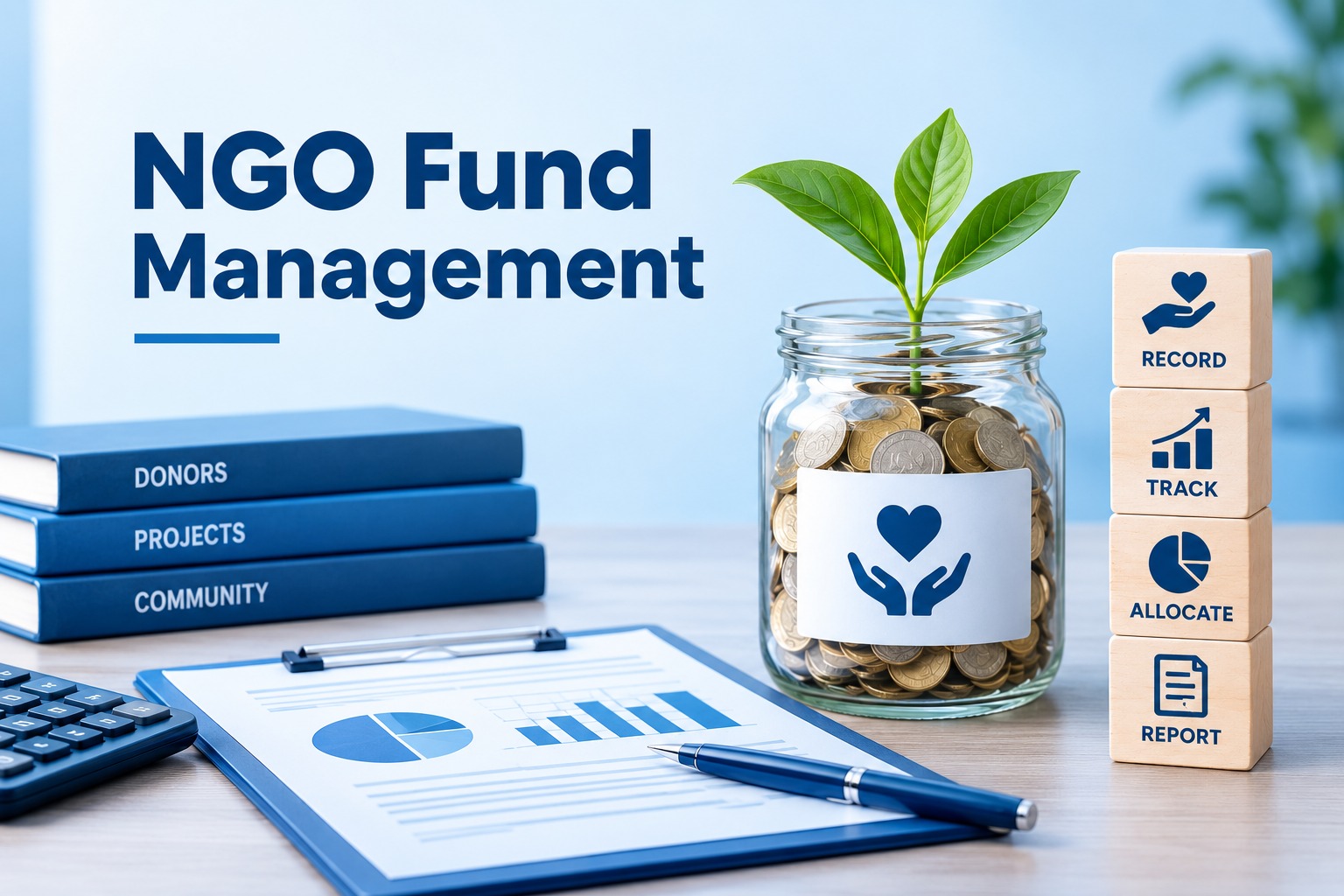
Managing funds responsibly is one of the most important responsibilities of an NGO. Whether an organisation supports education, healthcare, food distribution, emergency relief, or community development, every contribution needs to be recorded, allocated, monitored, and reported appropriately.
For smaller NGOs, this can often be managed through spreadsheets, paper records, receipts, and separate files. As fundraising activities and welfare projects grow, however, disconnected records can make it harder to understand the organisation’s complete financial picture.
Digital platforms can help bring these processes into a more organised system. They can support contribution tracking, donor management, fund allocation, project monitoring, reporting, and internal coordination.
But digital fund management is not simply about replacing a spreadsheet with software. The real value comes from creating a clearer connection between money received, money allocated, welfare activities, beneficiaries, and outcomes.
What Is NGO Fund Management?
NGO fund management is the process of recording, organising, allocating, monitoring, and reporting how an organisation receives and uses financial resources.
It can include activities such as:
- Recording donations and other contributions
- Tracking fundraising campaigns
- Maintaining donor information
- Allocating funds to welfare projects
- Recording project-related expenses
- Monitoring available funds
- Maintaining supporting documents
- Preparing financial and project reports
- Reviewing fund utilisation
- Communicating appropriate updates to stakeholders
Good fund management gives an organisation a clearer understanding of where its resources come from and how they are being used.
It also helps connect financial management with the organisation’s actual welfare work.
Why Is Effective Fund Management Important for NGOs?
Effective fund management helps NGOs use resources more systematically, maintain reliable records, support accountability, and make better operational decisions.
An NGO may receive contributions from many individuals or sources while simultaneously running several welfare programmes.
For example, one organisation might manage:
- An education-support programme
- A food-distribution initiative
- A healthcare assistance programme
- An emergency relief campaign
Each programme may have different activities, expenses, beneficiaries, and reporting requirements.
If all financial information is kept in one general spreadsheet, it can become difficult to determine which funds relate to which activities.
A structured approach allows the organisation to look at both the overall financial picture and individual welfare projects.
How Can Digital Platforms Improve NGO Fund Management?
Digital platforms can improve NGO fund management by organising financial information, reducing fragmented record-keeping, connecting contributions with projects, supporting reporting, and making relevant information easier to retrieve.
Some of the most useful improvements include the following.
1. Centralised Fund Records
A digital platform can provide a structured place for recording important fund information.
Instead of maintaining separate files for every campaign or project, an organisation can organise relevant records according to its operational structure.
Depending on the system, information may include:
- Contribution details
- Fund or campaign
- Date
- Donor information
- Purpose
- Related welfare project
- Allocation
- Supporting records
Centralisation can make it easier for authorised staff to find information without searching through multiple files.
2. Easier Donation Tracking
Donation tracking is one of the basic building blocks of NGO fund management.
A structured digital record can help an organisation maintain a history of contributions and associate them with relevant fundraising activities.
For example:
Donor → Contribution → Campaign → Fund → Welfare Project
This creates more context around the contribution than simply recording a number in a spreadsheet.
It can also make it easier to identify missing information, review contribution records, and prepare donor communications.
3. Clearer Fund Allocation
Digital fund management can help NGOs maintain a clearer record of how available funds are assigned to different welfare programmes or activities.
Suppose an NGO receives contributions for community healthcare assistance.
The organisation may need to distinguish between:
- Funds received
- Funds assigned to the programme
- Programme expenses
- Remaining allocation
- Activities completed
Maintaining these relationships digitally can make it easier to monitor the programme.
The objective is not necessarily to create complicated financial dashboards. A simple, well-maintained record can be more useful than an elaborate system that staff rarely update.
How Can Digital Platforms Connect Donations With Welfare Projects?
A digital platform can connect contribution records with fundraising activities and welfare projects, helping an NGO see how financial resources move through its wider welfare operations.
This is an important shift in thinking.
Fund management should not stop at:
“We received ₹X.”
The organisation should also be able to ask:
“What was this fund intended to support?”
and:
“What welfare activity did it contribute to?”
A broader flow can look like:
Donors → Contributions → Funds → Welfare Projects → Beneficiaries → Outcomes → Reporting → Continued Support
This connection is particularly valuable when an organisation manages multiple programmes.
How Does Digital Fund Management Improve Transparency?
Digital fund management can improve transparency by maintaining consistent records of contributions, allocations, expenses, projects, and reports that authorised people can review when needed.
Transparency is closely connected to the quality of an organisation’s records.
Consider two situations.
Organisation A
A donor asks about a contribution, and the organisation has to search through:
- Email messages
- Bank records
- Spreadsheets
- Paper receipts
- Project files
It may eventually find the information, but the process is slow.
Organisation B
The organisation maintains structured records connecting the contribution with its campaign and welfare programme.
The relevant information can be retrieved more efficiently.
The difference is not necessarily the amount of work the organisation performs. It is the way information is organised.
How Can Digital Platforms Help With NGO Reporting?
Digital platforms can make NGO reporting easier by allowing reports to be prepared from information recorded during day-to-day operations.
Many organisations spend considerable administrative effort collecting information when a report is due.
A project manager may have one set of figures, the fundraising team another, and the finance team another.
A structured system can reduce this fragmentation by giving authorised users a more consistent information base.
Reports may relate to:
- Funds received
- Fund allocation
- Project expenses
- Fundraising activity
- Beneficiary support
- Programme activities
- Project progress
- Outcomes
- Donor communication
The important principle is simple:
Reporting should be the result of good record-keeping, not a separate exercise performed at the last minute.
Can Digital Platforms Improve Donor Management?
Yes. Digital platforms can support donor management by organising donor information, contribution histories, fundraising activities, and relevant communication records.
Donor management is closely connected to fund management.
A donor may contribute several times over the course of an organisation’s work. If every contribution is treated as an isolated transaction, the organisation loses useful context.
A structured donor record can help the organisation understand:
- Who contributed
- When they contributed
- Which campaign was involved
- What communication was provided
- Whether an acknowledgement was recorded
- Which programme was associated with the contribution, where applicable
This can help fundraising teams communicate more consistently while maintaining better records.
How Can Digital Platforms Reduce Manual Errors?
Digital platforms can reduce some common manual errors by standardising data entry, reducing duplicate records, automating repetitive calculations, and keeping related information in structured formats.
Common problems in manual fund management include:
- Duplicate donor entries
- Incorrect calculations
- Missing information
- Inconsistent campaign names
- Lost supporting documents
- Multiple versions of spreadsheets
- Data entered repeatedly
- Difficulty identifying the latest record
Technology can help reduce these problems, but it does not eliminate human responsibility.
If inaccurate information is entered into a digital system, the resulting reports can also be inaccurate.
That is why data quality and process discipline are just as important as the software itself.
How Can NGOs Use Technology to Monitor Welfare Project Funds?
NGOs can use structured digital records to monitor the relationship between funds, welfare projects, activities, expenses, beneficiaries, and project outcomes.
Imagine a community organisation conducting a food-distribution programme.
Instead of treating the programme as a single expense category, the organisation can organise information around the project:
Fundraising → Available Funds → Food Distribution Project → Procurement → Distribution Activity → Beneficiary Group → Project Report
This provides a broader view of the programme.
The organisation can then ask practical questions:
- What funds are associated with this project?
- What activities have been completed?
- What resources were used?
- What expenses were recorded?
- Which beneficiaries were supported?
- What information needs to be included in the project report?
This is where fund management becomes part of wider welfare management.
What Is the Difference Between Fund Management and Welfare Governance?
Fund management focuses primarily on how financial resources are received, allocated, monitored, and reported, while Welfare Governance takes a broader view of how an organisation manages its welfare activities, resources, people, projects, beneficiaries, accountability, reporting, and impact.
Fund management is therefore one part of Welfare Governance.
A modern welfare organisation may need to coordinate:
- Donors
- Contributions
- Funds
- Welfare projects
- Beneficiaries
- Staff and volunteers
- Activities
- Communication
- Reporting
- Outcomes
Looking at these areas together can provide a more complete understanding of the organisation’s work.
This is especially important when an NGO grows beyond a small number of projects.
What Should an NGO Look for in a Digital Fund Management Platform?
An NGO should choose a digital platform based on its actual fund-management processes, ease of use, data organisation, reporting requirements, security practices, and ability to support related welfare activities.
Before selecting a platform, organisations should consider the following.
Ease of Use
The system should be understandable to administrators, fundraising teams, project managers, and other authorised users.
Organised Records
The platform should support the way the organisation actually categorises donors, contributions, funds, campaigns, and projects.
Reporting Needs
Consider what information the organisation regularly needs to review and report.
Access and Permissions
Different users may need different levels of access. Sensitive information should not automatically be available to everyone.
Data Security
Organisations should understand how their information is stored, protected, backed up, and accessed.
Scalability
The platform should be practical for the organisation’s current needs while allowing room for future operational growth.
Integration With Welfare Operations
Fund management becomes more useful when it can be considered alongside the organisation’s broader welfare activities.
What Are the Common Challenges of Digital Fund Management?
Moving from manual processes to digital systems can introduce its own challenges.
Poor Data Migration
Old spreadsheets may contain duplicate or incomplete records.
Better approach: Clean and standardise important data before moving it into a new system.
Staff Resistance
People who have worked with familiar spreadsheets or paper files may initially resist changing their routines.
Better approach: Introduce the system gradually and explain how it will reduce repetitive work.
Too Many Tools
Using different platforms for donations, projects, beneficiaries, communication, and reporting can create another layer of fragmentation.
Better approach: Evaluate whether related processes can be managed within a more connected workflow.
Inconsistent Data Entry
Different staff members may use different formats for names, campaigns, projects, or other information.
Better approach: Establish simple internal data-entry standards.
Overcomplication
An NGO does not necessarily need a complicated system.
Better approach: Choose technology according to actual operational needs rather than selecting features simply because they are available.
How Can Small NGOs Improve Fund Management With Limited Resources?
Small NGOs can improve fund management by starting with their most important financial and welfare workflows and gradually building a consistent digital record-keeping process.
A practical starting point could be:
- Maintain a structured donor database.
- Record every contribution consistently.
- Categorise fundraising campaigns clearly.
- Connect funds with relevant welfare projects.
- Record project-related financial activity.
- Organise supporting documentation.
- Review fund information regularly.
- Create simple recurring reports.
- Define who is responsible for maintaining records.
- Protect sensitive information through appropriate access controls.
The goal is not to digitise every activity immediately.
The goal is to create a reliable foundation that the organisation can maintain.
A Practical Example: Managing Funds for an Education Programme
Imagine an NGO running an education-support programme for children in a local community.
The organisation receives contributions from individual supporters and uses the funds for educational materials and programme activities.
A simple digital fund-management process could connect:
Donors
↓
Contributions
↓
Education Fund
↓
Education-Support Project
↓
Programme Activities
↓
Beneficiaries
↓
Project Outcomes
↓
Report to Stakeholders
This structure helps the organisation understand the complete journey of its resources.
The fundraising team can maintain contribution records.
The programme team can maintain project information.
Administrators can review allocations and supporting records.
Leadership can use consolidated information for decision-making and reporting.
Most importantly, the organisation can view fund management as part of its welfare work rather than as a completely separate administrative function.
What Are the Best Practices for Digital NGO Fund Management?
A few practical principles can make a significant difference.
Keep One Reliable Source of Information
Avoid maintaining several unofficial versions of the same financial record.
Define Responsibilities
Decide who records contributions, updates project information, reviews records, and prepares reports.
Record Information Promptly
Delayed data entry increases the chance of forgotten transactions and incomplete records.
Standardise Categories
Use consistent names for campaigns, projects, funds, and activities.
Review Records Regularly
Regular checks can help identify discrepancies before they become larger problems.
Connect Financial and Programme Information
Where appropriate, relate funds to the welfare activities they support.
Protect Sensitive Information
Transparency does not mean making private donor or beneficiary information publicly available.
Make Reporting Part of the Workflow
Capture useful information throughout the project rather than trying to recreate it later.
Why Fund Management Should Be Part of a Larger Welfare System
An NGO’s financial resources exist for a purpose.
The ultimate objective is usually to support people, communities, causes, or welfare programmes.
That means the organisation needs visibility across the complete chain:
Donors → Contributions → Funds → Welfare Projects → Beneficiaries → Outcomes → Reporting → Continued Support
This broader approach is central to Welfare Governance.
When fundraising, fund management, beneficiary management, project activities, communication, and reporting are treated as connected parts of one welfare ecosystem, leaders can make decisions with a more complete understanding of their organisation’s work.
Technology can provide the structure needed to support that connection.
It does not replace governance, financial controls, human judgement, or responsible leadership. Instead, it can make information easier to organise, review, and use.
FAQ
What is digital fund management for NGOs?
Digital fund management is the use of digital systems to organise information related to donations, contributions, funds, allocations, expenses, projects, and reporting.
How can technology improve NGO fund management?
Technology can centralise records, connect contributions with welfare projects, reduce some manual errors, support reporting, and make financial information easier for authorised users to retrieve and review.
Can digital platforms track donations and fund allocation?
Yes. Depending on the platform, digital systems can maintain structured records connecting donations with campaigns, funds, projects, and related activities.
How does digital fund management improve transparency?
It can create more consistent records of contributions, allocations, expenses, projects, and reports, making relevant information easier to review and communicate.
Can small NGOs use digital fund management platforms?
Yes. Small NGOs can benefit from digital systems, particularly when they start with essential workflows such as donor records, contribution tracking, project management, and reporting.
What should NGOs consider before choosing a fund management platform?
They should consider usability, data organisation, reporting requirements, access controls, security practices, scalability, and how well the platform fits their existing welfare processes.
Is NGO fund management the same as Welfare Governance?
No. Fund management focuses on financial resources, while Welfare Governance covers the broader management of welfare activities, resources, people, projects, beneficiaries, accountability, reporting, and impact.
Can technology replace financial controls in an NGO?
No. Technology can support financial management and record-keeping, but appropriate organisational policies, review procedures, approvals, and professional oversight remain important.
NidhiMax Conclusion
Building a Better Welfare Governance System
Effective NGO fund management is ultimately about more than knowing how much money an organisation has.
It is about understanding where resources came from, where they were allocated, which welfare projects they support, who benefits from those projects, what activities took place, and what outcomes can be reported.
That is why fund management fits within the larger idea of Welfare Governance.
NidhiMax — Welfare Governance Platform is designed to help charitable organisations, NGOs, trusts, community organisations, and welfare institutions move toward a more organised digital welfare-management ecosystem.
Rather than treating fundraising, contributions, projects, beneficiaries, communication, and reporting as isolated activities, a Welfare Governance approach looks at how these areas work together.
Every organisation has different processes and requirements. The right technology should therefore fit the organisation’s actual way of working while helping it maintain clearer records, stronger coordination, and more structured welfare management.