
 Post by
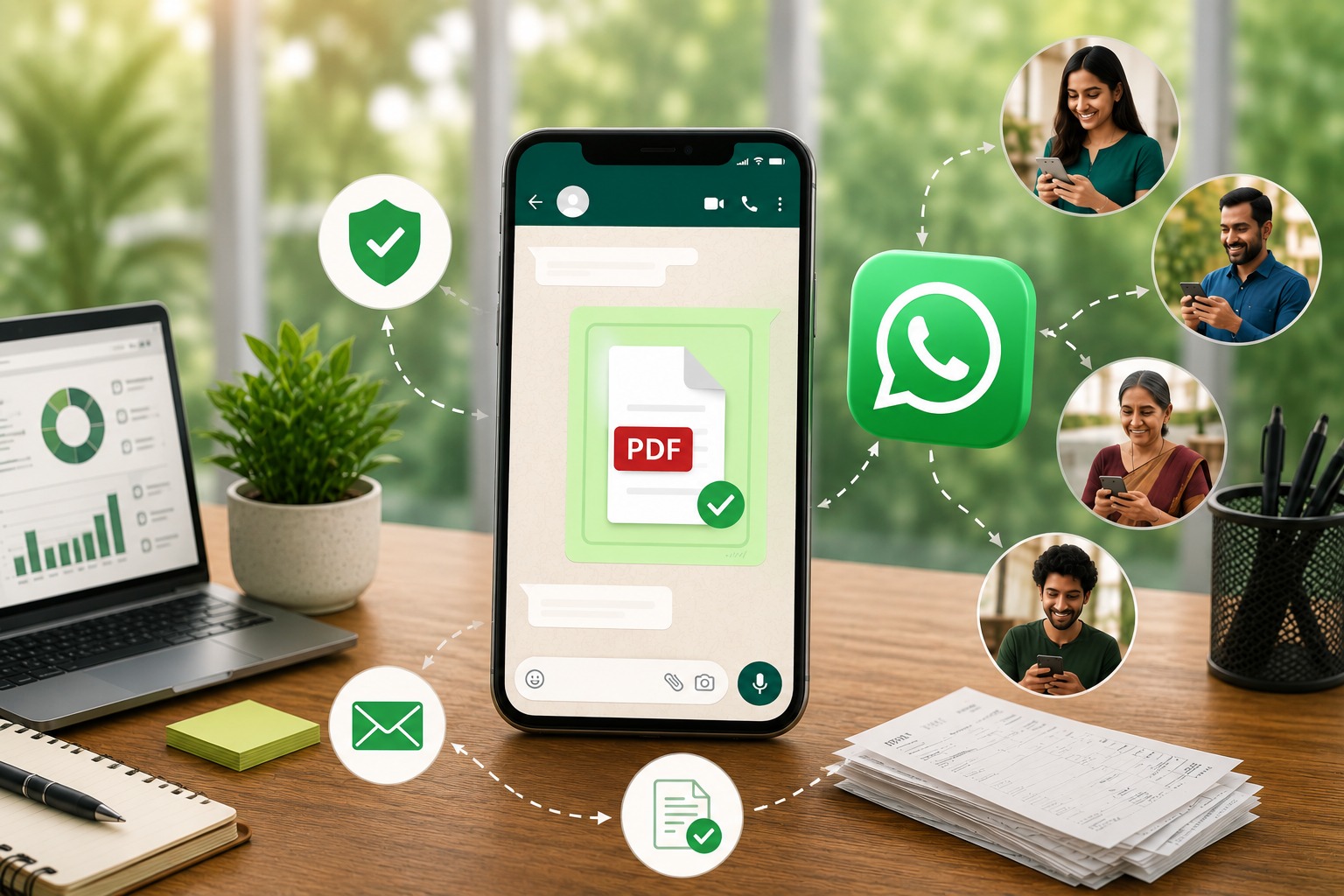
When someone makes a donation, the experience should not end with the payment. Donors often expect acknowledgement that their contribution has been received, while NGOs and charitable organisations need an organised way to maintain contribution records and communicate with supporters.
For many organisations, WhatsApp is already part of everyday communication with donors, volunteers, trustees, and community members. This makes it a convenient channel for sending a donation acknowledgement or receipt document where appropriate.
However, sending donation receipts through WhatsApp involves more than attaching a PDF and pressing send. An NGO needs to know which contribution the receipt relates to, confirm the relevant donor details, maintain an organised record of what was issued, and ensure that the communication is connected to the organisation’s wider fundraising and welfare-management processes.
This guide explains how NGOs can send donation receipts through WhatsApp, what information to check before sending them, how to organise the process, common mistakes to avoid, and why receipts are part of a broader system of donor communication, transparency, and accountability.
How Can I Send Donation Receipts Through WhatsApp?
An NGO can send a donation receipt through WhatsApp by preparing the appropriate receipt or acknowledgement document, confirming the relevant donation and donor information, attaching the document to a WhatsApp message, and recording that the receipt was issued.
A simple process may look like this:
Donation received → Contribution verified → Relevant details recorded → Receipt prepared → Receipt checked → Receipt sent through WhatsApp → Delivery and communication recorded → Donor relationship continued
The exact format and information required for a receipt may depend on the organisation’s circumstances and applicable requirements. Organisations should therefore use a receipt process appropriate to their own operations and seek professional guidance where legal, tax, accounting, or regulatory requirements apply.
From an operational perspective, the goal is to make sure that every receipt can be connected to the correct contribution and supporter.
Why Should NGOs Send Donation Receipts Promptly?
Sending a donation receipt or acknowledgement promptly can help confirm that the organisation has received the contribution and provide the donor with a record of the transaction.
It can also improve the donor experience.
A supporter who contributes to a welfare initiative may reasonably want confirmation that the organisation has received the donation. A delayed or missing acknowledgement can create unnecessary uncertainty and lead to additional follow-up messages.
An organised process helps charities answer questions such as:
- Was the contribution received?
- Has the contribution been recorded?
- Has a receipt or acknowledgement been prepared?
- Has it been sent to the donor?
- When was it sent?
- Who handled the communication?
The aim is not simply to send documents faster. It is to create a reliable process around each contribution.
What Should an NGO Check Before Sending a Donation Receipt?
Before sending a donation receipt through WhatsApp, an NGO should confirm that the document relates to the correct contribution and that the information it contains has been checked against the organisation’s records.
Depending on the organisation’s process, this may include verifying:
- Donor name
- Donation amount
- Date of contribution
- Relevant contribution or transaction reference
- Fundraising campaign or purpose, where applicable
- Receipt or acknowledgement number, if used by the organisation
- Any other information required under the organisation’s own procedures
Checking details before sending is important because correcting an error after a receipt has been issued can create additional administrative work and confusion for both the organisation and the donor.
For example, if a supporter contributes to an education-support campaign, the organisation should ensure that the receipt is connected to the correct contribution record before sharing it.
How Do You Send a Donation Receipt on WhatsApp?
To send a donation receipt on WhatsApp, prepare the document in a shareable format, open the relevant donor conversation, attach the file, add a short and clear message, and send it only after confirming that the recipient and document are correct.
A practical step-by-step process is as follows.
Step 1: Confirm the Contribution
First, verify that the donation has been received and recorded according to the organisation’s process.
Do not create the communication workflow around assumptions such as a donor saying they have sent money if the organisation still needs to verify receipt internally.
Step 2: Confirm the Donor Details
Check that the donor information associated with the contribution is correct.
For example:
- Is the donor’s name recorded correctly?
- Is this the correct WhatsApp contact?
- Is the contribution connected to the right campaign?
- Is the amount correctly recorded?
This helps reduce the risk of sending information to the wrong person.
Step 3: Prepare the Receipt
Create the appropriate receipt or acknowledgement document using the organisation’s approved process.
A PDF is often a practical format for sharing because the document can retain its layout when viewed on different devices.
The organisation should use a consistent format rather than creating every receipt manually from scratch.
Step 4: Review the Document
Before attaching the receipt, check:
- The donor information
- Contribution information
- Dates
- Any relevant reference numbers
- The document itself
This step can help prevent avoidable errors.
Step 5: Attach the Receipt in WhatsApp
Open the correct donor conversation and attach the document.
Before pressing send, confirm once again that:
- You selected the correct chat.
- You attached the correct file.
- The receipt belongs to the intended donor.
This is particularly important when staff members are sending multiple receipts in succession.
Step 6: Add a Clear Message
The message does not need to be long.
For example:
Hello, thank you for your contribution and support. Please find your donation receipt attached for your records. We appreciate your support for our welfare activities.
For a campaign-specific contribution:
Hello, thank you for supporting our education initiative. Please find the receipt for your contribution attached. We sincerely appreciate your support.
Step 7: Record That the Receipt Was Sent
The organisation should maintain an appropriate internal record showing that the receipt or acknowledgement was issued.
For example, a record may include:
- Contribution reference
- Donor
- Date issued
- Communication channel
- Staff member or team handling the communication
- Delivery or follow-up status where relevant
This helps avoid duplicate or missed communications.
What Is the Difference Between a Donation Receipt and a Donation Thank-You Message?
A donation receipt and a thank-you message serve different purposes, although an NGO may send both as part of the donor communication process.
A donation receipt is a record or document issued in connection with a contribution according to the organisation’s applicable procedures and requirements.
A thank-you message is a communication expressing appreciation for the donor’s support.
For example:
Receipt message:
Please find your donation receipt attached for your records.
Thank-you message:
Thank you for supporting our community welfare initiative. We truly appreciate your contribution and encouragement.
Combining a receipt with a warm acknowledgement can create a better donor experience. However, the organisation should avoid treating an informal thank-you message as a substitute for documentation when a formal or official receipt is required for its particular circumstances.
What Is the Best Format for Sending Donation Receipts Through WhatsApp?
The best format is one that is clear, consistent, readable, and suitable for the organisation’s approved receipt process. For many organisations, a PDF can be useful because it preserves the document’s layout and can be easily shared as a file.
Other formats may also be used depending on the organisation’s systems and procedures.
Regardless of format, the organisation should consider:
- Is the document easy to read?
- Does it contain the correct information?
- Is it generated consistently?
- Can the organisation retain an internal record?
- Can staff quickly identify the correct receipt?
- Is sensitive donor information being handled responsibly?
A simple and consistent naming approach can also help with internal organisation.
For example, a file name may include an internal receipt reference rather than unnecessary personal information.
Can an NGO Automatically Send Donation Receipts Through WhatsApp?
An NGO may use technology and appropriate communication systems to streamline parts of the receipt process, but automation should be designed carefully so that the correct receipt is associated with the correct contribution and recipient.
Before automating any process, the organisation should consider:
- How is a donation identified?
- When is the contribution considered ready for receipt processing?
- Where is donor information stored?
- How is the correct document generated?
- How is the intended recipient confirmed?
- What happens if information is incomplete?
- How are failed or missed communications handled?
- How is the organisation’s record updated?
Automation can reduce repetitive administrative work, but it does not remove the need for accurate data and clear processes.
A poorly organised automated process can send the wrong document just as quickly as a poorly organised manual one.
How Can NGOs Organise Donation Receipts and Donor Communication?
NGOs can organise donation receipts and donor communication by creating a clear workflow that connects each donor, contribution, receipt, communication record, and relevant welfare initiative.
A useful process may look like this:
Donor → Contribution → Contribution Record → Receipt or Acknowledgement → WhatsApp Communication → Donor Follow-Up
Where a donation supports a specific initiative, the wider journey may continue:
Donor → Contribution → Funds → Welfare Project → Beneficiaries → Outcomes → Reporting → Continued Support
This structure helps the organisation understand the relationship between fundraising communication and actual welfare activities.
For example, imagine a charitable organisation raising funds for a community healthcare assistance programme.
A supporter receives a WhatsApp campaign message and decides to contribute. The organisation:
- Records the donor and contribution.
- Connects the contribution with the relevant fundraising purpose.
- Prepares the appropriate receipt.
- Sends the receipt through WhatsApp.
- Records the communication.
- Uses available funds according to the organisation’s planned welfare activities and processes.
- Manages the relevant project and beneficiary activities.
- Maintains information needed for appropriate reporting and updates.
This approach creates better continuity than treating the receipt as a separate administrative task.
Why Are Donation Receipts Important for Donor Trust?
Donation receipts can support donor confidence by providing confirmation that a contribution has been received and by showing that the organisation has a process for acknowledging and recording support.
Trust is built through the overall donor experience.
A supporter may notice whether:
- Their contribution was acknowledged.
- The organisation communicated clearly.
- Information was handled carefully.
- Questions received an appropriate response.
- Relevant updates were provided over time.
A receipt alone does not prove everything about an organisation’s welfare work. However, an organised receipt process can be one part of stronger donor communication and accountability.
For charities that regularly receive contributions from many people, consistency becomes particularly important. Different donors should not receive completely different levels of communication simply because one staff member is more organised than another.
What Common Mistakes Should NGOs Avoid When Sending Receipts Through WhatsApp?
NGOs should avoid sending the wrong receipt, relying on scattered records, delaying communication unnecessarily, or sharing donor information carelessly.
Sending the Receipt to the Wrong Person
This can happen when staff members process several contributions at once.
Always confirm the recipient and attachment before sending.
Sending a Receipt With Incorrect Information
Review the contribution details before issuing the document.
Keeping Receipt Records Only in WhatsApp Chats
WhatsApp conversations can be useful for communication, but chat histories alone may not provide an organised contribution and receipt-management system.
Creating Every Receipt Manually
A completely manual process can become difficult to manage as the number of contributions increases.
Consistent templates and organised workflows can reduce repetitive work and errors.
Forgetting to Record That the Receipt Was Issued
Without a communication record, different staff members may send duplicate messages or assume someone else handled the receipt.
Sharing Unnecessary Sensitive Information
A receipt and accompanying message should contain and disclose information according to the organisation’s legitimate needs and applicable requirements. Staff should follow responsible data-handling practices when sharing documents through any communication channel.
Using a Thank-You Message as the Only Record
A thank-you message may be valuable for donor communication, but it is not automatically a replacement for whatever receipt or documentation process is appropriate for the organisation.
How Can Technology Improve Donation Receipt Management?
Technology can help NGOs organise the workflow around contributions, donor records, receipts, communication, and reporting so that staff do not need to manage every step through separate spreadsheets and individual chat histories.
A well-organised digital process may help an organisation connect:
- Donor information
- Contributions
- Fundraising campaigns
- Receipt status
- Communication history
- Welfare projects
- Beneficiary activities
- Reporting information
Before introducing a technology solution, an organisation should review its current process.
Ask:
- How are donations currently recorded?
- Who prepares receipts?
- How long does the process take?
- Where are issued receipts tracked?
- How do staff know whether a donor has received a receipt?
- Can the contribution be connected with a campaign or welfare project?
- How is donor communication managed across the team?
- Where are the biggest administrative gaps?
The answers can help an organisation identify whether the main problem is document creation, contribution tracking, donor management, communication coordination, or the lack of connection between these activities.
What Is Welfare Governance and How Does It Connect With Donation Receipts?
Welfare Governance is the structured management of an organisation’s welfare activities, resources, people, projects, beneficiaries, accountability, reporting, and impact.
Donation receipts may appear to be a small administrative task, but they sit within a much wider welfare ecosystem.
A contribution can begin a journey that includes:
Donors → Contributions → Funds → Welfare Projects → Beneficiaries → Outcomes → Reporting → Continued Support
The receipt is part of the communication and accountability surrounding the early stages of that journey.
For example, when a donor contributes to an education-support initiative, the organisation may need to manage:
- The donor relationship
- The contribution record
- The receipt or acknowledgement
- The funds associated with the initiative
- The welfare project
- The beneficiaries receiving support
- Project activities
- Relevant outcomes
- Reporting and continued communication
When these areas are disconnected, staff may spend significant time searching for information across different places.
A Welfare Governance approach encourages organisations to understand how these processes relate to one another.
Best Practices for Sending Donation Receipts Through WhatsApp
Before implementing or reviewing your process, consider the following:
- Verify the contribution before preparing the receipt.
- Confirm the donor and contribution details.
- Use a consistent receipt process.
- Review documents before sending them.
- Confirm the correct WhatsApp recipient and attachment.
- Keep the accompanying message clear and professional.
- Record when the receipt was issued.
- Maintain organised contribution and communication records.
- Handle donor information responsibly.
- Avoid relying only on individual WhatsApp chats for administration.
- Connect donations with relevant fundraising purposes and welfare activities.
- Review the complete donor journey, not only the receipt stage.
Conclusion
Sending donation receipts through WhatsApp can make donor communication more convenient when the organisation already uses the platform to communicate with supporters. But the process should be built around accurate contribution records, correct donor information, careful document handling, and organised follow-up.
The best approach is not simply to create a receipt and send it. An NGO should be able to understand the full chain behind the communication: who contributed, what the contribution supported, whether the receipt was issued, and how the contribution connects with the organisation’s welfare work.
When charities manage this process as part of a wider system of donor communication, contribution tracking, project management, reporting, and accountability, a simple receipt becomes part of a more organised welfare-management journey.
Frequently Asked Questions
Can I send a donation receipt through WhatsApp?
Yes. An NGO can send an appropriate donation receipt or acknowledgement document through WhatsApp after confirming the contribution and donor details and ensuring the document is sent to the correct recipient.
What format should I use for a donation receipt on WhatsApp?
A clear and consistent document format is best. Many organisations may use a PDF because it preserves the layout and can be shared easily, although the appropriate format depends on the organisation’s own process.
Should I send a thank-you message with the donation receipt?
Yes, where appropriate. A short thank-you message can acknowledge the donor’s support, while the receipt provides the relevant contribution record or documentation.
How quickly should an NGO send a donation receipt?
An organisation should aim to issue and communicate receipts according to its own established process and applicable requirements. A clear internal workflow can help avoid unnecessary delays.
Can donation receipts be sent automatically through WhatsApp?
Technology may help streamline parts of the process, but automation should be designed carefully to ensure the correct contribution, receipt, and recipient are matched accurately.
How can an NGO avoid sending the wrong receipt?
Verify the contribution details, review the document, confirm the recipient, and check the attachment before sending. Maintaining organised records also reduces confusion.
Should NGOs keep a record of receipts sent through WhatsApp?
Yes. Maintaining an internal record that a receipt or acknowledgement was issued can help with communication coordination, donor management, and avoiding duplicate or missed follow-ups.
Are WhatsApp chats enough for managing donation receipts?
WhatsApp chats can support communication, but relying only on chat histories may make it difficult to organise contribution records, receipt status, donor information, and reporting as activity grows.
NidhiMax Conclusion
How NidhiMax Can Help
Sending a receipt is one important part of the donor experience, but charitable organisations also need to manage everything connected to the contribution.
NidhiMax is a Welfare Governance Platform designed to help charitable organisations, NGOs, trusts, community organisations, and welfare institutions move toward a more organised digital welfare-management ecosystem.
For an organisation reviewing its donation and communication processes, the wider areas to consider may include:
- Donor management
- Contribution tracking
- Fundraising management
- Communication coordination
- Welfare project management
- Beneficiary management
- Reporting
- Transparency and accountability
- Operational coordination
- Understanding welfare activities and outcomes
Every organisation has its own processes. Technology should support the way its teams actually manage donors, contributions, welfare activities, and communication.
A more organised approach looks beyond an individual WhatsApp message or receipt and considers the complete journey:
Donors → Contributions → Funds → Welfare Projects → Beneficiaries → Outcomes → Reporting → Continued Support