 Post by
Zakat is one of the most sacred pillars of Islam. It is a divine system created to purify wealth, uplift the poor, and ensure social justice. However, in today’s modern world, Muslims face a growing challenge: How can we ensure that Zakat is distributed fairly, responsibly, and with complete transparency?
Many donors often wonder:
- Did my Zakat reach the right person?
- Was it used correctly?
- How much of it actually reached the beneficiaries?
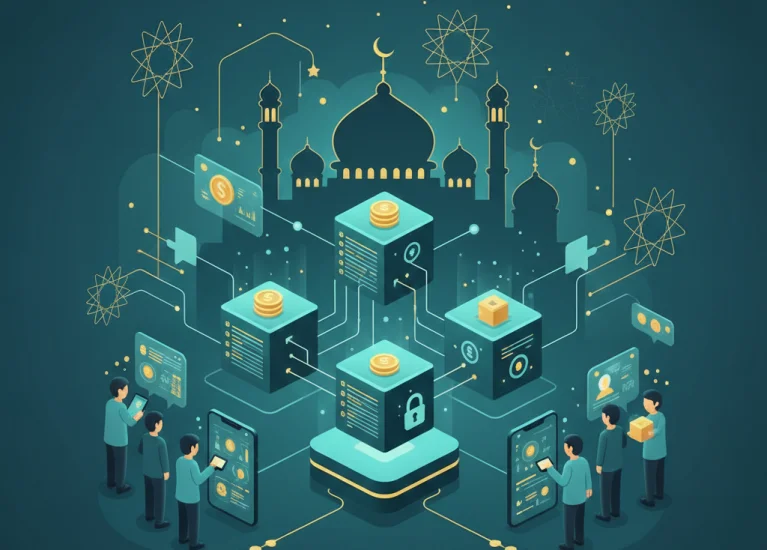
Blockchain technology offers a powerful solution that can strengthen Islamic charity and bring unparalleled clarity to Zakat management.
Understanding Blockchain in Simple Terms
Blockchain is a secure, transparent, and permanent digital ledger.
When donations enter a blockchain system:
- Every transaction is recorded
- Records cannot be altered
- Anyone with permission can verify them
This aligns seamlessly with Islamic values of honesty, accountability, and trustworthiness.
Current Challenges in Zakat Distribution
Even reputable Zakat organizations face limitations such as:
- Limited transparency for donors
- Manual tracking and slow reporting
- Lack of real-time fund updates
- Global trust issues due to fraud incidents
- Difficulty proving that funds were disbursed properly
These challenges can weaken confidence and impact total Zakat collections.
How Blockchain Can Transform Zakat Systems
1. Transparent Zakat Tracking
Blockchain provides complete visibility. Every donation can display:
- Donor amount
- Allocation details
- Beneficiary category
- Actual expenditure record
Donors gain assurance that their Zakat reaches exactly where intended.
2. Tamper-Proof Financial Records
Once a record is added to the blockchain, it cannot be modified or erased. This protects:
- Donor trust
- Institutional credibility
- Integrity of the Zakat system
3. Smart Sharia-Compliant Contracts
Smart contracts can automatically release funds only when Islamic criteria are fulfilled, such as:
- Disbursement only to the eight categories defined in the Quran
- Funds released after beneficiary verification
- Payment allowed only after project completion
This eliminates human manipulation and ensures strict Sharia compliance.
4. Digital Proof of Zakat Payment
Donors can receive:
- Verifiable digital receipts
- Zakat payment certificates
- Transaction references
All stored securely on blockchain for transparency and record-keeping.
5. Strengthening Donor Trust Worldwide
A transparent system increases contributions, especially from:
- Muslims living abroad
- Donors from Gulf countries
- CSR Islamic initiatives
- Major Ramadan charity campaigns
When trust grows, giving increases.
Aligned with Core Islamic Principles
Blockchain supports essential Islamic values, including:
- Amanah (Trust)
- Adl (Justice)
- Ihsan (Excellence)
- Transparency and fairness
- Protection from corruption
It enhances the ethical framework of Zakat.
A Global Vision for the Future
Imagine a world where:
- Every rupee of Zakat is traceable
- Every beneficiary is verified
- Every distribution step is transparent
- No discrepancies are possible
Blockchain has the potential to make this vision a reality.
Important Considerations
To implement blockchain in Zakat systems, organizations will need:
- Structured planning
- Employee training
- Strong Sharia governance
- Compliance with legal and financial regulations
The long-term benefits, however, are substantial.
Conclusion
Blockchain is not meant to replace Islamic charitable institutions. Instead, it empowers them. It provides the Muslim community with a trustworthy system to protect Zakat funds, honour Allah’s command, and ensure that wealth reaches those who deserve it most.
Zakat supported by technology creates a system defined by trust, accountability, and barakah.