 Post by
Running an NGO involves much more than delivering welfare programmes. Teams also have to manage donor records, track contributions, coordinate volunteers, maintain beneficiary information, prepare reports, communicate with supporters, organise documents, and monitor projects. When these tasks are handled manually, administrative work can consume valuable time that could otherwise be spent on community programmes.
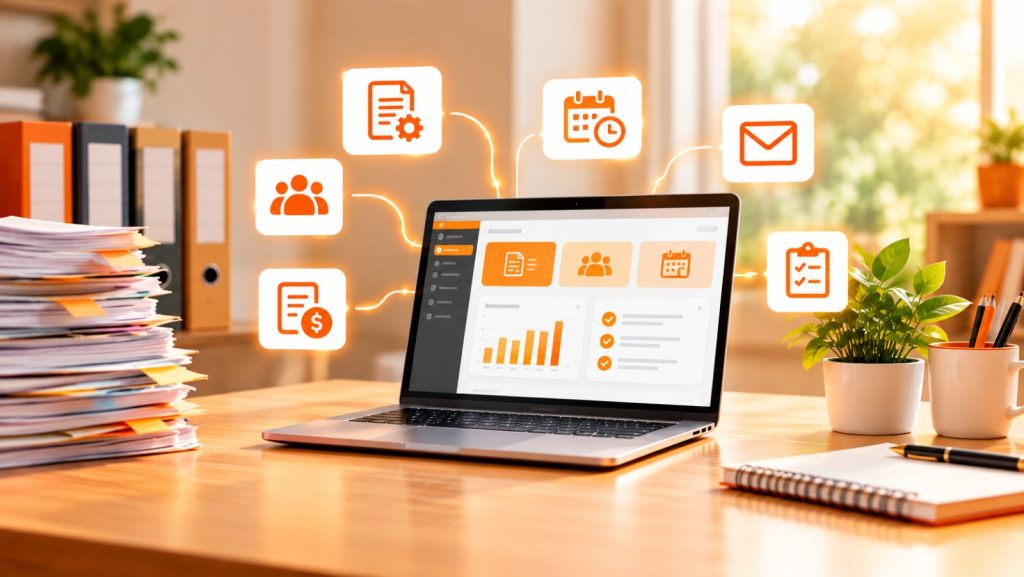
Automation can help NGOs reduce repetitive administrative work by allowing routine tasks to follow predefined processes with less manual intervention. It can support activities such as donation acknowledgements, data entry, reminders, communication, reporting, task management, and record updates.
The goal is not to automate every part of an NGO’s work. Instead, automation should take care of predictable tasks while people remain responsible for decisions, relationships, welfare delivery, and accountability.
What Is Automation in NGO Management?
Automation in NGO management means using digital systems to perform repetitive and rule-based tasks automatically or with minimal manual effort.
For example, instead of a staff member manually recording every contribution, updating several spreadsheets, preparing a follow-up reminder, and creating a basic summary, an integrated system can handle parts of that workflow based on predefined rules.
Common examples include:
- Automatically recording contribution information
- Sending acknowledgement messages
- Creating reminders for follow-ups
- Updating donor records
- Assigning tasks to team members
- Generating routine reports
- Tracking project activities
- Organising recurring communication
- Maintaining centralised records
Automation works particularly well when a task is repetitive, predictable, and governed by clear rules.
Why Do NGOs Spend So Much Time on Administrative Work?
NGOs often operate with limited staff and rely heavily on volunteers. At the same time, their activities can generate a large amount of information.
A single welfare programme may involve:
- Donor contributions
- Fund allocation
- Beneficiary records
- Volunteer activities
- Purchase or expense records
- Project updates
- Communication
- Supporting documents
- Reports
When this information is maintained across notebooks, spreadsheets, email conversations, messaging applications, and separate files, staff may spend considerable time moving information from one place to another.
The problem is not necessarily that the organisation has too many tasks. It may be that the same information is being entered, checked, communicated, or reported repeatedly.
This is where automation can make a practical difference.
How Can Automation Reduce Administrative Work for NGOs?
Automation reduces administrative work by handling repetitive steps within established workflows, allowing staff to focus on tasks that require human judgement and interaction.
Here are some of the most useful applications.
1. Automating Donation Records
Donation processing is a common administrative activity for charities and NGOs.
Without a structured digital workflow, staff may need to:
- Receive contribution information
- Enter donor details
- Update a spreadsheet
- Record the contribution
- Send an acknowledgement
- Update campaign records
- Prepare information for reporting
An automated workflow can reduce the number of manual steps involved.
Once contribution information is captured in the appropriate system, related records can be updated according to predefined processes.
This can make donation administration more consistent and reduce repetitive data entry.
2. Automating Donor Acknowledgements
Thanking supporters is an important part of donor communication.
Instead of preparing every acknowledgement manually, an NGO can create predefined communication workflows for appropriate situations.
For example:
Contribution received → Record updated → Acknowledgement prepared/sent → Donor history updated
Staff can still review and manage exceptions, while routine acknowledgements follow a standard process.
Automation should support genuine donor relationships rather than making every communication feel generic.
3. Automating Follow-Up Reminders
NGO teams often have many follow-ups to remember:
- Donor communication
- Project updates
- Volunteer coordination
- Pending documentation
- Programme activities
- Internal approvals
- Reporting deadlines
Automated reminders can help ensure that routine follow-ups do not depend entirely on someone’s memory or a manually maintained task list.
This is especially useful for small organisations where one person may manage several responsibilities.
4. Automating Recurring Communication
Some communications occur regularly.
For example, an organisation may send:
- Programme updates
- Volunteer reminders
- Event information
- Donor communications
- Internal notifications
Automation can help schedule appropriate recurring communication while allowing staff to review content and make changes when necessary.
Not every communication should be automated. Sensitive situations, major announcements, and personal donor or beneficiary interactions often require human involvement.
How Can Automation Help With Donor Management?
Automation can make donor management more organised by connecting routine actions to donor records.
For example, when a contribution is recorded, a digital system may be able to update the donor’s history and trigger an appropriate follow-up workflow.
This can help teams maintain a clearer picture of:
- Donor history
- Contributions
- Campaign participation
- Communication
- Follow-up activities
- Recurring support
A central donor-management process also reduces the need to search through multiple spreadsheets or communication channels to understand a supporter relationship.
The result is not simply less administrative work. It can also provide staff with better information when they need to communicate with donors.
How Can Automation Improve NGO Fund Management?
Automation can reduce manual work in fund management by helping organisations maintain consistent records of contributions, allocations, and project-related financial information.
For example, when funds are associated with a particular welfare project, the organisation can structure its records so that the relevant contribution and project information are easier to track.
This can help answer practical questions such as:
- Which funds were received?
- Which project are they associated with?
- How much has been allocated?
- What activities are being supported?
- What information needs to be included in a report?
Automation does not replace financial controls or responsible review. It simply reduces unnecessary manual movement of information between processes.
Can Automation Help NGOs Manage Beneficiaries?
Yes, automation can support certain administrative aspects of beneficiary management, particularly where information follows clear and predefined workflows.
For example, an NGO may need to:
- Register beneficiaries
- Update records
- Schedule programme activities
- Track participation
- Identify incomplete administrative information
- Prepare programme summaries
Digital workflows can help ensure that routine record updates and reminders are handled consistently.
However, beneficiary-related decisions can involve complex personal circumstances. Organisations should retain appropriate human oversight and protect beneficiary information carefully.
Automation should assist welfare teams—not make sensitive welfare decisions without responsible human involvement.
How Can Automation Improve Welfare Project Management?
Welfare projects often involve multiple activities, people, deadlines, resources, and reporting requirements.
Automation can help coordinate routine project administration.
For example:
Project created → Activities assigned → Tasks scheduled → Reminders triggered → Progress updated → Report information collected
This creates a more structured workflow for programme teams.
A community organisation running an education-support initiative, for example, might use digital workflows to coordinate volunteer assignments, programme activities, beneficiary records, and periodic reporting.
The project team can then spend more time on programme delivery rather than repeatedly checking spreadsheets and manually sending reminders.
How Can Automation Help With Reporting?
Reporting can become time-consuming when staff have to collect information from multiple sources.
Automation can help by making reporting information available from structured records and reducing repetitive compilation work.
A project report might need information about:
- Contributions
- Fund allocation
- Activities
- Beneficiaries
- Project progress
- Outcomes
- Communication
If these records are maintained systematically, staff can spend less time collecting the same information repeatedly.
Automation can help prepare routine summaries, but human review remains essential. Reports should reflect verified organisational records rather than automatically generated assumptions.
What Are the Benefits of Automating NGO Administration?
The main benefit of automation is that it reduces repetitive manual work while making routine processes more consistent.
1. Saves Staff Time
Employees and volunteers can spend less time on repetitive data entry, reminders, and routine administration.
2. Reduces Repetitive Data Entry
When information can flow between connected processes, staff may not need to enter the same information multiple times.
3. Improves Process Consistency
Predefined workflows can ensure that routine tasks follow the same basic process.
4. Reduces the Risk of Forgotten Tasks
Automated reminders and task workflows can help prevent routine follow-ups from being missed.
5. Supports Better Record Keeping
Structured digital records make information easier to access and maintain.
6. Improves Operational Visibility
When project, donor, contribution, and activity information is organised, managers can gain a clearer view of ongoing work.
7. Helps Small Teams Work More Efficiently
Automation can be especially useful for organisations where the same person handles fundraising, administration, communication, and programme coordination.
What Tasks Should NGOs Automate First?
Not every task is suitable for automation.
The best starting point is usually a task that is:
- Repeated frequently
- Based on clear rules
- Time-consuming
- Low-risk
- Easy to measure
- Currently dependent on manual data entry
Good starting points may include:
Task | Automation Opportunity |
Donation acknowledgement | Trigger standard acknowledgement |
Follow-up | Create reminders |
Data entry | Transfer information between connected records |
Volunteer coordination | Assign routine tasks and reminders |
Reporting | Collect information from structured records |
Communication | Schedule approved recurring messages |
Project tracking | Trigger task updates and reminders |
Record maintenance | Update connected information |
Tasks involving sensitive decisions, complex beneficiary circumstances, or significant organisational judgement should generally receive greater human oversight.
How Can an NGO Identify Processes That Need Automation?
A simple process review can reveal where automation would be useful.
Start by listing routine administrative activities and ask:
How often does this task happen?
A task performed every day or every week may offer more automation value than something that happens once a year.
How much manual effort does it require?
Look for processes involving repeated copying, checking, updating, or sending.
Does the task follow predictable rules?
Predictable workflows are usually easier to automate.
What happens if the task is missed?
Prioritise tasks where reminders or automated follow-ups can improve reliability.
Does the process involve sensitive decisions?
If it does, automation should be designed carefully and should not remove appropriate human oversight.
A Realistic Example: Automating Administration in a Community NGO
Imagine a community organisation running an education-support programme.
The organisation receives contributions from supporters and uses those resources to coordinate educational assistance for beneficiaries.
Before automation, the team might manually:
- Record donor information
- Update contribution spreadsheets
- Send acknowledgements
- Maintain beneficiary records
- Assign volunteer activities
- Track programme progress
- Collect information for reports
A more structured digital workflow could connect these activities.
For example:
Donor → Contribution → Fund Record → Education Project → Beneficiary Activity → Project Update → Report
When routine information is captured correctly, connected administrative steps can require less manual intervention.
Staff can then focus more of their time on programme coordination, communication with the community, and decisions about how the welfare initiative should operate.
The technology does not replace the people running the programme. It reduces some of the administrative friction around their work.
What Are the Common Challenges of NGO Automation?
Automation can create problems if it is introduced without understanding existing processes.
Automating a Bad Process
If an organisation has a confusing workflow, automating it may simply make the confusion happen faster.
The first step should be to simplify the process.
Poor Data Quality
Duplicate or outdated records can produce unreliable automated results.
Before automating, organisations should clean and organise important data.
Too Much Automation
Automating every possible interaction can make processes difficult to manage and can reduce personal communication.
Lack of Staff Training
Employees and volunteers need to understand how automated workflows operate and what they are responsible for checking.
No Exception Handling
Real-world situations do not always follow standard rules. Automated processes should allow staff to intervene when something unusual happens.
Weak Access Controls
Different people may need different levels of access to donor, beneficiary, financial, or project information.
Automation should be accompanied by appropriate access and security practices.
How Can NGOs Automate Without Losing the Human Touch?
The best approach is to automate administration, not relationships.
For example, an NGO can automate the process of recording a contribution while ensuring that important donor conversations remain personal.
It can automate a reminder for a project update while keeping programme decisions with the project team.
It can automate the collection of reporting information while having a staff member review the final report.
A useful rule is:
Automate repetitive actions; retain human responsibility for meaningful decisions.
This balance is particularly important for organisations whose work depends on trust and community relationships.
How Does Automation Support Transparency and Accountability?
Automation can support transparency by creating more structured and consistent records of organisational activities.
When information is recorded systematically, it becomes easier for authorised staff to understand:
- What happened
- When it happened
- Which project it related to
- Which records were updated
- What information is available for reporting
This can help organisations maintain clearer operational records.
However, automation itself does not guarantee transparency. Good governance also requires appropriate policies, responsible record keeping, review processes, access controls, and accountability.
How Does Automation Fit Into Welfare Governance?
Automation is one component of a broader Welfare Governance approach.
Welfare Governance means the structured management of an organisation’s welfare activities, resources, people, projects, beneficiaries, accountability, reporting, and impact.
The broader welfare ecosystem can be viewed as:
Donors → Contributions → Funds → Welfare Projects → Beneficiaries → Outcomes → Reporting → Continued Support
Automation can support many of the administrative connections within this chain.
For example:
- Donor information can be organised automatically.
- Contribution records can support fund tracking.
- Project tasks can trigger reminders.
- Beneficiary programme information can be maintained systematically.
- Reporting information can be collected from structured records.
- Communication workflows can support continued engagement.
This shows why automation should not be viewed simply as a way to reduce data entry. Its greater value comes from helping different parts of welfare management work together more systematically.
What Should NGOs Consider When Choosing Automation Technology?
Before choosing a technology platform, NGOs should consider their actual workflows rather than selecting tools based only on the number of features offered.
Important questions include:
Does It Solve a Real Problem?
Technology should address a genuine administrative challenge.
Can Staff Use It Easily?
A complicated system may create additional work if employees and volunteers struggle to use it.
Can Information Be Connected?
Where appropriate, donor, contribution, project, beneficiary, and reporting information should be able to support related workflows.
Are Access Controls Available?
Different roles may require different levels of information access.
Can Processes Be Reviewed?
Staff should be able to understand what an automated workflow is doing and intervene when necessary.
Can the Organisation Grow With It?
The system should remain useful as the number of donors, projects, beneficiaries, and activities changes.
How Can Small NGOs Start Automation Gradually?
Small NGOs do not need to automate their entire organisation at once.
A practical approach is:
- Map existing administrative processes.
- Identify the most repetitive task.
- Simplify the process before automating it.
- Choose one manageable workflow.
- Train the people who will use it.
- Monitor whether it actually saves time.
- Fix problems before expanding automation.
- Gradually connect additional workflows.
Starting small also makes it easier for staff and volunteers to understand the change.
The purpose is not to create a highly complicated technology environment. It is to remove unnecessary administrative effort.
What Does the Future of NGO Administration Look Like?
The future of NGO administration is likely to involve greater use of connected digital systems, automation, data analysis, and other technology-assisted workflows.
But technology will remain a means rather than the purpose of welfare work.
An effective NGO still needs:
- People who understand community needs
- Responsible leadership
- Strong donor relationships
- Clear welfare objectives
- Good project management
- Appropriate accountability
- Reliable records
- Meaningful engagement with beneficiaries
Automation can make the supporting administrative structure stronger, but it cannot replace the values and human judgement that guide charitable work.
Frequently Asked Questions
What is automation in NGO management?
Automation in NGO management means using digital systems to perform repetitive, rule-based administrative tasks with minimal manual intervention.
How can automation reduce NGO administrative work?
It can automate tasks such as donation acknowledgements, reminders, record updates, routine communication, task coordination, and parts of reporting.
What NGO tasks should be automated?
Start with repetitive, predictable, low-risk tasks such as acknowledgements, reminders, routine data updates, project notifications, and recurring reports.
Can automation help with donor management?
Yes. Automation can help maintain donor records, update contribution histories, trigger appropriate follow-ups, and support routine donor communication.
Can small NGOs benefit from automation?
Yes. Small NGOs can start with one or two repetitive administrative processes and expand gradually as staff become comfortable with the technology.
Does automation replace NGO employees?
No. Automation is best used to reduce repetitive administrative work while people retain responsibility for welfare decisions, relationships, oversight, and accountability.
How does automation improve NGO transparency?
Structured automated workflows can create more consistent records and make relevant information easier for authorised staff to track and report.
What is the connection between automation and Welfare Governance?
Automation can support Welfare Governance by connecting administrative workflows across donors, contributions, funds, welfare projects, beneficiaries, outcomes, and reporting.
How NidhiMax Can Help
Reducing administrative work is most effective when automation is part of a broader and organised welfare-management system.
NidhiMax — Welfare Governance Platform is designed to help charitable organisations, NGOs, trusts, community organisations, and welfare institutions move toward a more organised digital welfare-management ecosystem.
For organisations looking to reduce manual administration, the starting point is understanding how their fundraising, donor management, contribution tracking, welfare projects, beneficiary management, communication, and reporting processes connect with one another.
A structured welfare governance approach can help organisations move away from disconnected administrative activities and toward clearer workflows, better coordination, and stronger visibility across welfare operations.
Every organisation has different needs. The right technology should therefore be selected according to the organisation’s actual processes, team structure, and welfare objectives.
To learn more about building a more organised approach to welfare management, explore