 Post by

Raising funds is one of the most important responsibilities of an NGO, charitable trust, or community organisation. Yet many organisations still depend heavily on personal networks, local fundraising events, and occasional appeals. These methods can be valuable, but they may limit how far an organisation can reach and how consistently it can engage potential donors.
Digital fundraising helps NGOs raise awareness, reach supporters online, accept contributions through suitable digital channels, and maintain communication with donors. When managed carefully, it can support fundraising for education, healthcare, food distribution, emergency relief, and other welfare initiatives.
However, successful digital fundraising involves more than sharing a donation link. Organisations need a clear fundraising objective, trustworthy campaign information, a convenient donation process, reliable financial records, and regular updates about how funds are used.
This guide explains how NGOs in India can plan digital fundraising campaigns, choose appropriate online channels, build donor trust, measure results, and connect fundraising with the wider management of welfare projects.
What Is Digital Fundraising for NGOs?
Digital fundraising is the process of using online channels and digital payment methods to raise money for charitable activities. NGOs can use donation pages, websites, payment gateways, fundraising platforms, email, social media, messaging applications, and other digital tools to communicate with potential donors and receive contributions.
Unlike a fundraising event that takes place at a particular location, a digital campaign can reach supporters in different communities and locations. It can also make it easier to share updates, maintain contribution records, and communicate with donors after a campaign.
For example, an NGO supporting children’s education could publish a campaign explaining its learning-support programme, share the appeal through its website and social channels, accept contributions through an appropriate digital payment facility, and report how the funds were used.
The central principle is simple: digital fundraising connects an organisation’s cause with potential supporters through accessible online channels. The organisation must still manage the resulting contributions responsibly.
Why Is Digital Fundraising Important for NGOs in India?
Digital fundraising gives NGOs another way to communicate their work, reach potential supporters, and make giving more convenient. It can be especially useful for organisations that want to engage people beyond their immediate geographic area or organise campaigns around specific welfare needs.
Its practical benefits include:
- Wider audience reach: Campaigns can be shared with existing supporters and new audiences through websites, email, and social media.
- Convenient giving: Donors can contribute through suitable online payment methods without attending an in-person event.
- Campaign-specific appeals: Organisations can explain a particular need, such as school materials, healthcare support, or emergency assistance.
- More organised records: Digital transaction reports can help teams record contributions and reconcile payments.
- Ongoing donor communication: Organisations can send acknowledgements, progress updates, and reports through appropriate channels.
- Performance measurement: Teams can review visits, donations, campaign costs, and donor engagement to improve future fundraising.
Digital fundraising does not automatically produce more donations. Results depend on the relevance of the cause, the credibility of the organisation, the quality of its communication, the ease of giving, and the way supporters are treated.
For smaller NGOs, the best starting point is usually a fundraising process they can manage consistently rather than a complicated digital setup they cannot maintain.
What Are the Main Digital Fundraising Methods NGOs Can Use?
NGOs can combine several digital fundraising methods, depending on their objectives, donor preferences, available resources, and compliance requirements.
1. Online Donation Pages
An online donation page provides a dedicated place where supporters can understand a cause and make a contribution. It may be hosted on an organisation’s website or provided through a suitable fundraising service.
A useful donation page should explain:
- The organisation and its charitable work.
- The specific problem the campaign addresses.
- The proposed use of donations.
- The fundraising target, where appropriate.
- The accepted payment methods.
- How supporters can contact the organisation.
- How campaign progress or expenditure will be reported.
Keep the process straightforward, especially for mobile users. Avoid unnecessary form fields and make sure that donors can identify the organisation receiving their money.
2. UPI and QR-Code Fundraising
UPI and QR codes can make it convenient for supporters in India to contribute through compatible payment applications. An NGO may use an appropriate organisational payment arrangement and share verified payment details through its campaign materials.
Before using a QR code, check the recipient information, test the payment process, and confirm that funds reach the intended account. Reconcile transactions against the relevant payment or bank records rather than relying only on payment screenshots.
The campaign should also explain how donors can verify the recipient. If a QR code is printed on a poster or shared through WhatsApp, ensure it remains clear and functional.
3. Fundraising Platforms and Payment Gateways
Online fundraising platforms may provide campaign pages, sharing tools, payment processing, and contribution records. A payment gateway can help an organisation accept supported digital payment methods through its website or donation page.
Before choosing a provider, compare its eligibility requirements, fees, settlement process, payment options, reporting facilities, refund procedures, security practices, and customer support.
Also confirm how the money will be received, which party is responsible for maintaining the transaction records, and whether the provider supports your organisation’s specific fundraising arrangement. Check the current terms instead of assuming that every platform accepts every type of organisation or campaign.
4. Social Media Fundraising
Social media can help NGOs explain their work through short updates, photographs, videos, stories, and campaign announcements.
A campaign post should communicate the need clearly and guide interested supporters to a verified donation option. Use genuine project information and obtain appropriate permission before sharing identifiable beneficiary photographs, stories, or personal details.
Rather than publishing repeated requests for money, vary the content. Explain the problem, show what the organisation is doing, answer common questions, and share progress. This gives people useful information before they decide whether to donate.
5. WhatsApp and Email Fundraising
WhatsApp and email can help NGOs reach existing donors, volunteers, community members, and other supporters directly.
A good fundraising message is specific and easy to understand. State why support is needed, how the contribution will be used, and where people can find more information. Share verified links and avoid sending repeated unsolicited requests.
For an established donor, a relevant project update may be more useful than another general donation appeal. Respect communication preferences and provide a reasonable way for supporters to stop receiving messages.
6. Recurring Donation Campaigns
A recurring donation campaign invites supporters to contribute regularly rather than only once. Depending on the payment arrangement, recurring contributions may be scheduled monthly or at another agreed interval.
Regular donations can help an NGO plan ongoing activities such as learning support, community meals, or other continuing programmes. However, the organisation should explain the payment frequency, amount, cancellation process, and intended use of contributions clearly.
Do not assume that every supporter wants to commit to recurring payments. Offer the choice without making one-time donors feel less valued.
How Can an NGO Create a Digital Fundraising Campaign Step by Step?
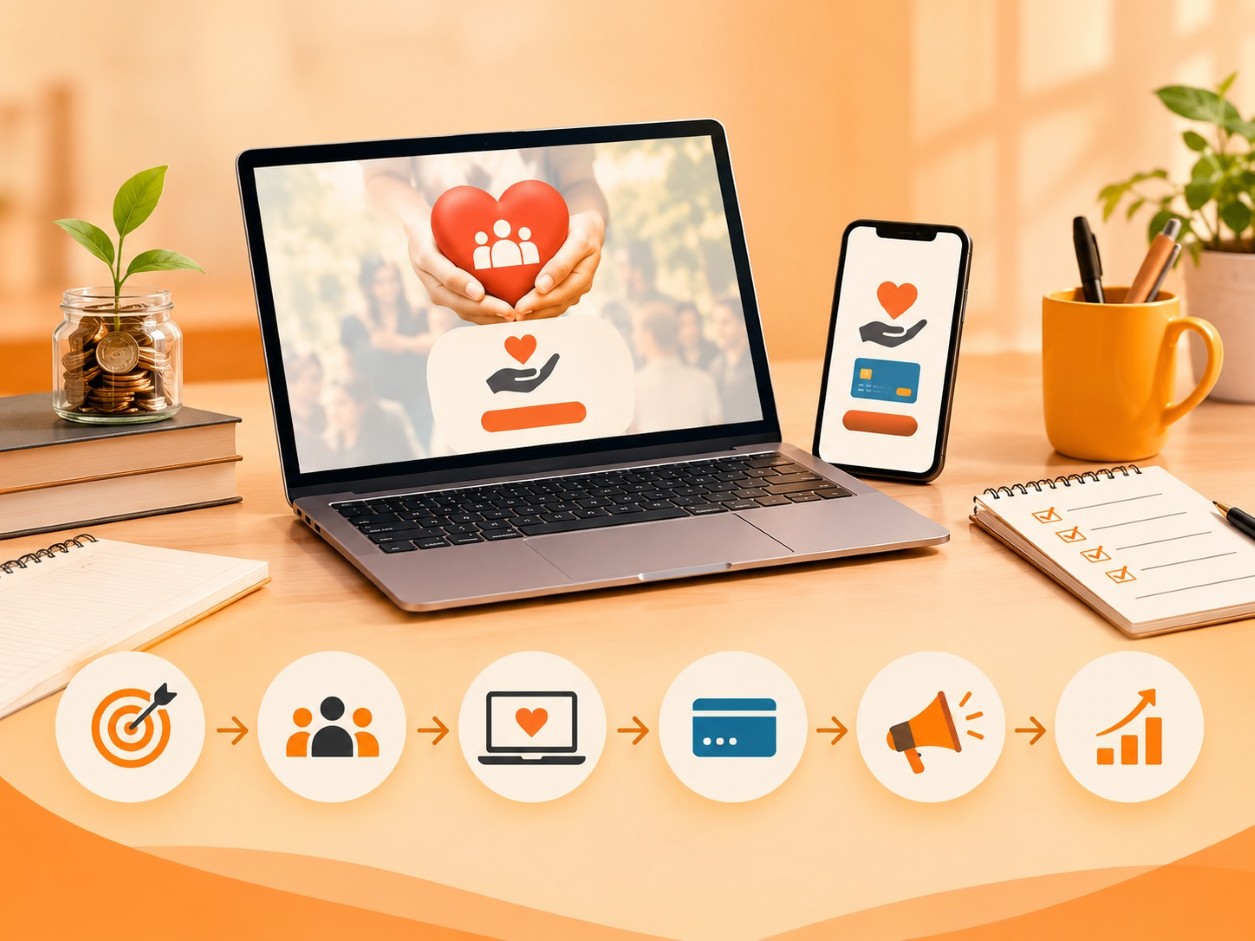
A digital fundraising campaign is easier to manage when the organisation defines the objective first, prepares accurate information, chooses suitable channels, tests its donation process, and assigns responsibility for records and reporting.
Step 1: Set a Clear Fundraising Objective
Identify exactly what the organisation wants to fund. An objective such as “support our community” is broad, while “raise funds for learning materials for children enrolled in our education-support programme” gives potential donors a clearer reason to engage.
Prepare a realistic budget based on actual project requirements. Include relevant costs and document the assumptions behind the target.
Step 2: Understand the Intended Donor Audience
Consider who may be interested in supporting the cause. Existing donors, alumni, local businesses, community groups, former beneficiaries, and members of the public may respond to different messages.
The organisation does not need to target everyone. A focused campaign for people who understand the cause may be easier to explain and manage than a broad appeal without a defined audience.
Use donor information responsibly and avoid collecting or using personal details without an appropriate basis.
Step 3: Choose the Right Digital Channels
Select channels that match the audience and the team’s capacity. A small community organisation might use a clear donation page and share it with existing supporters. An NGO with an established website and email list may combine those channels with social media.
Decide who will publish the campaign, respond to enquiries, verify payments, update donor records, and prepare progress reports.
Step 4: Prepare the Campaign Page and Message
Explain the welfare problem, the action the NGO plans to take, and how the funds will be managed. Use accessible language and provide enough organisational information for donors to assess the appeal.
Where appropriate, use realistic examples to explain what particular contribution amounts could support. Base these examples on actual project costs, and avoid implying that a donation will have a specific result unless that claim is accurate.
Step 5: Test the Donation Journey
Before promoting the campaign, test the donation page, payment details, QR code, mobile display, and confirmation process.
Make sure that staff know how to handle failed or delayed payments and where to check completed transactions. If a payment provider offers transaction reports, learn how to access and reconcile them.
A confusing or unreliable payment process can discourage donors even when they strongly support the cause.
Step 6: Promote the Campaign Consistently
Share the campaign through the selected channels and adjust the message for each audience. Explain why the campaign matters and include a clear way to contribute.
Use a simple communication calendar that includes the launch, meaningful progress updates, important milestones, and the final report. The frequency should suit the campaign and the preferences of supporters.
Step 7: Record Donations and Follow Up
Record verified contributions, match them with payment references, and link them to the relevant campaign or project. Acknowledge donors through an appropriate process and keep records of acknowledgements where needed.
After the campaign, share an update describing the funds received, relevant expenditure, activities completed, and next steps. If the target was not met or the intended plan changes, communicate that honestly.
How Can NGOs Choose the Right Digital Fundraising Strategy?
The right digital fundraising strategy depends on the organisation’s size, cause, existing donor relationships, available staff, and ability to manage funds and records. NGOs should begin with a manageable plan and expand when they have the capacity to do so.
A practical assessment can include the following questions:
Consideration | What the NGO should evaluate |
Fundraising objective | Is the campaign for a specific project or continuing operations? |
Donor audience | Which supporters are most likely to understand the cause? |
Payment process | Can donors contribute through a clear, verified method? |
Costs | What fees or operating expenses affect the amount received? |
Record-keeping | Can the organisation match contributions with actual transactions? |
Team capacity | Who will manage the campaign, donor enquiries, and reports? |
Compliance | What legal, tax, banking, and platform requirements apply? |
Reporting | How will the organisation communicate progress and fund use? |
A small NGO does not need to use every available channel. It may be better to maintain one reliable donation process, communicate consistently, and keep accurate records than to run several campaigns that the team cannot coordinate.
How Can NGOs Build Trust With Digital Donors?
Donors are more likely to understand and evaluate an appeal when an NGO communicates clearly, provides verifiable payment information, manages money responsibly, and reports what happened after fundraising.
Trust-building practices include:
Explain the purpose of the appeal. Clearly describe the welfare need and how donations are intended to support the work.
Make organisational information accessible. Provide accurate details about the organisation, its activities, and the appropriate way to contact it.
Use verified payment arrangements. Check the recipient details and monitor transactions rather than assuming that a shared link or screenshot confirms receipt.
Provide appropriate acknowledgements. Confirm contributions through the organisation’s established process and avoid promising tax benefits unless the relevant conditions are met.
Report fund use honestly. Explain how the campaign progressed, what was spent, what was delivered, and what remains to be done.
Protect donor and beneficiary information. Limit access to sensitive records and obtain appropriate permission before publishing identifiable stories or images.
Be transparent when plans change. If an emergency passes, a target is missed, or a project needs to change, explain the situation and follow the campaign’s stated terms and applicable requirements.
Credibility is built through consistent conduct. A polished campaign page cannot replace accurate records and honest reporting.
What Legal and Compliance Issues Should NGOs Consider in India?
NGOs should review the legal, tax, banking, and platform requirements relevant to their legal structure and fundraising activities before launching a digital campaign. The applicable requirements may vary by organisation, contribution type, donor circumstances, and use of funds.
Important considerations include:
- Organisational documentation: Ensure that the organisation’s registration information, authorised representatives, and bank or payment-provider details are appropriate and current.
- Tax deduction claims: Do not advertise tax benefits merely because an organisation is charitable. Donor deductions under Section 80G depend on the applicable rules and the recipient institution’s eligibility and approval. Consult the official Income Tax Department guidance on Section 80G.
- Foreign contributions: Contributions that fall within India’s foreign contribution rules may be regulated under the Foreign Contribution (Regulation) Act, 2010 (FCRA). An NGO should review official Ministry of Home Affairs FCRA resources and obtain qualified advice before accepting funds that may be covered by these rules.
- Accounting and receipts: Maintain records of income, expenses, transaction references, and donor acknowledgements as required for the organisation’s activities and obligations.
- Privacy and security: Protect personal information, limit access to financial records, and check the terms of the digital services being used.
- Accurate appeals: Ensure that descriptions of the cause, intended use of donations, project progress, and beneficiary needs are truthful.
This is general information, not legal, tax, or financial advice. An organisation should consult a qualified professional about its particular circumstances. Regulatory requirements can change, so check the latest official guidance before acting.
What Common Digital Fundraising Mistakes Should NGOs Avoid?
NGOs can reduce avoidable fundraising problems by planning the campaign carefully and establishing clear procedures before accepting donations.
Common mistakes include:
- Using a vague fundraising appeal: Donors need to understand the purpose and intended use of contributions.
- Choosing a payment method without checking its terms: Fees, settlement timelines, eligibility requirements, and reporting facilities can affect day-to-day operations.
- Failing to verify payments: A message or screenshot alone may not establish that funds have reached the intended account.
- Keeping fragmented records: Information spread across personal chats, paper files, and multiple spreadsheets can make reconciliation difficult.
- Making unsupported claims: Exaggerated impact statements, unverified urgency, or inaccurate tax-benefit promises can harm credibility.
- Ignoring donor communication: Supporters need clear acknowledgements and meaningful updates, not only repeated donation requests.
- Collecting excessive personal information: Gather only what is reasonably needed for the activity and handle it responsibly.
- Failing to report project outcomes: Without a clear account of activities and expenditure, the organisation may struggle to explain what donations achieved.
A written process for campaign approval, payment verification, record maintenance, expense approval, and reporting can help staff and volunteers manage these responsibilities consistently.
How Should NGOs Measure Digital Fundraising Success?
NGOs should measure digital fundraising through a combination of financial results, campaign engagement, donor experience, and the welfare activities supported by the funds. The total amount raised is useful, but it does not show the entire performance of a campaign.
Depending on the campaign, useful measures include:
- Total amount received: The value of donations actually received and verified.
- Number of completed donations: How many contributions were successfully completed.
- Donation-page conversion rate: The proportion of relevant page visitors who complete a donation, when reliable visitor and transaction data are available.
- Average donation amount: Total verified donation value divided by the number of completed donations.
- Fundraising costs: Relevant advertising, platform, payment-processing, and campaign expenses.
- Repeat-donor activity: The number or share of supporters who contribute again, where records allow this to be measured appropriately.
- Acknowledgement and response time: How promptly the organisation handles donor communication.
- Project delivery: Whether funds support the activities described in the campaign.
- Reporting completion: Whether the organisation publishes or shares an accurate account of fund use and progress.
For example, a campaign may collect its target amount but incur higher-than-expected costs or leave the team unable to reconcile payments. Another campaign may raise less money but bring new supporters who continue to engage with the organisation. These results require different responses.
Use measurement to identify what should change, not simply to rank campaigns by donation totals.
Example: How Can an NGO Run a Digital Fundraising Campaign for Education?
Imagine a community organisation supporting 100 children through an education programme. The organisation needs funds for learning materials and related educational activities.
It begins by preparing a budget and a campaign page explaining the need, the proposed activities, and the intended use of contributions. The fundraising team shares the campaign with existing supporters through email and WhatsApp, while the organisation publishes project information on its website or another suitable online channel.
As contributions arrive, the team verifies the payments, records each transaction, and links it to the education campaign. Staff or volunteers track purchases and distribution of learning materials while keeping appropriate records and protecting children’s personal information.
The organisation then compares the original plan with actual spending and completed activities. It shares a progress report with donors that explains how much was received, how the funds were used, what support was delivered, and what remains.
The full process connects:
Donors → Contributions → Funds → Education Project → Beneficiaries → Outcomes → Reporting → Continued Support
This example illustrates why online fundraising should be connected to project management and accountability. Collecting a contribution is the first step; using it responsibly and reporting the outcome complete the cycle.
How Does Digital Fundraising Connect With Welfare Governance?
Digital fundraising is one part of welfare governance, which means the structured management of an organisation’s welfare activities, resources, people, projects, beneficiaries, accountability, reporting, and impact.
A charity may have a successful donation campaign yet struggle to explain which project received the funds, how money was allocated, what activities were completed, or which beneficiaries received support. This often happens when fundraising information is managed separately from finance, project, and beneficiary records.
A more organised welfare-management process connects these activities:
- Donor management: Maintain appropriate records of supporters and their communication preferences.
- Contribution tracking: Record and reconcile donations against payment records.
- Fund management: Document allocation and expenditure in line with organisational procedures and any applicable restrictions.
- Welfare project management: Connect funds with planned activities, responsibilities, and delivery records.
- Beneficiary management: Maintain appropriate and protected records of the assistance delivered.
- Reporting and accountability: Explain how resources were used and what the organisation accomplished.
Digital tools can support these connections, but technology alone does not guarantee transparency. Clear responsibilities, sound financial procedures, accurate data, and regular review remain essential.
For an NGO, the larger goal is to build a dependable process through which fundraising supports real welfare activities and those activities can be explained with accurate records.
Frequently Asked Questions
What is digital fundraising for NGOs?
Digital fundraising is the use of online channels, such as donation pages, websites, social media, email, and digital payment methods, to raise funds for charitable activities.
How can NGOs start digital fundraising in India?
An NGO can begin by defining a clear fundraising objective, preparing accurate campaign information, choosing an appropriate online donation method, testing the payment process, and setting up reliable transaction records.
Which digital fundraising methods are suitable for NGOs?
Options include online donation pages, UPI and QR codes, payment gateways, fundraising platforms, social media campaigns, email appeals, WhatsApp communication, and recurring donation arrangements.
Can NGOs collect donations through WhatsApp?
Yes. NGOs can share campaign information and verified donation links through WhatsApp. They should communicate the purpose clearly, avoid misleading appeals, respect supporters’ communication preferences, and verify incoming payments.
How can NGOs build trust with online donors?
NGOs can build trust by explaining how funds will be used, providing verified payment details, maintaining accurate financial records, acknowledging donations appropriately, protecting personal information, and reporting campaign progress honestly.
How can NGOs track digital donations?
NGOs should record verified transactions, including dates, amounts, payment references, campaign details, and relevant donor information. They should reconcile records with bank or payment-provider statements and maintain appropriate supporting documents.
What compliance requirements apply to digital fundraising in India?
Requirements depend on the organisation and its fundraising activities. NGOs should review applicable registration, accounting, tax, payment-provider, privacy, and foreign-contribution requirements. Qualified professional advice may be necessary.
How can digital fundraising support welfare governance?
Digital fundraising can connect donors and contributions with fund allocation, welfare projects, beneficiary support, and outcome reporting. This helps an organisation manage the journey from collecting donations to accounting for the activities those donations support.
NidhiMax Conclusion
How NidhiMax Can Help NGOs Build a Better Welfare Governance System
Digital fundraising can help NGOs reach supporters and mobilise resources for important causes. Sustaining that work, however, requires more than collecting donations. Organisations need to maintain reliable records, coordinate welfare projects, manage beneficiary information responsibly, and communicate progress to supporters.
As operations grow, keeping fundraising information, contribution records, project activities, and reports in disconnected systems can create additional work. A structured digital approach can help organisations work towards better coordination and accountability.
NidhiMax — Welfare Governance Platform focuses on helping charitable organisations, NGOs, trusts, community organisations, and welfare institutions move towards a more organised digital welfare-management ecosystem.
Every organisation has different needs. A suitable approach should reflect its existing processes, team capacity, reporting responsibilities, and welfare objectives rather than introduce unnecessary complexity.