
 Post by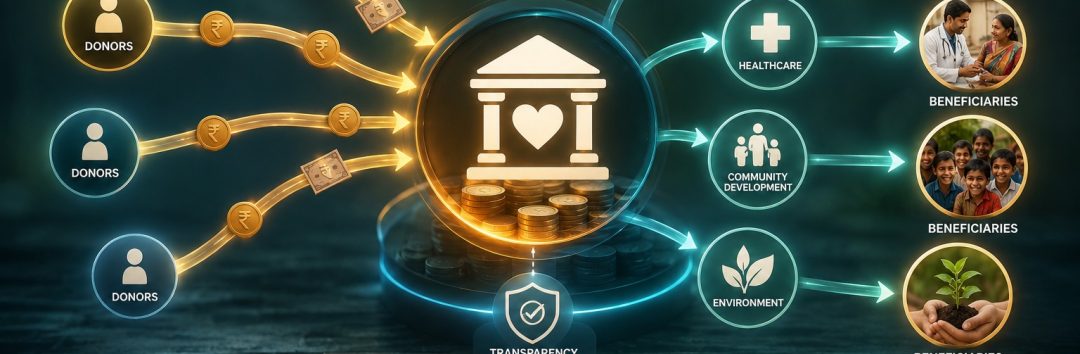
Digital fundraising has created new opportunities for NGOs, charitable trusts, community organisations, and welfare institutions to connect with supporters. Instead of relying only on physical events, personal networks, or traditional fundraising campaigns, organisations can now use digital channels to share their work, communicate with donors, and make contributing more convenient.
However, simply creating a donation page or posting an appeal on social media is rarely enough. Effective digital fundraising requires a clear message, a trustworthy supporter experience, organised donor management, and consistent communication after a contribution is received.
For NGOs in India, the most useful approach is usually to combine several digital fundraising methods rather than depend on one channel. The goal is to make it easy for the right people to discover the organisation, understand the welfare project, contribute through appropriate channels, and see how their support contributes to meaningful outcomes.
This guide explains the best digital fundraising methods for NGOs in India and how organisations can build a more organised approach to fundraising, donor relationships, transparency, and welfare management.
What Is Digital Fundraising for NGOs?
Digital fundraising is the use of online channels and digital tools to attract supporters, collect contributions, communicate with donors, and manage fundraising activities. It can include an organisation’s website, online donation campaigns, social media, email, messaging platforms, digital events, and other online engagement methods.
For a charitable organisation, digital fundraising should not be viewed only as a way to collect money online. A good digital fundraising process connects several stages:
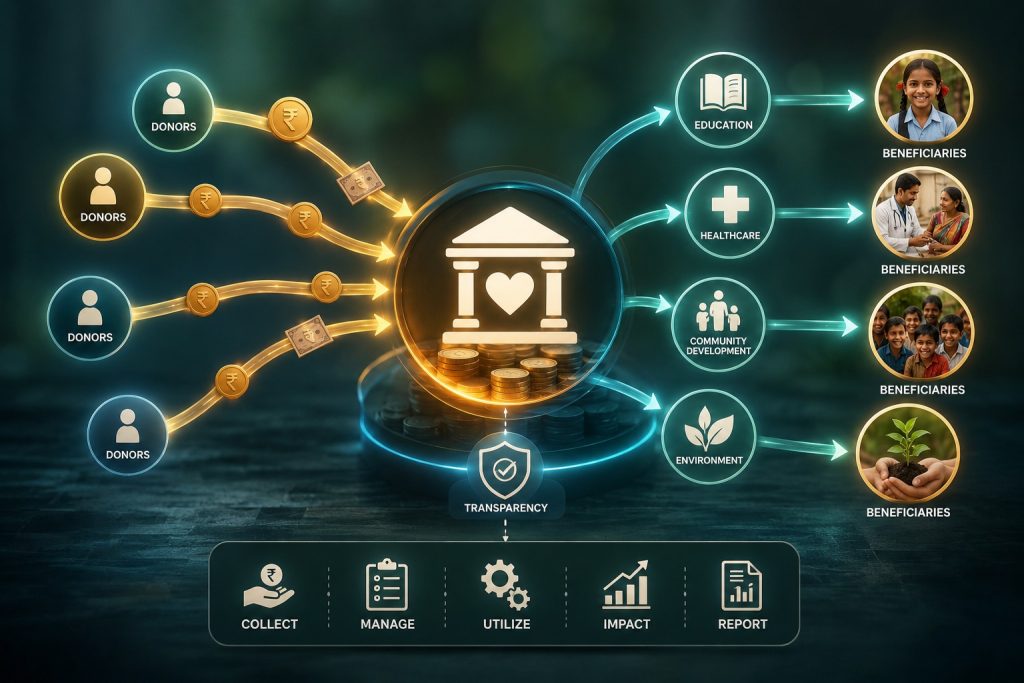
Donors → Contributions → Funds → Welfare Projects → Beneficiaries → Outcomes → Reporting → Continued Support
When these stages are connected properly, an organisation can build stronger relationships with supporters and improve its ability to explain how resources are being used.
Why Should NGOs Use Digital Fundraising?
NGOs should use digital fundraising because it can help them reach supporters beyond their immediate physical network, communicate more regularly, and create more convenient ways for people to engage with welfare causes.
A local community organisation may be doing valuable work but have limited visibility outside its neighbourhood. Digital channels can help it tell its story to former volunteers, families, professionals, supporters, and other communities who may care about its work.
Digital fundraising can also support:
- Wider awareness of welfare projects
- More regular communication with supporters
- Easier sharing of fundraising campaigns
- Better organisation of donor information
- Faster campaign updates
- Greater visibility into fundraising progress
- More opportunities to encourage recurring support
- Improved reporting and accountability
The method itself is not the most important factor. What matters is whether the organisation has a clear cause, credible communication, an organised process, and a meaningful relationship with supporters.
Build a Clear and Trustworthy NGO Website
An NGO website can serve as a central digital home where supporters learn about the organisation, understand its welfare work, and find appropriate ways to contribute or get involved.
Social media posts can attract attention, but an organisation-controlled website provides a more permanent place to explain its mission and activities.
A useful website can include information such as:
- The organisation’s mission and areas of work
- Current and completed welfare projects
- The communities or beneficiaries being supported
- Clear explanations of specific fundraising needs
- Project updates and stories
- Appropriate contact information
- Information about how supporters can contribute
- Updates on activities and outcomes
Make the fundraising purpose specific
Compare these two appeals:
General:
“Please support our NGO and help us continue our work.”
Specific:
“We are raising support for an education programme that provides learning materials and academic assistance to children from low-income families in our community.”
The second message gives supporters more context. A donor should be able to understand:
- What problem exists?
- Who needs support?
- What will the funds help with?
- What does the organisation plan to do?
- How can the donor stay informed?
Clarity is one of the foundations of donor trust.
Use Online Donation Campaigns for Specific Projects
Project-based digital campaigns work best when supporters can clearly understand the purpose of the fundraising effort and the intended use of the funds.
Rather than asking people to contribute to a broad and undefined cause, an NGO can create campaigns around specific welfare needs.
For example, a community organisation might run separate fundraising initiatives for:
- Educational support
- Healthcare assistance
- Food distribution
- Emergency relief
- Community development
- Livelihood support
- Shelter or rehabilitation activities
A campaign should clearly explain the need without making unsupported promises or exaggerated claims.
A simple campaign structure
A strong campaign can answer five questions:
The need: What problem requires attention?
The people: Who is expected to benefit?
The project: What activity will the organisation carry out?
The support: What will contributions help fund?
The updates: How will supporters learn about progress?
This structure can be used across a website, email campaign, social media post, or messaging communication.
Use Social Media to Build Relationships, Not Just Ask for Donations
Social media is most effective for NGO fundraising when it consistently helps people understand and connect with the organisation’s work instead of being used only for repeated donation appeals.
A common challenge is posting fundraising requests without giving supporters enough reason to remain engaged between campaigns.
A stronger content approach can include a mix of:
- Stories about welfare projects
- Educational content about the problem being addressed
- Project progress updates
- Volunteer activities
- Behind-the-scenes operational work
- Community needs
- Milestones and completed activities
- Responsible stories about impact
- Occasional, clear fundraising appeals
For example, an organisation working on food distribution could share information about the community need, explain how its distribution activities are organised, provide project updates, and then invite supporters to contribute to a specific upcoming initiative.
This creates context around the fundraising request.
Keep the call to action simple
Every fundraising post should have a clear next step. Depending on the campaign, that could mean:
- Learn more about the project
- Visit the organisation’s website
- Share the campaign
- Register as a volunteer
- Contribute to the initiative
- Follow future project updates
Avoid trying to ask for too many actions in one post.
Can NGOs Use Email for Digital Fundraising?
Yes. Email can help NGOs maintain direct communication with existing supporters and share fundraising opportunities with people who have already shown interest in the organisation’s work.
The value of email is not simply sending more donation requests. It gives an organisation an opportunity to communicate over time.
A useful email programme might include:
- Welcome messages for new supporters
- Updates on current welfare projects
- Stories explaining the purpose of specific initiatives
- Campaign announcements
- Progress reports
- Invitations to events or volunteer activities
- Thank-you messages after contributions
- Periodic updates showing what happened after a campaign
Segment communication where possible
Not every supporter has the same relationship with an organisation.
For example, a charity may communicate differently with:
- First-time donors
- Recurring supporters
- Former donors
- Volunteers
- Event participants
- Supporters interested in a particular welfare area
Organised donor information can help an NGO send more relevant communication instead of sending the same message to everyone.
How Can NGOs Use WhatsApp and Messaging for Fundraising?
Messaging platforms can support digital fundraising by helping NGOs communicate directly, share timely campaign information, and maintain relationships with supporters who have chosen to receive updates.
For organisations in India, messaging can be particularly useful for community communication and campaign sharing. However, fundraising messages should be relevant and respectful.
Useful communication may include:
- A short explanation of an urgent campaign
- A link to more information
- Project updates
- Event reminders
- Thank-you messages
- Follow-up communication with interested supporters
The key is permission and relevance. Repeated unsolicited fundraising messages can damage supporter relationships.
A simple approach is to provide supporters with useful updates first and ensure that donation requests are connected to a clear welfare need.
Use Digital Storytelling to Explain Why Support Is Needed
Digital storytelling helps supporters understand the human purpose behind a welfare project, but it should always be accurate, respectful, and mindful of the dignity and privacy of beneficiaries.
Numbers and budgets can explain a project, but stories can help people understand why the work matters.
For example, instead of only saying that an education initiative requires funding, an organisation could explain:
- The challenge children in the community face
- What type of educational support is being organised
- How the programme is delivered
- What resources are needed
- What progress the organisation hopes to monitor
Where real beneficiary stories are used, organisations should handle personal information responsibly and avoid exploiting hardship simply to create emotional fundraising content.
A good story should create understanding, not sensationalism.
Encourage Supporters to Start Their Own Fundraising Campaigns
Peer-to-peer fundraising can help an NGO expand its reach by enabling supporters, volunteers, and community members to share a cause with their own networks.
People often trust recommendations from friends, family members, colleagues, and communities they already know.
A supporter may be willing to organise:
- A birthday fundraising appeal
- A community campaign
- A workplace initiative
- A digital challenge
- A volunteer-led fundraising event
- A campaign around a specific welfare project
The organisation should provide participants with accurate campaign information, approved communication materials where appropriate, and clear guidance about the purpose of the fundraising effort.
The organisation should also have a process for tracking and acknowledging the support generated through these campaigns.
Use Online Events to Combine Awareness and Fundraising
Digital events can help NGOs bring supporters together around a cause while creating opportunities for education, engagement, and fundraising.
Possible formats include:
- Webinars
- Expert discussions
- Community meetings
- Online workshops
- Digital cultural programmes
- Awareness sessions
- Virtual fundraising events
The fundraising request should be connected naturally to the event.
For example, an organisation working on healthcare assistance could organise an educational session about a relevant community challenge and explain how its welfare programme addresses identified needs. Supporters can then learn about the work before deciding whether and how they wish to contribute.
Build Recurring Support Into Your Digital Fundraising Strategy
Recurring donations can help an NGO build a more predictable base of support by giving willing donors an opportunity to contribute regularly rather than only responding to one-time campaigns.
A supporter may prefer to make a smaller regular contribution instead of making occasional larger donations. However, recurring support should be based on trust and clear communication.
To encourage continued support:
- Explain the ongoing nature of the welfare need.
- Show what regular contributions help the organisation plan.
- Communicate with supporters after they contribute.
- Share meaningful project updates.
- Make it easy to understand or manage the arrangement through the relevant donation process.
- Treat recurring donors as long-term partners rather than simply a source of repeated transactions.
The strongest recurring donor relationship is built after the first contribution, not before it.
How Can NGOs Build Trust in Digital Fundraising?
NGOs can build digital fundraising trust through clarity, consistent communication, responsible management of contributions, and meaningful reporting on welfare activities.
A supporter should not have to guess what happens after a donation.
Organisations can strengthen accountability by maintaining organised records and communicating appropriately about:
- The purpose of a fundraising campaign
- Contributions received for the initiative
- Welfare activities undertaken
- Project progress
- Challenges or changes where relevant
- Outcomes and future needs
Transparency does not mean publishing every internal detail without context. It means communicating clearly enough for stakeholders to understand how the organisation approaches its responsibilities.
A Practical Example: Raising Funds for a Community Education Project
Imagine a community organisation in India that plans to support 100 children through an education initiative. The organisation needs funds for learning materials, programme activities, and other planned support.
A digital fundraising strategy could look like this:
Step 1: Define the project clearly
The organisation documents:
- Who the programme is intended to support
- What type of educational assistance is planned
- What activities will be carried out
- What resources are needed
- How progress will be monitored
Step 2: Create a focused fundraising campaign
Instead of a general message asking people to “support education,” the organisation explains the specific programme and why it requires support.
Step 3: Share the campaign through several digital channels
The organisation may use:
- Its website
- Social media
- Email communication
- Supporter and volunteer networks
- Appropriate messaging channels
- Online awareness events
Step 4: Organise donor and contribution information
As contributions are received, the organisation maintains accurate records of donors and contributions and keeps fundraising information organised.
Step 5: Connect funds to welfare activities
The fundraising team should not operate entirely separately from the people managing the project. There should be an understandable connection between:
Contributions → Available funds → Planned activities → Beneficiary support
Step 6: Communicate progress
Supporters receive appropriate updates about activities and progress.
Step 7: Report outcomes and continue the relationship
When the organisation can explain what activities were carried out and what outcomes were observed, supporters have a stronger basis for continued engagement.
This example shows why digital fundraising is part of a larger organisational process. Collecting donations is only the beginning.
What Are the Biggest Challenges in Digital Fundraising?
The biggest digital fundraising challenges are usually trust, visibility, limited staff capacity, inconsistent communication, fragmented donor information, and difficulty connecting fundraising data with actual welfare outcomes.
Some common problems include:
Treating every supporter the same
A first-time donor, long-term supporter, volunteer, and event participant may each require different communication.
Focusing only on acquiring new donors
Existing supporters also need attention. Thanking them, updating them, and maintaining the relationship can be just as important as attracting new people.
Running campaigns without a clear objective
Vague fundraising campaigns make it harder for supporters to understand the need.
Keeping information in disconnected systems
Donor records, project updates, beneficiary information, and financial records may be managed separately, making it difficult to build a complete picture.
Communicating only when money is needed
Supporters should hear about the organisation’s work throughout the year, not only during fundraising campaigns.
Measuring only the amount raised
Funds raised matter, but organisations should also consider questions such as:
- How many supporters became repeat donors?
- Which communication channels generated meaningful engagement?
- Which campaigns attracted new supporters?
- How effectively were donors retained?
- Can the organisation connect fundraising efforts with project progress and outcomes?
How Can Technology Help NGOs Manage Digital Fundraising?
Technology can help NGOs bring donor information, fundraising activity, project coordination, communication, and reporting into a more organised system, reducing dependence on scattered spreadsheets and disconnected processes.
The right technology should reflect the organisation’s actual way of working.
Relevant areas may include:
- Donor and supporter records
- Contribution tracking
- Fundraising campaign management
- Communication history
- Welfare project coordination
- Beneficiary information
- Activity tracking
- Reporting
- Accountability processes
For a growing organisation, the important question is not simply, “How do we collect more donations online?”
It is also:
Can we clearly manage what happens after the donation?
That is where fundraising connects with the broader idea of Welfare Governance.
Why Digital Fundraising Needs Strong Welfare Governance
Welfare Governance is the structured management of an organisation’s welfare activities, resources, people, projects, beneficiaries, accountability, reporting, and impact.
Fundraising works best when it is connected to the wider welfare ecosystem.
Consider the full journey:
Donors → Contributions → Funds → Welfare Projects → Beneficiaries → Outcomes → Reporting → Continued Support
If an organisation manages only the first two stages well but loses visibility after the funds are received, it may struggle to provide a complete picture of its work.
A stronger approach connects fundraising with operations.
For example:
- Fundraising teams understand which welfare projects require support.
- Project teams can record activities and progress.
- Donor information is managed in an organised way.
- Contributions can be connected to relevant organisational processes.
- Beneficiary-related information is handled responsibly.
- Reporting can help stakeholders understand activities and outcomes.
This is the bigger opportunity behind digital transformation for NGOs: moving from isolated fundraising tools toward a more coordinated welfare-management ecosystem.
Frequently Asked Questions
What is the best digital fundraising method for NGOs in India?
There is no single best method for every NGO. A combination of a clear website, project-based campaigns, social media, email, supporter networks, and organised donor management can provide a stronger overall approach.
Can NGOs raise funds through social media?
Yes. Social media can help NGOs build awareness, engage supporters, share campaign information, and direct people to appropriate ways to learn more or contribute. It works best when fundraising is supported by regular, credible communication.
How can an NGO get more online donors?
An NGO can attract more online supporters by clearly explaining its welfare work, creating specific campaigns, improving visibility, communicating consistently, and providing a trustworthy supporter experience.
How can NGOs encourage recurring donations?
NGOs can encourage recurring support by explaining ongoing needs, building trust after the first contribution, sharing meaningful updates, and giving supporters appropriate opportunities to continue their involvement.
Can a small community organisation use digital fundraising?
Yes. Even a small organisation can begin with a focused digital presence, clear project information, organised supporter records, and a few communication channels that it can manage consistently.
How can NGOs build trust with online donors?
Trust can be strengthened through clear communication, responsible record management, transparency about welfare activities, appropriate project updates, and meaningful reporting.
Why is donor management important for digital fundraising?
Donor management helps an organisation maintain organised supporter information, understand engagement, communicate appropriately, and build stronger long-term relationships.
What should happen after an online donation is received?
The organisation should have a process for recording the contribution, acknowledging the donor as appropriate, managing the funds responsibly, connecting them with relevant welfare activities, and communicating meaningful updates over time.
How NidhiMax Can Help
Lorem ipsum dolor sit amet, consectetur adipiscing elit. Ut elit tellus, luctus nec ullamcorper mattis, pulvinar dapibus leo.
Digital fundraising is most effective when it is part of an organised approach to managing the entire welfare journey.
NidhiMax — Welfare Governance Platform is designed to help charitable organisations, NGOs, trusts, community organisations, and welfare institutions move toward a more organised digital welfare-management ecosystem. Depending on an organisation’s processes and needs, the broader focus can include areas such as fundraising management, donor management, contribution tracking, welfare project coordination, beneficiary management, communication, reporting, transparency, and accountability.
Every welfare organisation works differently. A technology approach should therefore support the organisation’s actual processes rather than force its teams into disconnected workflows.
The larger objective is to create better visibility across the journey from supporter contributions to welfare activities and outcomes.
Organisations looking to build a more organised approach to Welfare Governance can explore NidhiMax and consider how a digital welfare-management ecosystem can support their operational needs.