
 Post by
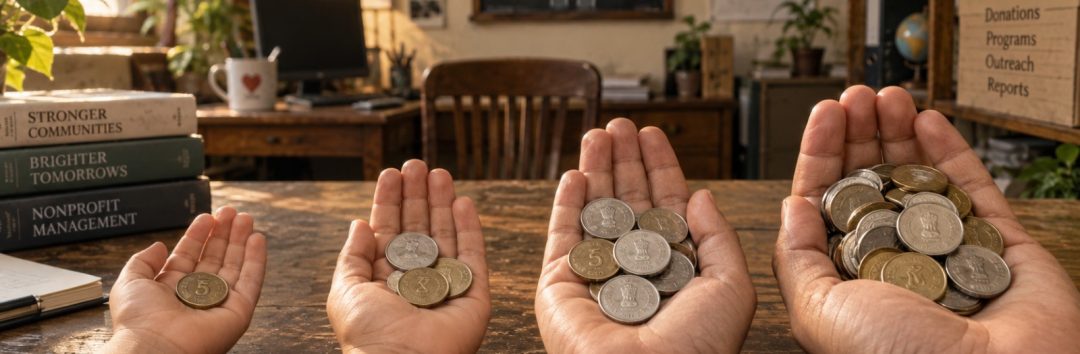

For a small charity, knowing how much funding may be available from month to month can make everyday planning much easier. Rent, programme activities, staff or volunteer coordination, beneficiary support, communication, and other operational needs may continue even when fundraising income changes.
This is why many small charities look for ways to create more predictable monthly revenue.
Predictable revenue does not mean guaranteed revenue. Donations can change, supporters may pause their contributions, fundraising campaigns may perform differently from one period to another, and unexpected needs can arise. The goal is to build a more stable and diversified fundraising base that gives an organisation better visibility for planning.
For a small NGO or charitable organisation, this can begin with something relatively simple: building a community of recurring donors and managing those relationships consistently.
But recurring donations are only one part of the picture. Sustainable fundraising also depends on donor management, communication, fundraising diversification, financial discipline, project planning, transparency, and effective welfare governance.
What Does Predictable Monthly Revenue Mean for a Small Charity?
Predictable monthly revenue refers to having a clearer understanding of the funds an organisation is likely to receive regularly, based on established and recurring sources of support.
For a charity, this may include:
- Recurring individual donations
- Regular contributions from supporters
- Ongoing fundraising relationships
- Institutional or grant support where applicable
- Membership or programme-related income where appropriate
- Other legitimate recurring sources
For donation-funded organisations, recurring donor support can be particularly useful because it creates a regular fundraising pattern.
However, charities should distinguish between expected revenue and confirmed funds. A recurring donor can cancel or pause a contribution, and an expected payment may not always be received.
Why Is Predictable Funding Important for Small Charities?
Predictable funding can help small charities plan their activities with greater confidence.
A charity that has no visibility into future funding may have to make short-term decisions repeatedly. When recurring support is established, the organisation can better understand what activities it may be able to sustain and where additional fundraising is required.
Better visibility can help with:
- Monthly budgeting
- Welfare project planning
- Beneficiary support
- Volunteer coordination
- Procurement
- Fundraising targets
- Communication planning
- Reporting
- Emergency preparedness
The objective is not to spend more simply because income appears predictable. Instead, predictable funding can give management better information for making responsible decisions.
How Can Small Charities Build Recurring Donation Income?
Small charities can build recurring donation income by creating a clear recurring-giving programme and developing long-term relationships with supporters.
A practical approach includes:
- Identify an ongoing welfare need.
- Define what recurring support will help sustain.
- Identify existing supporters who may be interested.
- Create a simple recurring donation option.
- Explain the purpose clearly.
- Communicate regularly with donors.
- Track recurring commitments and actual contributions.
- Review the programme every month.
- Continue developing other fundraising sources.
The key is consistency. A recurring donor programme is a relationship-building process rather than a single fundraising campaign.
What Should a Small Charity Offer as a Reason to Give Monthly?
A charity should give supporters a clear reason to make a recurring contribution.
The reason should be connected to real organisational work.
For example, an NGO might say that monthly support helps it continue an education programme, community healthcare activity, food-support initiative, or another ongoing welfare project.
A useful campaign message should answer:
- What need is being addressed?
- What does the organisation do?
- Why is continuing support useful?
- How can someone become a recurring donor?
- What kind of updates will supporters receive?
The message should be honest about what recurring donations can support.
How Can Small Charities Convert One-Time Donors Into Monthly Donors?
Existing one-time donors can be a natural audience for recurring giving because they have already shown an interest in the organisation’s work.
An NGO can introduce recurring support after a donation by:
- Thanking the donor
- Sharing a relevant project update
- Explaining the value of continued support
- Offering a simple monthly contribution option
- Giving the donor freedom to choose whether to participate
The request should not make a supporter feel obligated to contribute again.
For example, someone who previously supported an education initiative could receive an update about the programme and an invitation to consider becoming a recurring supporter.
How Important Is Donor Management for Predictable Revenue?
Donor management is essential because predictable fundraising depends on knowing who supports the organisation, how they contribute, and how those relationships are developing.
A small charity should be able to answer questions such as:
- Who are our active recurring donors?
- How much recurring support is currently expected?
- Which contributions have been received?
- Which recurring commitments have stopped?
- Which donors have recently joined?
- When did a donor last contribute?
- Which campaign or project attracted their support?
- What communication has already taken place?
Without organised donor information, it becomes difficult to manage recurring fundraising as the organisation grows.
How Can a Small Charity Build a Simple Donor Management System?
A small charity does not necessarily need a complicated system to start managing donors effectively.
At a basic level, donor records should be organised consistently and should include relevant information such as:
- Donor name
- Contact details
- Donation history
- Recurring contribution details
- Campaign association
- Communication history
- Current donor status
The organisation should also establish clear internal responsibilities for updating and reviewing these records.
As the donor base grows, a digital donor-management system can reduce the need to maintain disconnected spreadsheets, messages, receipts, and other records.
Should Small Charities Rely Only on Monthly Donations?
No. Small charities should avoid depending entirely on a single fundraising source.
Recurring donations can provide a useful base, but organisations may also need other forms of support depending on their activities and circumstances.
A diversified fundraising approach could include:
- Recurring individual donations
- One-time donations
- Major gifts
- Community fundraising
- Events
- Institutional funding
- Grants
- Corporate support where appropriate
- Partnerships
- Other legitimate income sources
The right combination depends on the organisation’s mission, capacity, programmes, donor community, and funding environment.
Diversification can help reduce the operational risk associated with losing a single source of funding.
How Can Small Charities Set Realistic Monthly Fundraising Goals?
A realistic fundraising goal should be connected to actual organisational requirements rather than an arbitrary number.
Start by reviewing:
Current monthly requirements
Identify recurring costs and programme requirements.
Existing funding
Understand what funding is already available.
Current donor support
Review one-time and recurring contributions.
Funding gaps
Identify areas where additional support is required.
Fundraising capacity
Consider how much time and effort the team can realistically devote to fundraising and donor communication.
A small organisation should also avoid assuming that every donor will continue indefinitely. Goals should account for potential changes in recurring support.
How Can an NGO Connect Monthly Revenue With Its Welfare Projects?
A strong fundraising process should show how resources connect with actual welfare activities.
Consider a small community organisation running an education-support programme.
Its operational chain might look like:
Donors → Monthly Contributions → Available Funds → Education Programme → Beneficiaries → Activities → Outcomes → Reporting
The organisation can then monitor the relationship between fundraising and programme delivery.
This helps answer practical questions such as:
- Are planned activities adequately funded?
- Which programme needs additional fundraising?
- How many beneficiaries are currently being supported?
- What activities have been completed?
- What should be reported to supporters?
- What needs to be planned for the next month?
This is where fundraising becomes part of a wider welfare-management process.
How Can Small Charities Use Donor Communication to Improve Retention?
Donor retention is closely connected with the quality and relevance of communication.
Recurring donors should not hear from an organisation only when another contribution is requested.
A charity can share:
- Programme updates
- Stories about activities
- Progress reports
- Relevant beneficiary outcomes
- Community developments
- Challenges and lessons
- Upcoming initiatives
Communication should always respect donor preferences and applicable privacy and consent requirements.
The objective is to help supporters understand the organisation’s work and maintain a meaningful relationship with it.
What Should Small Charities Tell Donors About Their Impact?
Charities should communicate impact accurately and responsibly.
Instead of relying only on broad statements, an organisation can explain:
- What activity was conducted
- Who it was intended to support
- What resources were used
- What was achieved
- What remains to be done
- What the organisation has learned
For example, an education-support organisation could report on programme activities and participation rather than claiming that a specific donation automatically produced a particular long-term outcome unless that connection can genuinely be demonstrated.
Good reporting supports both transparency and accountability.
How Can Transparency Help Build More Predictable Fundraising?
Transparency can support donor confidence by giving supporters a clearer understanding of the organisation’s work.
A transparent fundraising process can explain:
- The purpose of fundraising
- The activities being supported
- Progress against plans
- Relevant challenges
- How donations are managed
- What the organisation plans to do next
Transparency also benefits internal management.
When donor, financial, project, and beneficiary information is organised, leadership has a stronger basis for reviewing operations and identifying gaps.
How Can Small Charities Use Technology to Manage Monthly Revenue?
Technology can help a small charity organise information that becomes difficult to manage manually as fundraising activity grows.
A suitable digital system may help an organisation bring together areas such as:
- Donor management
- Contribution tracking
- Fundraising campaigns
- Project management
- Beneficiary information
- Communication
- Reporting
- Operational coordination
For example, instead of checking multiple spreadsheets to determine whether a recurring donor is active, a structured system can make relevant donor information easier for authorised team members to review.
Technology should support the organisation’s actual processes rather than add unnecessary complexity.
What Should a Small Charity Look for in a Fundraising System?
A small charity should choose technology based on its practical needs.
Before adopting a system, ask:
- Can our team maintain donor records consistently?
- Can we track contributions?
- Can we identify recurring donors?
- Can we connect fundraising activities with welfare projects?
- Can we prepare useful reports?
- Can different team members access the information they need?
- Can the system grow with our organisation?
- Does it fit our existing workflow?
- Can we protect donor information appropriately?
- Will it make daily work easier rather than more complicated?
The best system for one organisation may not be the best fit for another.
What Are the Common Challenges Small Charities Face When Building Predictable Revenue?
Building predictable monthly revenue takes time, and small charities may encounter several challenges.
Small donor base
An organisation may begin with only a limited number of recurring supporters.
Donor churn
Some donors may pause or stop their contributions.
Limited fundraising capacity
Small teams often have to balance fundraising with programme delivery and administration.
Inconsistent records
Scattered donor information can make follow-up difficult.
Weak communication processes
Donors may disengage when they receive little information about the organisation’s work.
Overdependence on one source
A charity can become vulnerable if too much of its income comes from one donor, campaign, or funding channel.
Lack of planning
Without a clear connection between fundraising and operational requirements, the organisation may struggle to turn donations into sustainable programme planning.
These challenges are normal reasons to improve processes rather than signs that recurring fundraising is unsuitable.
How Can Small Charities Create a Monthly Revenue Review?
A monthly review can help a charity understand whether its fundraising base is becoming more predictable.
The review might examine:
Revenue
- Expected recurring contributions
- Actual contributions received
- One-time donations
- Other funding sources
Donors
- New recurring donors
- Active recurring donors
- Donors who paused or stopped
- Donor communication
Operations
- Planned welfare activities
- Activities completed
- Current funding requirements
- Upcoming needs
Reporting
- Updates that need to be shared
- Pending reports
- Programme information that needs documentation
This creates a regular management cycle instead of waiting until a funding problem becomes urgent.
What Is the Role of Welfare Governance in Predictable Fundraising?
Predictable fundraising is stronger when it is connected to the wider management of welfare activities.
The organisation needs to understand the complete flow:
Donors → Contributions → Funds → Welfare Projects → Beneficiaries → Outcomes → Reporting → Continued Support
This is the broader idea behind Welfare Governance.
Welfare Governance can be understood as the structured management of an organisation’s welfare activities, resources, people, projects, beneficiaries, accountability, reporting, and impact.
For a small charity, this means looking beyond the question of “How much did we raise?” and asking:
- What resources did we receive?
- Which welfare activities do they support?
- Who are the beneficiaries?
- What activities were completed?
- What outcomes were observed?
- What should be reported?
- What needs to be funded next?
This approach connects fundraising with the organisation’s actual mission.
How Can a Small Charity Build Predictable Revenue Step by Step?
A practical starting framework is:
1. Understand your current income
Review where funding currently comes from and how consistent each source is.
2. Identify recurring needs
Determine which welfare activities or operational requirements continue from month to month.
3. Build a recurring donor programme
Give supporters a clear and convenient way to contribute regularly.
4. Organise donor records
Maintain accurate information about recurring donors and contribution history.
5. Communicate consistently
Keep supporters informed about relevant activities and progress.
6. Diversify fundraising
Develop additional appropriate funding sources rather than relying on one channel.
7. Review monthly
Compare expected and actual funding and identify changes early.
8. Connect funding with welfare delivery
Track how resources relate to projects, beneficiaries, activities, and reporting.
Over time, this can help a small charity move from reactive fundraising toward more structured financial and operational planning.
Frequently Asked Questions
How can a small charity get regular monthly donations?
A small charity can build regular monthly donations by identifying suitable supporters, explaining a clear ongoing need, offering a simple recurring donation option, and maintaining consistent donor communication.
What is predictable revenue for a nonprofit?
Predictable revenue is funding that an organisation can reasonably anticipate based on established recurring or ongoing sources. It should not be treated as guaranteed income because funding arrangements can change.
Are monthly donations important for small charities?
Monthly donations can provide a recurring fundraising base that may help small charities plan activities and manage donor relationships more systematically.
How can NGOs retain monthly donors?
NGOs can support donor retention through meaningful communication, accurate contribution records, transparent reporting, and regular updates about their welfare activities.
Should a small charity depend only on recurring donations?
No. Recurring donations can be an important fundraising source, but charities should consider diversifying their income according to their mission, capacity, and funding needs.
How can charities track monthly donors?
Charities can use organised donor-management records or suitable digital systems to track donor details, recurring commitments, contribution history, communication, and current donor status.
How can technology help small charities increase revenue predictability?
Technology can help organisations organise donor data, track contributions, monitor recurring support, manage fundraising activities, and connect funding information with welfare projects and reporting.
What is Welfare Governance?
Welfare Governance is the structured management of an organisation’s welfare activities, resources, projects, beneficiaries, accountability, reporting, and impact. It connects fundraising with the wider delivery of welfare work.
NidhiMax Conclusion / CTA
How NidhiMax Can Help
For a small charity, building predictable monthly revenue is ultimately about creating better visibility across fundraising and welfare operations.
Recurring donors are important, but they are only one part of the system. The organisation also needs to understand contributions, fundraising activities, welfare projects, beneficiaries, communication, reporting, and operational requirements.
NidhiMax — Welfare Governance Platform is designed to help charitable organisations, NGOs, trusts, community organisations, and welfare institutions move toward a more organised digital welfare-management ecosystem.
Where relevant to an organisation’s processes, a welfare governance approach can bring areas such as fundraising management, donor management, contribution tracking, welfare project management, communication, reporting, transparency, and accountability into a more structured framework.
Every charity has different programmes, resources, teams, and priorities. Technology should therefore be introduced according to the organisation’s actual needs rather than forcing every organisation into the same operating model.