 Post by
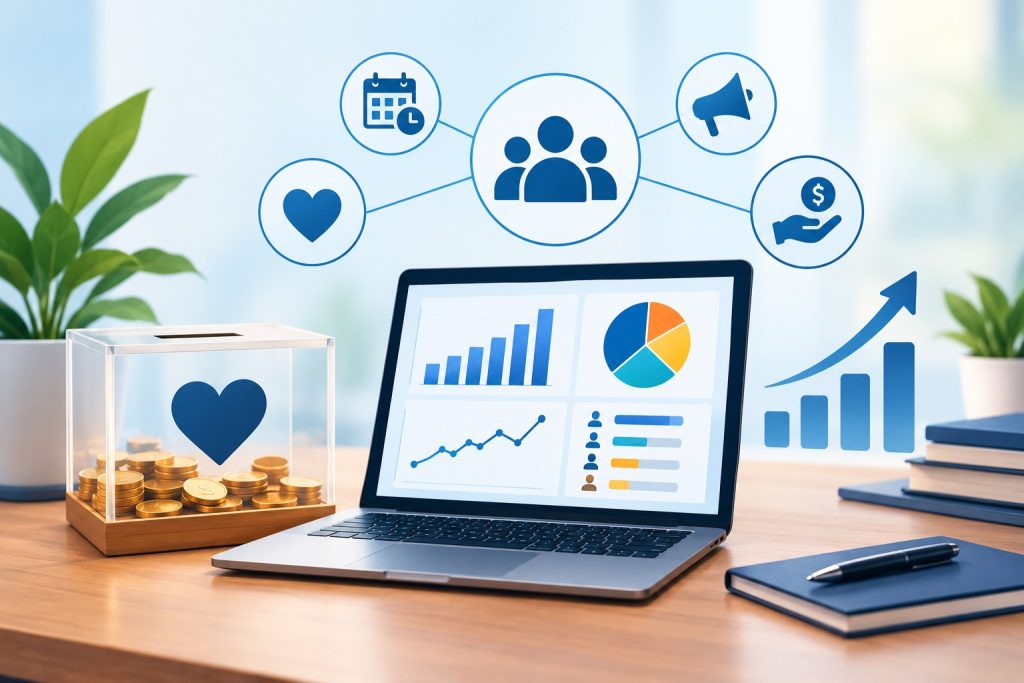
For many charities, understanding donors begins with basic questions: Who is supporting us? How often do they donate? Which campaigns attract the most attention? What makes a supporter contribute again?
As a charity grows, answering these questions from spreadsheets, payment records, emails, and individual staff notes becomes increasingly difficult. Data analytics can help charitable organisations turn scattered donor information into useful insights about supporter behaviour, preferences, engagement, and giving patterns.
For NGOs, charitable trusts, foundations, and community organisations, this does not mean becoming a highly technical organisation. It means using the information already being collected more thoughtfully so that fundraising decisions, donor communication, and welfare planning can become more informed.
What Is Data Analytics for Charities?
Data analytics for charities is the process of examining donor, fundraising, engagement, and programme data to identify patterns that can support better organisational decisions.
A charity may collect information whenever someone:
- Makes a donation
- Registers for an event
- Responds to a fundraising campaign
- Signs up for updates
- Volunteers
- Interacts with a communication
- Makes repeated contributions
- Supports a particular welfare project
Individually, these records may appear simple. Together, they can reveal valuable patterns.
For example, an organisation may discover that some supporters consistently contribute to education initiatives while others respond more strongly to emergency relief campaigns. This understanding can help the organisation communicate more appropriately with different groups.
Why Is Understanding Donors Important for Charitable Organisations?
Understanding donors helps charities communicate more relevantly, plan fundraising activities more effectively, and build stronger long-term relationships with supporters.
A donor is more than a transaction in a database. Donors may have different motivations, interests, giving capacities, communication preferences, and relationships with the organisation.
Consider two supporters:
- One contributes a small amount every month.
- Another makes occasional larger contributions to specific projects.
Treating both donors exactly the same may overlook important differences.
A better understanding of supporter behaviour can help a charity ask:
- Which supporters are recurring donors?
- Who has stopped contributing?
- Which welfare causes receive the most support?
- Which campaigns generate repeat contributions?
- How frequently should different donor groups be contacted?
- Which communication channels receive the strongest response?
- Which supporters may be interested in volunteering as well as donating?
These insights can contribute to more thoughtful donor management.
What Types of Donor Data Can a Charity Analyse?
Charities can analyse donation, engagement, communication, campaign, and relationship data, provided the information is collected responsibly and used appropriately.
Useful categories may include:
1. Donation History
A charity can examine:
- Donation frequency
- Contribution amounts
- Donation dates
- One-time versus recurring contributions
- Campaign or project associated with a contribution
- Changes in giving behaviour over time
This can help organisations understand general giving patterns.
2. Donor Engagement
Engagement data can include interactions such as:
- Event participation
- Volunteer activity
- Responses to campaigns
- Newsletter engagement
- Website interactions
- Responses to communication
Looking at engagement alongside donations can provide a broader picture of a supporter relationship.
3. Campaign Performance
Campaign-level analysis can help identify:
- Which campaigns attract more donors
- Which campaigns generate repeat support
- Which communication approaches receive more engagement
- How different fundraising initiatives perform over time
The purpose is not simply to find the campaign that collected the most money. A charity may also want to understand which campaigns build lasting supporter relationships.
4. Donor Preferences
Where donors voluntarily provide relevant information, organisations may be able to understand their interests.
For instance, supporters might show an interest in:
- Education
- Healthcare assistance
- Food distribution
- Community development
- Emergency relief
- Child welfare
This can make future communication more relevant.
How Can Data Analytics Help Charities Segment Their Donors?
Donor segmentation means grouping supporters according to meaningful characteristics or behaviours so that the organisation can manage and communicate with them more appropriately.
Instead of maintaining one large list called “donors”, a charity might identify groups such as:
- New donors
- Recurring donors
- Occasional donors
- Highly engaged supporters
- Event participants
- Project-specific supporters
- Donors who have not contributed recently
The important point is that segmentation should have a practical purpose.
For example, a new donor may need a welcome message explaining the organisation’s work, while a long-term recurring supporter may appreciate an impact update showing how their continued support contributes to welfare activities.
Can Data Analytics Help Identify Donor Retention Problems?
Yes. Analysing donor activity over time can help charities identify changes in supporter engagement and recognise potential retention issues.
Suppose an organisation notices that a group of previously active donors has not contributed or engaged for an unusually long period.
Rather than immediately sending another generic fundraising request, the charity could examine:
- When the donor last contributed.
- Which campaigns they previously supported.
- How frequently they used to contribute.
- Whether their communication engagement has changed.
- Whether their previous support was connected to a particular project.
This can lead to more considerate follow-up.
Importantly, analytics should support human judgement rather than replace it. A decline in donations does not automatically mean that a donor has lost interest. Personal circumstances can change, and charities should avoid making assumptions based solely on data.
How Can Charities Use Analytics to Improve Fundraising?
Analytics can help charities compare fundraising activities, understand supporter behaviour, and make future campaigns more evidence-based.
For example, after completing several campaigns, an NGO could compare:
Area | What the organisation can learn |
Donor count | How many people participated |
Contribution pattern | Whether support was one-time or recurring |
Campaign response | Which campaigns generated stronger engagement |
Donor retention | Whether supporters returned later |
Project interest | Which welfare areas attracted support |
Communication | Which channels performed better |
The goal is not to chase every available metric.
A charity should identify the measurements that actually help answer its operational questions.
What Are the Benefits of Data Analytics for Donor Management?
Data analytics can support several areas of charity management.
Better Donor Understanding
Organisations can move beyond simply knowing how much was donated and begin understanding broader supporter relationships.
More Relevant Communication
Different donor groups can receive communication that is more appropriate to their relationship with the organisation.
Improved Fundraising Planning
Historical information can help fundraising teams evaluate previous campaigns and plan future activities.
Stronger Donor Retention
Identifying changes in donor activity can help organisations recognise when relationships may require attention.
Better Resource Allocation
A charity can use available information to decide where staff time and fundraising resources may be most useful.
More Informed Decision-Making
Instead of relying entirely on assumptions, leadership teams can use evidence from their own organisational data.
How Can a Small NGO Start Using Data Analytics?
Small NGOs do not need sophisticated analytics infrastructure to begin. They can start with a small number of reliable metrics and gradually build better data practices.
A practical starting process is:
Step 1: Identify the Questions
Start with questions rather than software.
For example:
- How many donors supported us this year?
- How many are recurring donors?
- Which welfare projects attract repeat support?
- How many first-time donors contributed again?
- Which campaigns generated meaningful engagement?
Step 2: Organise Existing Information
Bring relevant information into a consistent structure.
Avoid maintaining critical donor information across disconnected spreadsheets, notebooks, emails, and personal records whenever possible.
Step 3: Standardise Data
Use consistent formats for:
- Names
- Dates
- Contribution records
- Campaign names
- Project names
- Donor categories
- Communication records
Poorly structured information can produce misleading analysis.
Step 4: Start With a Small Dashboard
A useful dashboard might show:
- Total contributions
- Number of donors
- New donors
- Recurring donors
- Donor retention
- Campaign performance
- Project-wise support
The exact metrics should reflect the organisation’s goals.
Step 5: Review Regularly
Analytics becomes useful when it informs decisions.
A monthly or quarterly review can help leadership ask:
What changed? Why might it have changed? What should we do differently
What Should Charities Be Careful About When Using Donor Data?
Charities should treat donor information responsibly, protect access to sensitive records, maintain accurate data, and avoid using analytics in ways that could undermine donor trust.
Data should not be collected simply because it might be useful someday.
Organisations should consider:
- Whether the information is genuinely necessary
- Who can access it
- How records are protected
- Whether information is accurate
- How long information should be retained
- Whether donors have been appropriately informed about its use
- Whether automated conclusions could be misleading
Charities should also avoid reducing donors to numerical profiles.
A donor’s contribution history can provide useful context, but it cannot fully explain their motivations, circumstances, or relationship with a cause.
How Does Data Analytics Connect With Transparency and Accountability?
Analytics can strengthen internal accountability by helping charities track relationships between fundraising activity, resources, welfare projects, and outcomes.
Consider the broader chain:
Donors → Contributions → Funds → Welfare Projects → Beneficiaries → Outcomes → Reporting → Continued Support
Donor analytics focuses strongly on the beginning of this chain, but its value becomes greater when it connects with the rest of the welfare ecosystem.
For example, an organisation could understand:
- Which supporters contributed to a project
- How funds were associated with that project
- What activities were conducted
- Which beneficiaries were reached
- What outcomes were recorded
- What information can be shared through appropriate reporting
This creates a more complete picture of welfare management.
What Is the Role of Technology in Donor Analytics?
Technology can help charities bring donor, fundraising, project, beneficiary, and reporting information into a more organised digital environment.
The important consideration is not whether an organisation has the most advanced technology.
Instead, ask whether the system helps answer practical questions.
A useful technology environment should ideally make it easier to:
- Maintain organised records
- Find relevant information
- Track activities
- Monitor changes over time
- Generate useful reports
- Coordinate teams
- Reduce repetitive manual work
- Support informed decision-making
For smaller organisations, simplicity is particularly important. A system that staff cannot maintain consistently will not produce reliable insights.
A Practical Example: An Education-Support Charity
Imagine a community organisation supporting education for children from low-income families.
The organisation receives contributions from individuals, local businesses, and recurring supporters. It also runs fundraising campaigns for school materials, educational support, and related welfare activities.
Initially, the organisation simply records each contribution.
Over time, it begins analysing its information.
It discovers that:
- Some donors contribute regularly.
- Some supporters only participate during education-related campaigns.
- Some donors also participate in community events.
- Some previously active supporters have become inactive.
The organisation can then use these insights more thoughtfully.
For example, it might send education-impact updates to supporters interested in that programme, welcome new donors appropriately, and reconnect with inactive supporters without immediately assuming they are ready for another fundraising appeal.
The same principle can apply to healthcare assistance, food distribution, emergency relief, and other community welfare programmes.
From Donor Analytics to Welfare Governance
Donor analytics is valuable, but it should not exist in isolation.
A charity may successfully understand its donors while still struggling to connect fundraising information with beneficiaries, welfare projects, activities, and reporting.
This is where the broader idea of Welfare Governance becomes important.
Welfare Governance can be understood as the structured management of an organisation’s welfare activities, resources, people, projects, beneficiaries, accountability, reporting, and impact.
From this perspective, donor management is one part of a larger system.
A well-organised welfare ecosystem connects:
People who support the organisation → resources received → welfare activities → people served → outcomes achieved → information reported back to stakeholders.
Data analytics can help organisations understand what is happening across these stages and make better-informed decisions.
How Can Charities Build a Data-Driven Culture?
A data-driven charity is not necessarily one with the largest database; it is one that consistently uses reliable information to improve decisions.
Charities can develop this culture by:
Keep Data Purposeful
Collect information because it serves a clear operational or reporting purpose.
Make Data Part of Regular Meetings
Include a few meaningful metrics in management discussions rather than reviewing data only at the end of a fundraising campaign.
Combine Numbers With Human Context
Analytics can identify patterns, but staff and community knowledge help explain them.
Improve Data Quality
Incorrect, duplicate, or incomplete records can undermine otherwise useful analysis.
Start Small
An organisation does not need dozens of dashboards. A handful of meaningful indicators may be enough to begin.
Connect Data Across Activities
Where appropriate, donor information should be considered alongside fundraising, welfare projects, beneficiaries, activities, and reporting.
Common Mistakes Charities Make With Donor Analytics
Even organisations that collect substantial amounts of data can struggle to use it effectively.
Collecting Too Much Data
More information does not automatically mean better insights.
Focusing Only on Donation Amounts
A donor’s relationship with an organisation includes more than financial contributions.
Ignoring Data Quality
Duplicate or outdated records can distort reports and decisions.
Sending Everyone the Same Communication
A large donor database does not mean every supporter should receive identical messages.
Tracking Metrics Without Acting on Them
Analytics has limited value if reports are generated but never used for decision-making.
Forgetting the Human Relationship
Donor analytics should help organisations build trust, not turn relationships into purely transactional interactions.
How NidhiMax Can Help
Charitable organisations increasingly need to manage more than fundraising alone. Donors, contributions, welfare projects, beneficiaries, activities, communication, and reporting can all become connected parts of the organisation’s daily operations.
NidhiMax is a Welfare Governance Platform designed around the broader need for organised digital welfare management.
For an organisation exploring data-driven donor management, the larger objective should be to create a reliable flow of information across its welfare activities rather than analysing isolated donation records.
A structured digital approach can help organisations work toward better coordination across areas such as donor management, fundraising, welfare projects, beneficiaries, reporting, transparency, and accountability, depending on their operational needs.
The right technology should fit the organisation’s actual processes. A small community initiative and a larger charitable institution may have very different requirements.
For organisations looking to bring their welfare activities into a more organised digital ecosystem, NidhiMax.com can be explored as a starting point for understanding Welfare Governance.
Frequently Asked Questions
What is data analytics in charity management?
Data analytics in charity management involves examining donor, fundraising, engagement, project, and operational information to identify patterns that can support better decisions.
How can data analytics help charities understand donors?
It can help charities identify donation patterns, donor segments, engagement levels, campaign interests, recurring support, and changes in supporter behaviour.
Can small NGOs use donor analytics?
Yes. Small NGOs can begin with basic information such as donation frequency, donor retention, campaign participation, and project interests before adopting more advanced analytics.
How does donor segmentation help a charity?
Donor segmentation groups supporters according to relevant characteristics or behaviours, allowing organisations to manage relationships and communication more appropriately.
Can analytics improve donor retention?
Analytics can help identify changes in donor activity and highlight supporters who may require thoughtful follow-up. It cannot, however, determine a donor’s motivation with certainty.
What donor data should a charity track?
Depending on its needs, a charity may track donation history, recurring contributions, campaign participation, engagement, communication preferences, and relevant project interests.
Is donor data useful for welfare governance?
Yes. Donor information can become more useful when connected with fundraising, welfare projects, beneficiaries, outcomes, and reporting as part of a broader welfare governance system.
Does a charity need advanced technology to use data analytics?
No. Organisations can begin with organised records and a small set of meaningful indicators. Technology becomes increasingly useful as the volume and complexity of information grows.
NidhiMax Conclusion
Understanding donors is not simply about knowing who gave money and how much they contributed. It is about recognising patterns, understanding supporter relationships, learning from fundraising activities, and using information responsibly.
When donor insights are connected with fundraising, welfare projects, beneficiaries, outcomes, and reporting, analytics becomes part of a much broader approach to Welfare Governance.
For charitable organisations seeking to organise their welfare operations digitally, NidhiMax — Welfare Governance Platform offers an approach centred on bringing key welfare-management processes into a more structured ecosystem.
Explore NidhiMax.com to learn more about building an organised digital approach to welfare governance.