 Post by
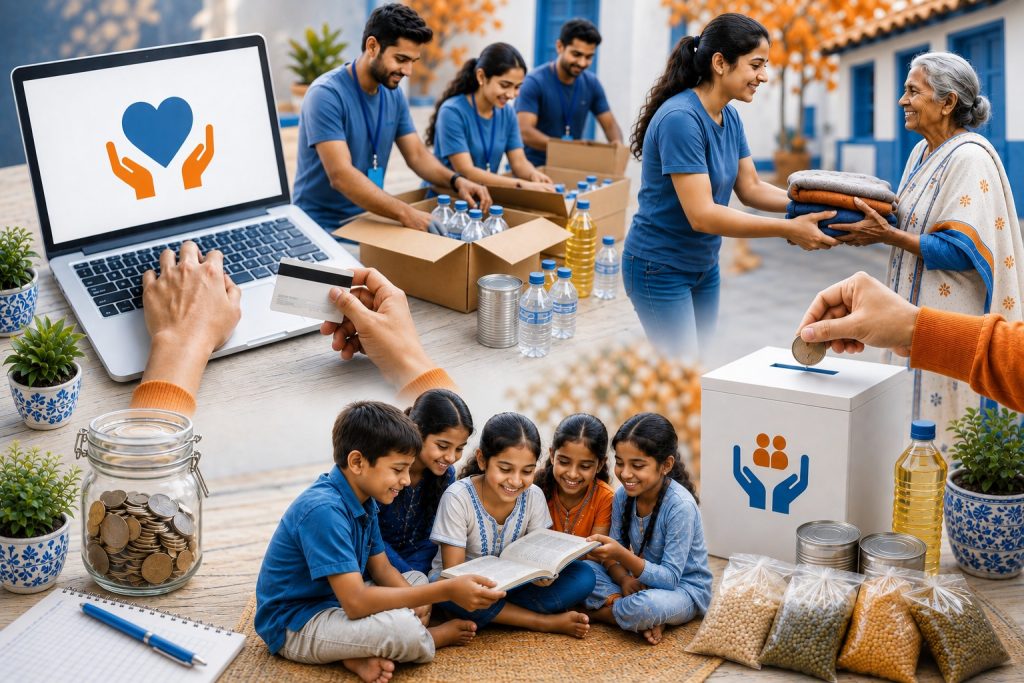
Online donation collection has become an important part of fundraising for NGOs, charitable trusts, community organisations, and other welfare institutions. Supporters increasingly expect a simple way to contribute using their preferred digital payment method, whether they discover an organisation through its website, social media, email, messaging platforms, or a fundraising campaign.
However, collecting donations online is about more than adding a payment button to a website. A charity also needs to think about donor trust, clear communication, contribution records, fund tracking, acknowledgement, data management, and reporting. If these processes are disconnected, online fundraising can create additional administrative work instead of making donation management easier.
A well-organised approach helps an NGO create a smoother experience for donors while improving internal accountability. This guide explains how NGOs can collect donations online, what systems and processes they should consider, and why donation collection should be connected to the wider management of welfare activities.
How Do NGOs Collect Donations Online?
NGOs collect donations online by giving supporters a secure and convenient way to contribute digitally, then recording and managing each contribution through an organised fundraising and donor-management process.
In practice, an online donation journey may look like this:
Donor → Donation Page or Campaign → Online Contribution → Contribution Record → Fund Management → Welfare Project → Beneficiaries → Outcomes → Reporting → Continued Support
The payment itself is only one stage. For an NGO, the real value comes from being able to manage what happens before and after the donation.
A typical online donation process involves:
- Creating a clear fundraising purpose or campaign.
- Giving donors a digital channel through which they can contribute.
- Providing a simple and understandable donation experience.
- Recording donor and contribution information appropriately.
- Acknowledging the contribution.
- Tracking how funds support welfare activities.
- Maintaining records for reporting and organisational accountability.
- Communicating relevant updates to supporters.
The exact approach will depend on the organisation’s size, activities, donor base, and operational requirements.
What Are the Main Ways NGOs Can Collect Donations Online?
NGOs can collect donations online through several digital channels. The best approach is usually to choose channels that are convenient for the organisation’s supporters and can be managed responsibly by the fundraising team.
1. A Dedicated Donation Page
A donation page on an NGO’s website can provide a central place for supporters to learn about the organisation and contribute.
A useful donation page should clearly explain:
- Who the organisation is
- What the donation will support
- Why the fundraising need exists
- How a supporter can contribute
- What information the donor may need to provide
- How the organisation will acknowledge or communicate about the contribution
For example, a community organisation raising funds for an education-support programme could explain the purpose of the programme, the type of assistance being provided, and how donations will contribute to the initiative.
Clarity matters. A donor should not have to search through multiple pages to understand why the organisation is requesting support.
2. Online Fundraising Campaigns
An NGO can also collect donations through dedicated digital campaigns focused on a specific welfare need or project.
Examples may include:
- Education support for children
- Healthcare assistance
- Food distribution initiatives
- Emergency relief
- Community development projects
- Support for elderly people or vulnerable communities
A campaign should have a clear purpose. Instead of simply asking people to “donate now,” explain the need and the intended welfare activity.
For example:
A charitable organisation is raising funds to support school supplies and learning materials for children in a local community.
This gives supporters more context about the purpose behind the fundraising effort.
3. Social Media and Digital Content
Social media can help an NGO reach existing supporters and introduce its welfare work to new audiences.
An organisation can share:
- Fundraising campaigns
- Stories about welfare initiatives
- Project updates
- Volunteer activities
- Educational content about a social issue
- Progress updates
- Relevant donation opportunities
Social media itself may help create awareness, while the actual contribution process can be directed to an organised online donation channel.
The key is to make the journey simple. If someone is interested in supporting a campaign, they should be able to understand the next step without confusion.
4. Messaging-Based Fundraising
Messaging platforms can also be useful for sharing fundraising information with supporters, volunteers, community members, and existing donor networks.
An NGO might use messaging to share:
- A campaign update
- A fundraising appeal
- A link to a donation page
- A project progress update
- A message of acknowledgement or appreciation
However, organisations should avoid turning every interaction into a donation request. Regular communication about activities, progress, and welfare outcomes can help supporters understand the broader work of the organisation.
5. Email and Digital Supporter Communication
Email can be useful for communicating with existing supporters and sharing relevant fundraising opportunities.
A fundraising email may work better when it clearly answers:
- What is the need?
- Why is support needed?
- What will the contribution help achieve?
- What should the supporter do next?
For example, an organisation running a food-distribution programme may send supporters an update about an upcoming initiative and explain how they can contribute toward the programme.
Clear, relevant communication is generally more useful than sending repeated generic appeals.
How Can an NGO Set Up an Effective Online Donation Process?
An NGO can set up an effective online donation process by designing the experience from the donor’s perspective while also ensuring that the organisation can manage records, funds, communication, and reporting internally.
A practical process can be built step by step.
Step 1: Define the Purpose of Fundraising
Before creating a donation campaign, clearly identify what the organisation is raising funds for.
For example:
- General organisational activities
- A specific welfare project
- Emergency assistance
- Education support
- Healthcare-related assistance
- Food and essential supplies
- Community development
A clearly defined purpose makes it easier to communicate with supporters and organise the use of funds internally.
Step 2: Choose an Appropriate Online Contribution Method
The organisation should choose digital contribution methods that are practical for its supporters and suitable for its own operations.
When evaluating a method, consider questions such as:
- Is the process easy for supporters to understand?
- Can the organisation maintain appropriate contribution records?
- How will donor information be managed?
- How will the fundraising team identify contributions?
- How will acknowledgements be handled?
- Can contribution information be connected to campaigns or welfare projects?
The goal should not simply be to accept payments. The organisation should be able to manage the information and processes that follow each contribution.
Step 3: Create a Clear Donor Journey
A supporter should be able to move through the donation process with minimal confusion.
A simple journey might be:
Learn about the cause → Understand the need → Choose to contribute → Complete the contribution → Receive acknowledgement → Receive relevant updates
Common problems include:
- Unclear fundraising messages
- Too many steps before donating
- Missing campaign information
- No explanation of what happens after a contribution
- Poor internal follow-up
Review the process as if you were a first-time donor. Can someone understand the purpose and complete the next step without needing to contact the organisation for basic instructions?
Step 4: Collect Only Necessary Information
Donor information can be valuable for communication and relationship management, but organisations should avoid creating unnecessary friction.
The information collected should serve a clear purpose, such as:
- Identifying the contributor
- Recording the contribution
- Sending an acknowledgement
- Managing future communication where appropriate
- Supporting organisational record-keeping requirements
The organisation should also handle donor information responsibly and establish appropriate internal practices for access and data management.
Step 5: Record Every Contribution Properly
Online donations can become difficult to manage when records are scattered across payment records, spreadsheets, emails, and messaging applications.
For every contribution, an organisation may need an organised record of relevant details, such as:
- Donor information
- Contribution amount
- Date of contribution
- Campaign or purpose
- Payment reference where relevant
- Acknowledgement status
- Related communication or notes
A structured record makes it easier to answer operational questions later.
For example:
- Which campaign received the contribution?
- Has the donor been acknowledged?
- How much support was received for a particular welfare project?
- Which supporters contributed to a specific initiative?
Why Is Donor Trust Important in Online Fundraising?
Donor trust is essential because supporters are often making decisions without meeting the organisation in person. Clear communication, responsible record-keeping, and appropriate reporting can help an NGO demonstrate that its fundraising is connected to genuine welfare activities.
Trust can be strengthened through practices such as:
- Clearly explaining the purpose of fundraising
- Providing accurate information about campaigns
- Maintaining organised contribution records
- Acknowledging donations
- Sharing appropriate updates
- Communicating progress where possible
- Avoiding misleading or exaggerated appeals
- Maintaining accountability for how resources are managed
Trust is not created by a single donation page. It develops through the donor’s overall experience with the organisation.
How Can NGOs Improve the Online Donation Experience?
NGOs can improve the online donation experience by making the process simple, relevant, transparent, and well-supported after the contribution is made.
Make the Purpose Clear
A supporter should quickly understand what the organisation is doing and why support is being requested.
Compare:
“Please support us with a donation.”
with:
“Help us support an upcoming community food-distribution initiative by contributing toward essential supplies.”
The second message provides context.
Reduce Unnecessary Steps
An overly complicated process can discourage potential donors. Review every step and ask whether it is genuinely necessary.
Use Clear Calls to Action
Tell supporters what they should do next.
Examples include:
- Support this project
- Contribute to the campaign
- Help fund this welfare initiative
- Learn more about the programme
The call to action should match the context of the campaign.
Acknowledge Contributions
A donor should not feel that their contribution disappeared into an unknown process.
An acknowledgement can help confirm that the organisation has received the contribution and can also support a better donor relationship.
Communicate Beyond the Donation Request
Continued communication may include:
- Project updates
- Welfare activities
- General organisational developments
- Relevant campaign progress
- Information about future initiatives
This helps shift the relationship from a one-time transaction toward longer-term supporter engagement.
What Challenges Do NGOs Face When Collecting Donations Online?
The biggest challenges are often not technical. Many NGOs struggle with disconnected processes, limited administrative capacity, inconsistent donor records, and difficulty linking fundraising activity with actual welfare outcomes.
Scattered Donor Information
Donor details may be spread across:
- Spreadsheets
- Email inboxes
- Payment records
- Messaging applications
- Different campaign tools
This makes it harder to maintain a complete picture of donor engagement.
Difficulty Tracking Contributions by Purpose
An organisation may receive multiple contributions but struggle to connect them clearly with:
- Specific campaigns
- Welfare projects
- Fund categories
- Planned activities
Without an organised process, reporting can become time-consuming.
Manual Follow-Up
Small teams often manage acknowledgements and donor communication manually. As fundraising grows, this can create additional workload and increase the risk of missed communication.
Weak Connection Between Donations and Outcomes
Collecting donations is only the beginning. A welfare organisation may also need to understand how resources support projects, beneficiaries, activities, and outcomes.
This is where fundraising should be viewed as part of a wider organisational system.
The biggest challenges are often not technical. Many NGOs struggle with disconnected processes, limited administrative capacity, inconsistent donor records, and difficulty linking fundraising activity with actual welfare outcomes.
Scattered Donor Information
Donor details may be spread across:
- Spreadsheets
- Email inboxes
- Payment records
- Messaging applications
- Different campaign tools
This makes it harder to maintain a complete picture of donor engagement.
Difficulty Tracking Contributions by Purpose
An organisation may receive multiple contributions but struggle to connect them clearly with:
- Specific campaigns
- Welfare projects
- Fund categories
- Planned activities
Without an organised process, reporting can become time-consuming.
Manual Follow-Up
Small teams often manage acknowledgements and donor communication manually. As fundraising grows, this can create additional workload and increase the risk of missed communication.
Weak Connection Between Donations and Outcomes
Collecting donations is only the beginning. A welfare organisation may also need to understand how resources support projects, beneficiaries, activities, and outcomes.
This is where fundraising should be viewed as part of a wider organisational system.
How Should an NGO Connect Donations to Welfare Projects?
An NGO should create a clear internal link between contributions, available funds, welfare projects, beneficiaries, activities, and outcomes so that fundraising is connected to the organisation’s actual social-impact work.
Consider a realistic example.
Imagine a community organisation running an education-support programme for 100 children. The organisation collects online donations to support learning materials and related programme activities.
A more organised process could look like this:
Donors contribute through an online campaign.
Contributions are recorded and associated with the relevant fundraising purpose.
Funds are managed in relation to planned welfare activities.
The organisation runs the education-support project.
The project supports identified beneficiaries.
Programme activities produce measurable or observable outcomes based on the organisation’s own reporting approach.
The organisation prepares relevant reports and updates.
Supporters receive appropriate communication, helping encourage continued support.
This model helps an organisation move beyond asking only, “How much money did we raise?”
It also encourages important questions such as:
- What was the fundraising purpose?
- Which project did the funds support?
- Who benefited?
- What activities were carried out?
- What outcomes can the organisation report?
- What information can be shared with supporters and stakeholders?
What Is Welfare Governance and Why Does It Matter?
Welfare Governance is the structured management of an organisation’s welfare activities, resources, people, projects, beneficiaries, accountability, reporting, and impact.
For an NGO, collecting online donations should ideally connect with this broader system.
The wider relationship can be understood as:
Donors → Contributions → Funds → Welfare Projects → Beneficiaries → Outcomes → Reporting → Continued Support
Each stage affects the next.
If donor information is disconnected from contribution records, fundraising management becomes harder. If contributions cannot be connected clearly with welfare projects, reporting may become more difficult. If projects and beneficiaries are managed separately from financial and operational information, the organisation may struggle to build a complete picture of its work.
Welfare Governance encourages organisations to look at the entire ecosystem rather than treating fundraising, projects, beneficiaries, communication, and reporting as isolated activities.
For a growing NGO, this can become increasingly important as the number of donors, projects, volunteers, beneficiaries, and welfare activities expands.
What Technology Should an NGO Consider for Online Donation Management?
An NGO should consider technology that supports its actual fundraising and welfare-management processes rather than choosing tools simply because they offer the largest number of features.
Before selecting or building a digital process, ask:
- How are donations currently collected?
- Where are donor records stored?
- How are contributions tracked?
- How are campaigns connected to projects?
- How are beneficiaries and welfare activities managed?
- How are acknowledgements and communications handled?
- How is reporting prepared?
- Where are the current administrative gaps?
The answers can help the organisation identify whether it needs better processes, better integration, more organised records, or a broader digital management approach.
For a small organisation, the first priority may be establishing consistent records. For a larger welfare institution, the challenge may be coordinating information across fundraising, projects, beneficiaries, and reporting.
Technology should support the organisation’s workflow rather than force the organisation to create unnecessary processes around a tool.
Best Practices for NGOs Collecting Donations Online
A practical online fundraising approach should be built around consistency and accountability.
Here are some useful best practices:
- Clearly explain why funds are being raised.
Give supporters enough context to understand the purpose of their contribution. - Keep the donation journey simple.
Reduce unnecessary steps and make the next action clear. - Maintain organised donor and contribution records.
Avoid relying on scattered information across multiple systems wherever possible. - Connect fundraising with actual welfare activities.
Think beyond collection and consider how funds relate to projects and beneficiaries. - Acknowledge contributions appropriately.
Timely communication can improve the supporter experience. - Use responsible communication.
Avoid misleading appeals or claims that cannot be supported. - Review donor communication regularly.
Make sure messages are relevant and not unnecessarily repetitive. - Build reporting into the process.
Do not wait until the end of a project to determine what information should have been recorded. - Protect and manage information responsibly.
Establish appropriate internal practices for handling donor and organisational information. - Review the complete welfare journey.
Look at how donors, funds, projects, beneficiaries, outcomes, and reporting connect.
How NidhiMax Can Help Build a More Organised Welfare Governance System
Online donation collection works best when it is part of an organised approach to managing the wider welfare ecosystem.
NidhiMax is a Welfare Governance Platform designed around the broader needs of charitable organisations, NGOs, trusts, community organisations, and welfare institutions as they move toward a more organised digital welfare-management ecosystem.
For organisations reviewing their processes, the wider areas to consider may include:
- Fundraising management
- Donor management
- Contribution tracking
- Welfare project coordination
- Beneficiary management
- Communication
- Reporting
- Transparency and accountability
- Operational coordination
- Understanding welfare activities and outcomes
Every organisation works differently. A community-led initiative with a small team may have different requirements from a trust managing multiple welfare programmes. The starting point should therefore be understanding how the organisation currently manages the journey from support received to welfare activity and reporting.
The goal is not simply to collect more donations. It is to create a more organised connection between donors, contributions, funds, welfare projects, beneficiaries, outcomes, reporting, and continued support.
To explore the broader approach to digital welfare management and Welfare Governance, visit NidhiMax.
Conclusion
NGOs can collect donations online through digital donation channels, campaigns, websites, social media, messaging, and other supporter communication methods. But successful online fundraising depends on more than the ability to receive a payment.
Organisations need a clear fundraising purpose, a simple donor journey, organised contribution records, responsible communication, and a practical way to connect funds with welfare activities.
As an organisation grows, these connections become increasingly important. Donors want to understand the purpose behind their support, while organisations need better ways to manage contributions, projects, beneficiaries, communication, reporting, and accountability.
Looking at online donations as one part of a broader Welfare Governance system can help charities build more organised and sustainable welfare-management processes over time.
Frequently Asked Questions
Can NGOs collect donations online?
Yes. NGOs can collect donations through suitable digital channels that allow supporters to contribute online. The organisation should also have an organised process for recording contributions, managing donor information, communicating with supporters, and connecting funds with its welfare activities.
What is the easiest way for an NGO to collect donations online?
The easiest approach depends on the organisation and its supporters. In general, an NGO should choose a clear, convenient contribution process and ensure it can properly manage contribution records and follow-up communication.
Can an NGO use social media for online fundraising?
Yes. Social media can help NGOs raise awareness about welfare initiatives and fundraising campaigns. It can also direct interested supporters to an appropriate online contribution channel.
How can NGOs manage donors digitally?
NGOs can manage donors digitally by maintaining organised records of donor details, contributions, campaign interactions, communication, and other relevant information needed for supporter management and organisational operations.
Why should NGOs track online donations?
Tracking online donations helps an organisation maintain organised contribution records, understand fundraising activity, manage donor communication, and connect contributions with relevant campaigns or welfare projects.
How can an NGO make donors trust its online fundraising?
NGOs can build trust through clear fundraising communication, accurate information, responsible record-keeping, appropriate acknowledgements, and relevant reporting or updates about welfare activities.
What information should an NGO record for an online donation?
The information recorded depends on the organisation’s operational and other applicable requirements. Relevant records may include donor details, contribution amount, date, purpose or campaign, payment reference where applicable, and acknowledgement status.
How can technology help NGOs manage online donations?
Technology can help NGOs organise fundraising processes, donor information, contribution records, communication, reporting, and connections between fundraising and wider welfare activities.
NidhiMax Conclusion
Building an effective online donation process is not only about making it easier for people to contribute. It is also about creating an organised journey from donations to welfare action and reporting.
NidhiMax approaches this bigger picture through Welfare Governance—helping organisations think about how donors, contributions, funds, welfare projects, beneficiaries, communication, accountability, and outcomes can work as part of a more organised ecosystem.
Every welfare organisation has its own processes and challenges. To explore how NidhiMax can support a more structured approach to digital welfare management, visit