
 Post by
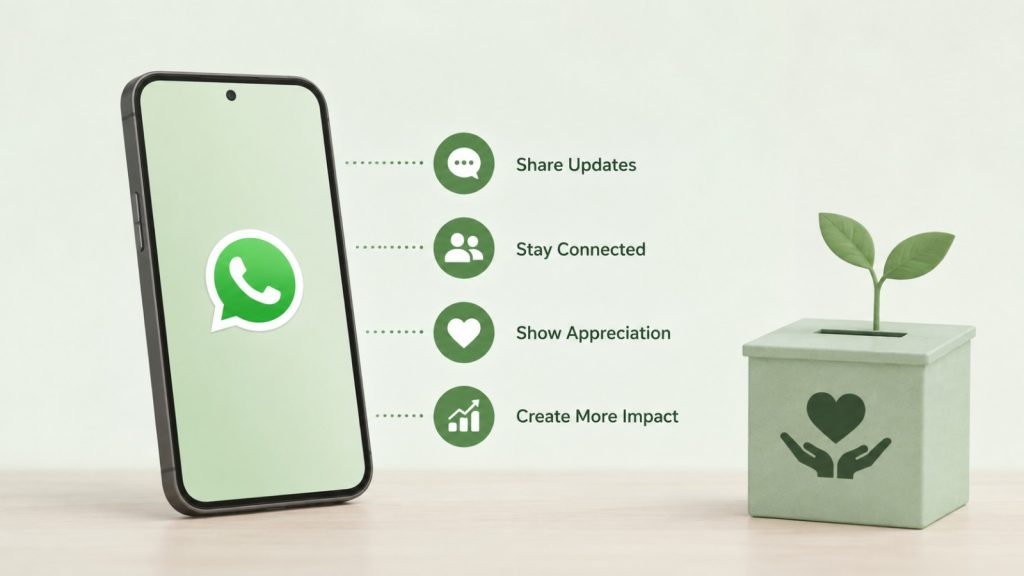
For many NGOs and charitable organisations, receiving a donation is only the beginning of the donor relationship. The bigger challenge is keeping supporters informed, connected, and interested in the welfare work they have chosen to support.
A donor may contribute to an education programme, healthcare initiative, food distribution project, emergency relief campaign, or community development effort. After making that contribution, they may want to know what happens next. Is the project progressing? Has the organisation started the planned activities? What impact is being created? Will they hear from the charity again only when another donation is needed?
This is where regular and meaningful communication can make a difference. WhatsApp can give NGOs a practical way to maintain contact with donors, share relevant updates, answer questions, express appreciation, and keep supporters connected to the organisation’s work.
Used thoughtfully, WhatsApp can support stronger donor engagement. However, effective engagement requires more than sending frequent messages. NGOs need relevant communication, organised donor information, accurate updates, and a clear connection between fundraising and the welfare activities that follow.
What Is Donor Engagement and Why Does It Matter for NGOs?
Donor engagement is the ongoing process of building and maintaining a meaningful relationship with supporters through communication, updates, appreciation, involvement, and transparency. For NGOs, good donor engagement helps ensure that the relationship continues beyond a single contribution.
A donor should ideally understand more than the payment they made. They should be able to see how their support connects to the organisation’s wider mission and welfare activities.
For example, the donor journey may look like this:
Awareness → Interest → Contribution → Communication → Project Updates → Outcomes → Continued Support
When communication stops immediately after a donation, donors may feel disconnected from the work they supported. When an organisation provides useful updates, donors can remain informed about the journey that follows.
Donor engagement is therefore not simply about asking for another donation. It is about building trust and maintaining a relationship over time.
How Can WhatsApp Help NGOs Increase Donor Engagement?
WhatsApp can help NGOs increase donor engagement by providing a direct and familiar channel for sharing timely updates, thanking supporters, answering questions, communicating project progress, and maintaining an ongoing connection with donors.
Many supporters already use WhatsApp as part of their everyday communication. For an NGO, this can make it useful for short and accessible updates.
For example, instead of contacting a donor only with another fundraising appeal, an organisation could send a message such as:
Thank you for supporting our education initiative. We wanted to share that the programme has now moved into its next phase, and our team is continuing the planned activities. We will keep you informed as the project progresses.
This type of communication reminds the donor that their relationship with the organisation did not end when the contribution was made.
WhatsApp can support engagement in several ways:
- Sending thank-you messages
- Sharing fundraising progress
- Providing welfare project updates
- Communicating important milestones
- Sharing appropriate impact stories
- Answering donor questions
- Inviting feedback
- Keeping supporters informed about future initiatives
- Maintaining a more consistent communication relationship
The effectiveness of WhatsApp depends on how the organisation uses it. Relevant and useful messages can strengthen engagement, while excessive or unrelated messages can have the opposite effect.
Why Is WhatsApp Useful for Donor Communication?
WhatsApp is useful for donor communication because it allows charities to share short, timely, and easy-to-read updates through a communication channel that many supporters already understand and use.
For smaller NGOs and volunteer-led organisations, WhatsApp can also be easier to manage than a complex communication system, especially when the organisation needs to communicate quickly with a defined group of supporters.
However, convenience should not replace organisation.
Before sending updates, charities should consider questions such as:
- Who should receive this message?
- Why is this update relevant to them?
- What campaign or project did they support?
- Is the information accurate?
- Has the donor already received this update?
- Is the organisation communicating too frequently?
- Does the message respect donor preferences and personal information?
These questions help turn WhatsApp from a simple messaging tool into a more thoughtful donor engagement channel.
What Types of WhatsApp Messages Can NGOs Send to Engage Donors?
NGOs can use WhatsApp to send messages that inform, appreciate, involve, and update donors throughout their relationship with the organisation. The most useful messages are usually connected to the donor’s interests or the welfare activities they supported.
1. Thank-you messages
A timely thank-you message can help acknowledge a donor’s support.
For example:
Thank you for supporting our community welfare initiative. We truly appreciate your contribution and will share relevant updates about the progress of the planned activities.
The message can be simple. What matters is that it feels genuine and acknowledges the donor’s role.
2. Fundraising progress updates
Donors may appreciate knowing how a campaign is progressing.
An organisation can share meaningful milestones without repeatedly turning every message into another donation request.
For example:
We wanted to share a quick update on our healthcare assistance campaign. The fundraising effort is progressing, and our team is preparing for the next stage of the planned initiative. Thank you for being part of this work.
3. Welfare project updates
Once fundraising moves into implementation, project updates can help donors understand what is happening after funds are collected.
These updates may relate to:
- Programme activities
- Distribution efforts
- Project milestones
- Service delivery
- Progress toward planned objectives
- Upcoming stages of the initiative
The information should be based on accurate organisational records.
4. Impact and outcome updates
An NGO can strengthen donor engagement by helping supporters understand what happened after a project was implemented.
Where appropriate and properly documented, the organisation may share information about completed activities, progress, outcomes, or lessons from the initiative.
This helps move communication beyond:
“Please donate.”
toward:
“Here is what happened with the support received.”
5. Stories from welfare work
Stories can make an organisation’s work easier to understand when they are shared respectfully and responsibly.
For example, a community organisation supporting education may share an appropriate story about how a programme is helping improve access to learning resources, without unnecessarily exposing a beneficiary’s private information.
Stories should provide context rather than exploit personal circumstances for emotional fundraising.
6. Invitations to participate
Donor engagement can also include invitations to remain involved.
Depending on the organisation and initiative, this may include:
- Attending a community event
- Participating in a volunteer activity
- Sharing a fundraising campaign
- Learning about a new welfare project
- Providing feedback
Engagement becomes stronger when supporters have opportunities to participate in ways that are meaningful to them.
How Can an NGO Build a Donor Engagement Journey on WhatsApp?
An NGO can build a donor engagement journey on WhatsApp by planning communication around the different stages of the donor relationship rather than sending messages only when new funds are needed.
A simple engagement journey could include the following stages.
Step 1: Welcome and acknowledge the donor
The first communication should acknowledge the donor and, where appropriate, explain what kind of updates they can expect.
For example:
Thank you for supporting our welfare initiative. We appreciate your trust and will share relevant updates about the progress of the work connected to this campaign.
This helps establish expectations.
Step 2: Keep the donor informed
Share useful information as the fundraising campaign or welfare project develops.
Updates may include:
- Campaign progress
- Project milestones
- Activity updates
- Important changes
- Progress toward planned goals
The organisation does not need to create communication simply to fill a schedule. It is better to communicate when there is meaningful information to share.
Step 3: Show the connection between support and activity
Donors should be able to understand how their support relates to the organisation’s work.
For example:
Donor contribution → Fund allocation → Welfare activity → Project progress → Reported outcomes
The exact details shared will depend on the organisation’s reporting processes and the nature of the initiative, but the communication should help make this journey clearer.
Step 4: Encourage two-way communication
Where practical, allow donors to ask questions or share feedback.
A simple message such as:
If you have any questions about this initiative, please feel free to contact our team.
can make communication feel more open.
Two-way engagement can also help an organisation understand what information donors find useful.
Step 5: Continue the relationship after the project
A completed project should not automatically mean the end of communication.
The organisation can continue to share relevant information about:
- The next phase of a programme
- New welfare initiatives
- Organisational developments
- Future opportunities for support or participation
Continued engagement should remain relevant rather than becoming a constant stream of fundraising requests.
A Realistic Example: Using WhatsApp to Engage Donors in an Education Programme
Imagine a community organisation running an education-support programme for 100 children.
The organisation raises funds from individual donors to support planned programme activities. After receiving contributions, it needs to manage several connected areas:
- Donor information
- Contributions received
- Available funds
- Project planning
- Education-support activities
- Beneficiary coordination
- Communication
- Progress reporting
- Outcome tracking
The organisation could use WhatsApp as part of its donor communication process.
After a contribution
The donor receives an acknowledgement and a message explaining that relevant updates will be shared.
During fundraising
Supporters receive occasional updates about meaningful campaign progress.
When project activities begin
The organisation sends an update explaining that the programme has moved from fundraising into implementation.
During the programme
The charity shares appropriate milestone updates, such as the completion of a planned activity or the beginning of the next programme phase.
After an important phase
The organisation prepares an accurate progress or outcome update and communicates relevant information to supporters.
This creates a clearer journey:
Donors → Contributions → Funds → Welfare Projects → Beneficiaries → Outcomes → Reporting → Continued Support
WhatsApp is only one communication channel in this process. The real value comes from having organised information behind the communication.
How Can NGOs Personalise WhatsApp Communication for Donors?
NGOs can personalise WhatsApp communication by making messages relevant to a donor’s relationship with the organisation, such as the campaign or welfare initiative they supported, instead of treating every supporter as part of one identical audience.
Personalisation does not always mean creating a completely unique message for every individual. Even basic donor segmentation can improve relevance.
For example, an organisation may group supporters based on:
- Campaign supported
- Type of welfare initiative
- Frequency of support
- Communication preferences
- Level of involvement
A donor who supported healthcare assistance may be more interested in a meaningful update from that initiative than in repeated messages about an unrelated programme.
Personalisation should also be handled responsibly. Charities should protect donor information and avoid using personal data in ways that are unnecessary for communication.
What Should an NGO Avoid When Engaging Donors on WhatsApp?
NGOs should avoid excessive messaging, irrelevant fundraising appeals, inaccurate updates, poor record management, and communication practices that make donors feel pressured or overlooked.
Several common mistakes can reduce engagement.
Sending messages only to ask for donations
If every WhatsApp message is another fundraising request, donors may eventually disengage.
Balance appeals with:
- Thank-you messages
- Progress updates
- Project information
- Outcome communication
- Relevant opportunities for involvement
Sending too many messages
Frequent communication is not automatically better communication.
A charity should consider whether each message provides genuine value to the recipient.
Sharing information without verification
Updates about funds, projects, activities, beneficiaries, or outcomes should be checked before they are communicated.
Inaccurate information can damage trust and create avoidable confusion.
Sending the same message to everyone without relevance
Mass communication can save time, but irrelevant messages may weaken engagement.
Organised donor information can help charities communicate more thoughtfully.
Ignoring donor questions
A communication channel becomes less useful when supporters have no clear way to receive answers.
NGOs should establish an appropriate process for monitoring and responding to genuine donor enquiries.
Overlooking privacy and dignity
Charities should be careful when sharing donor information, beneficiary stories, photographs, or videos. Communication should respect privacy and the dignity of everyone involved.
What Are the Best Practices for NGO Donor Engagement on WhatsApp?
The best practices for NGO donor engagement on WhatsApp include sending relevant messages, maintaining reasonable communication frequency, protecting personal information, verifying updates, and connecting donor communication with actual welfare activities and records.
A practical checklist includes:
- Know your audience
Keep donor information organised and understand which campaigns or initiatives supporters are connected to. - Communicate with purpose
Every message should have a clear reason for being sent. - Keep messages concise
WhatsApp is well suited to short, easy-to-read communication. - Share meaningful progress
Inform donors about important developments rather than sending generic updates. - Be accurate
Verify information before sharing updates about fundraising, projects, or outcomes. - Respect communication preferences
Communicate with donors appropriately and avoid unnecessary or excessive messaging. - Protect personal information
Handle donor and beneficiary information responsibly. - Encourage feedback
Where practical, provide a way for supporters to ask questions or engage with the organisation. - Maintain communication records where useful
A record of important communications can support better coordination across the organisation. - Connect communication with reporting
Donor updates should reflect the organisation’s actual fundraising and welfare activities.
How Can Technology Improve Donor Engagement for NGOs?
Technology can improve donor engagement by helping NGOs organise information about donors, contributions, campaigns, welfare projects, beneficiaries, communication, and reporting so that donor updates are based on a clearer understanding of the organisation’s activities.
For many organisations, the main challenge is not sending a WhatsApp message. The challenge is finding the correct information behind that message.
A fundraising team may know who contributed. A project team may know what activities are taking place. Another team member may manage beneficiary information. If these areas are disconnected, preparing a clear donor update can require repeated manual coordination.
Technology can help organisations bring greater structure to processes such as:
- Donor management
- Contribution tracking
- Fund management
- Welfare project coordination
- Beneficiary management
- Communication planning
- Reporting
- Accountability
- Impact tracking
A more organised system can make it easier for teams to understand the status of a welfare initiative before communicating about it.
For example, before sending a project update, an authorised team member may need to know what stage the project has reached, what activities have been completed, and what information is ready to be communicated.
Technology can support this coordination when it is designed around the organisation’s real working processes.
Why Is Welfare Governance Important for Better Donor Engagement?
Welfare Governance is important for donor engagement because meaningful communication depends on an organisation having a structured understanding of what happens from the moment a donor contributes through to welfare activities, outcomes, and reporting.
Fundraising should not be viewed as an isolated activity.
A broader welfare ecosystem includes:
Donors → Contributions → Funds → Welfare Projects → Beneficiaries → Outcomes → Reporting → Continued Support
When these areas operate without coordination, donor communication can become fragmented.
For example, an organisation may know that funds were received but struggle to provide a clear update about the project those funds support. Alternatively, programme activities may be taking place, but the fundraising or communication team may not have access to reliable progress information.
Welfare Governance can be understood as the structured management of an organisation’s welfare activities, resources, people, projects, beneficiaries, accountability, reporting, and impact.
This broader approach can help charities create stronger connections between:
- Donor support
- Organisational resources
- Welfare activities
- Project progress
- Beneficiary support
- Outcomes
- Reporting
- Continued donor communication
From this perspective, better donor engagement is not simply about sending more messages. It is about having meaningful, reliable information to communicate.
Frequently Asked Questions
Can WhatsApp help NGOs increase donor engagement?
Yes. WhatsApp can help NGOs maintain direct communication with donors through thank-you messages, fundraising updates, project progress, milestone updates, and appropriate opportunities for feedback and continued involvement.
What should an NGO send to donors on WhatsApp?
NGOs can send relevant messages such as thank-you notes, campaign updates, welfare project progress, important milestones, appropriate outcome information, and invitations to participate in relevant activities.
How often should NGOs message donors on WhatsApp?
NGOs should communicate when there is meaningful information to share and avoid excessive messaging. The appropriate frequency depends on the campaign, project, and donor relationship.
Can WhatsApp be used for fundraising and donor communication?
Yes. WhatsApp can support fundraising communication and ongoing donor engagement. It can be particularly useful for keeping supporters informed throughout the journey from contribution to welfare activity and reporting.
How can NGOs personalise donor communication?
NGOs can make communication more relevant by organising donor information around factors such as campaigns supported, welfare interests, communication preferences, and level of involvement.
What are common mistakes in WhatsApp donor engagement?
Common mistakes include sending messages only when asking for donations, communicating too frequently, sharing unverified information, sending irrelevant messages, ignoring donor questions, and failing to manage information responsibly.
How can technology help charities manage donor engagement?
Technology can help charities organise donor information, contributions, projects, communication, reporting, and related welfare activities, making it easier to provide relevant and accurate updates.
What is Welfare Governance?
Welfare Governance is the structured management of welfare activities, resources, people, projects, beneficiaries, accountability, reporting, and impact. It helps organisations connect different stages of their welfare ecosystem more effectively.
How NidhiMax Can Help Build a More Organised Welfare Governance System
Strong donor engagement depends on more than a communication channel. An NGO also needs reliable information about the journey behind every update.
A donor’s relationship with a welfare organisation can move through many connected stages: contribution, fund management, welfare project activity, beneficiary support, progress, outcomes, reporting, and continued communication.
NidhiMax — Welfare Governance Platform is designed to help charitable organisations, NGOs, trusts, community organisations, and welfare institutions move toward a more organised digital welfare-management ecosystem.
A welfare governance approach can bring greater structure to relevant areas such as donor management, contribution tracking, welfare project coordination, communication, reporting, transparency, accountability, and impact tracking.
Every organisation has its own welfare processes, teams, and operational requirements. Technology should support those real processes and help create a clearer connection between donor support and the welfare work that follows.
To explore how NidhiMax can support a more organised Welfare Governance system for your organisation.