 Post by
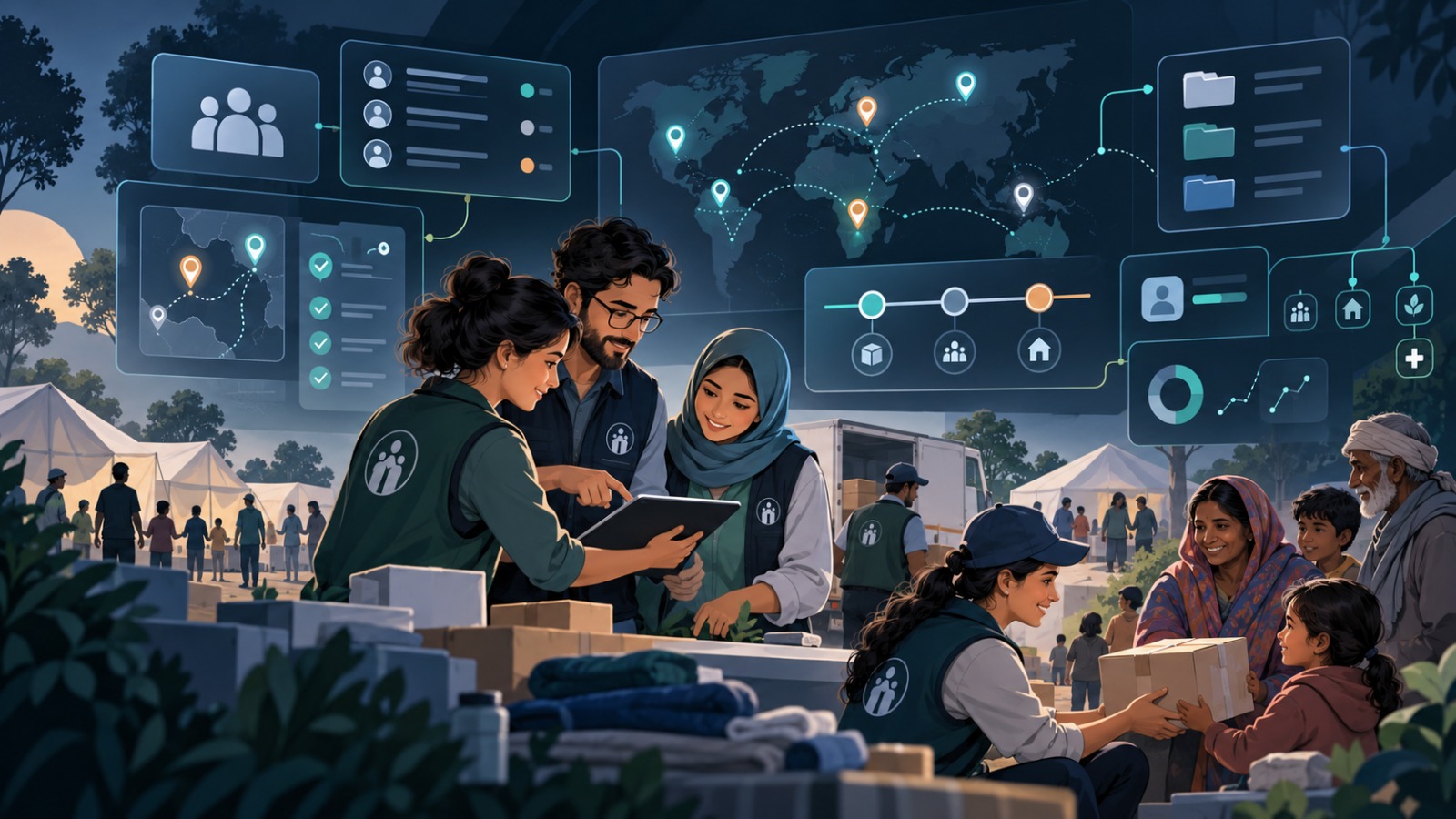
Running an NGO involves much more than raising donations and delivering assistance. Organisations must coordinate donors, manage funds, maintain beneficiary records, organise welfare projects, communicate with volunteers, and report their progress. When these activities are handled through separate spreadsheets, paper documents, and messaging applications, important information can become difficult to track.
These challenges can affect both day-to-day operations and an organisation’s ability to demonstrate accountability. Teams may spend valuable time searching for records instead of supporting beneficiaries, while managers may struggle to understand the progress of different welfare programmes.
A welfare management platform can help address these challenges by bringing relevant information and processes into a more organised digital environment. For NGOs, charitable trusts, foundations, and community organisations, the goal is to improve coordination, maintain reliable records, and make welfare activities easier to monitor.
Understanding how such a platform works can help an organisation decide whether digital welfare management is the right next step.
What Is a Welfare Management Platform?
A welfare management platform is a digital system designed to help organisations organise and coordinate welfare-related activities, resources, projects, beneficiaries, and reporting. Depending on its capabilities, it may support processes such as donor management, contribution tracking, beneficiary records, project coordination, and progress monitoring.
For an NGO, the value of a welfare management platform lies in connecting activities that might otherwise be managed separately.
For example, an organisation running an educational assistance programme needs to understand how donations support the programme, which children are eligible for assistance, what resources have been distributed, and what outcomes can reasonably be reported.
A suitable platform can help organise this information and make it easier for authorised team members to review it.
A welfare management platform is not simply a donation collection tool. It supports a broader view of how an organisation plans, delivers, monitors, and reports its welfare activities.
Why Do NGOs Need a Welfare Management Platform?
NGOs need an organised management approach because welfare programmes involve multiple responsibilities, limited resources, and people working across different activities or locations. A suitable platform can help teams coordinate these responsibilities and reduce the difficulties caused by fragmented information.
Here are some of the main reasons an NGO might consider one.
1. How Can a Platform Help NGOs Manage Information?
A welfare management platform can help NGOs keep relevant information organised instead of maintaining disconnected records across multiple files and applications.
An organisation may have one spreadsheet for donors, another for beneficiaries, separate documents for project expenses, and conversations containing distribution updates. Finding the latest information can become difficult when several people are involved.
A more structured digital system can help authorised users access and update relevant records according to their responsibilities.
This can reduce the time spent searching for information and make it easier to review a programme’s status.
2. How Can It Improve Donor Management?
A welfare management platform may help an NGO maintain donor records, organise contribution histories, and support consistent communication with supporters, depending on the available features.
Accurate records are important for acknowledging contributions, understanding donor relationships, and preparing appropriate updates.
For example, an NGO conducting a fundraising campaign for school supplies needs a reliable record of contributions received and the programme those contributions support. Organised information can help the team prepare clearer updates and avoid repeatedly searching for donation details.
Donor information should be maintained carefully, with access restricted to authorised people.
3. How Can It Improve Beneficiary Management?
A welfare management platform can help an organisation maintain structured records of beneficiaries and document the assistance provided to them.
Depending on the programme, these records may include eligibility information, identified needs, support received, and follow-up requirements.
For instance, a community organisation distributing food packages may need to record which households received assistance and which households still require support. An organised process can help the team coordinate distribution and identify gaps.
Beneficiary management must also protect privacy. NGOs should collect only the information necessary for their work and handle sensitive records with care, particularly when programmes involve children or vulnerable individuals.
4. How Can It Support Welfare Project Coordination?
A platform can help NGOs organise project activities, assign responsibilities, monitor progress, and maintain records of completed work.
This is particularly useful when an organisation runs several programmes simultaneously or coordinates staff and volunteers across different locations.
A project coordinator may need to know which activities are complete, which resources are still required, and whether any delays could affect delivery. Structured project information helps the team review these questions and decide what needs attention.
5. How Can It Strengthen Transparency and Accountability?
A welfare management platform can support transparency by helping an NGO maintain records of contributions, resource allocation, project activities, and assistance delivered.
These records can make internal reviews and stakeholder reporting more consistent. They can also help managers identify missing information and investigate discrepancies.
However, technology alone does not guarantee transparency. Organisations still need clear procedures, accurate data entry, responsible decision-making, appropriate access controls, and regular reviews.
What Are the Key Benefits of a Welfare Management Platform for NGOs?
The benefits depend on the organisation’s needs and the platform’s actual capabilities. When the system fits existing workflows, it can help improve several areas of welfare operations.
Better Coordination Across Teams
When relevant information is organised and accessible to authorised team members, staff and volunteers can coordinate activities with fewer misunderstandings.
For example, a field coordinator can document completed distributions so that the project manager can review progress without waiting for several separate messages.
More Consistent Record-Keeping
Standardised records help an organisation maintain a clearer history of donations, beneficiary assistance, project activities, and resource allocation.
Consistent records also make it easier to identify missing details and prepare summaries.
Improved Reporting
When information is recorded throughout a programme, preparing reports can become more straightforward than collecting details from multiple sources at the end.
Reports may cover contributions received, planned activities, assistance delivered, resources used, and outstanding work.
Clearer Resource Planning
Organised project and resource information can help managers understand what has been allocated, what has been used, and where additional support may be required.
This is useful for NGOs that manage several welfare programmes with competing resource needs.
Better Donor Communication
Reliable donation and project records can help organisations share accurate updates with supporters. Clear communication helps donors understand what the organisation has done, what remains in progress, and what challenges it has encountered.
Stronger Monitoring of Welfare Activities
A platform may help organisations compare planned activities with completed work and maintain information about relevant programme indicators.
This gives managers a clearer basis for reviewing progress and deciding where improvements are needed.
How Can a Welfare Management Platform Support the Entire Welfare Process?
A welfare management platform can help connect the different stages of a welfare initiative rather than treating fundraising, project delivery, and reporting as separate activities.
The overall process can be understood as:
Donors → Contributions → Funds → Welfare Projects → Beneficiaries → Outcomes → Reporting → Continued Support
Each stage depends on reliable information from the stages before it.
- Donors: Maintain relevant information about supporters and their contributions.
- Contributions: Record donations and other appropriate forms of support.
- Funds: Document allocation and use according to the organisation’s procedures.
- Welfare projects: Organise planned activities, responsibilities, and resources.
- Beneficiaries: Record eligible recipients and assistance delivered.
- Outcomes: Assess progress against the programme’s objectives.
- Reporting: Communicate accurate information to relevant stakeholders.
- Continued support: Use clear reporting and honest communication to maintain relationships with donors and communities.
This connected approach reflects the broader concept of welfare governance: the structured management of welfare activities, resources, people, projects, beneficiaries, accountability, reporting, and impact.
Fundraising is one part of this process. Effective welfare delivery also requires responsible resource allocation, organised project execution, beneficiary protection, and meaningful evaluation.
How Does a Welfare Management Platform Work in Practice?
Consider a community NGO planning an educational support programme for 100 children.
The organisation wants to provide school supplies and learning materials while keeping track of fundraising, distribution, and programme progress.
Step 1: Plan the Programme
The NGO defines the programme’s objectives, identifies eligibility criteria, estimates resource requirements, and assigns responsibilities to team members.
Step 2: Organise Donations
The fundraising team records contributions and maintains the information needed to understand the resources available for the programme.
Step 3: Maintain Beneficiary Records
The organisation records the information necessary to identify eligible children and coordinate assistance. Access to children’s personal information is restricted to authorised team members.
Step 4: Allocate Resources
The team plans purchases, documents relevant allocations, and coordinates the preparation of learning materials.
Step 5: Record Distribution
Volunteers distribute supplies and record what has been provided. The team identifies any outstanding requirements and arranges follow-up where necessary.
Step 6: Review Progress
The programme manager compares planned activities with completed work and reviews the resources used.
Step 7: Prepare Reports
The organisation summarises contributions, expenditure, distribution activities, and relevant feedback. It communicates what was completed and identifies challenges or improvements for the next programme.
A suitable platform can help organise these connected activities, provided its features support the required workflows. The organisation must still verify records, supervise the programme, and evaluate outcomes appropriately.
What Challenges Can a Welfare Management Platform Help Solve?
A welfare management platform may help address several common operational challenges faced by NGOs.
Scattered records: A structured system can make relevant information easier to find and maintain.
Repeated administrative work: Standardised processes may reduce duplicate data entry and repetitive record searches.
Unclear project progress: Organised activity records can help managers identify delays and incomplete tasks.
Inconsistent reporting: Records maintained throughout a programme can make report preparation more reliable.
Limited visibility into resource use: Clear allocation and expense records can support better internal reviews.
Difficulty tracking assistance: Beneficiary and distribution records can help teams understand what support has been delivered and what remains outstanding.
These benefits are not automatic. If information is inaccurate, staff members do not update records, or responsibilities remain unclear, the platform may reproduce the same problems in digital form.
The organisation should improve its processes alongside adopting technology.
How Should an NGO Choose the Right Welfare Management Platform?
An NGO should choose a welfare management platform based on its actual operational requirements, staff capacity, budget, data sensitivity, and programme complexity.
Before selecting a solution, consider these practical steps.
1. Identify the Main Problem
Start by listing the activities that currently create the most difficulty.
Examples include tracking donations, maintaining beneficiary records, coordinating field teams, monitoring project progress, or preparing reports.
Prioritise problems that affect service delivery, accountability, or the reliability of information.
2. Define Essential Features
Decide which functions are necessary and which are optional.
A small organisation may initially need beneficiary records and distribution tracking. An NGO with several programmes may also require donor management, project coordination, and consolidated reporting.
Do not select a platform simply because it offers many features. Choose one that supports the tasks your organisation actually performs.
3. Review Data Security and Privacy
Ask how the platform manages user permissions, sensitive information, backups, account access, and data export.
The organisation should be able to establish appropriate access restrictions and follow its own data protection procedures.
4. Check Ease of Use
Staff and volunteers should be able to understand the system without excessive training.
Consider the team’s digital skills, internet access, language needs, and working conditions. A system that is difficult to use may lead to incomplete records and inconsistent adoption.
5. Understand Costs and Support
Review subscription charges, setup requirements, training, support, maintenance, and any additional costs associated with the functions you need.
Evaluate the overall value rather than focusing only on the initial price.
6. Test the Platform Before Expanding
Where possible, test the platform with one programme or a limited set of records.
Check whether users can complete routine tasks, whether the reports are useful, and whether permissions work as expected. Gather team feedback before implementing the system across the organisation.
What Are the Best Practices for Using a Welfare Management Platform?
Successful implementation depends on clear processes and consistent use. NGOs should prepare their teams and records before expecting a digital platform to improve operations.
Useful practices include:
- Start small: Introduce the platform for a clearly defined process or programme.
- Review existing data: Correct duplicate, outdated, and incomplete records before transferring them.
- Assign responsibilities: Decide who maintains records, checks their accuracy, and manages access.
- Train staff and volunteers: Explain how to use the system and why accurate information matters.
- Protect beneficiary information: Collect only necessary data and restrict access appropriately.
- Review reports regularly: Use reports to identify problems and decide what action is needed.
- Measure practical improvements: Assess whether coordination, record quality, or reporting has improved.
- Refine the process: Update workflows when programme needs or organisational responsibilities change.
The purpose of a digital platform is to make welfare operations easier to manage, not to create unnecessary administrative work.
How Can NGOs Measure the Impact of a Welfare Management Platform?
NGOs can evaluate a platform by checking whether it improves the quality of their records, coordination, reporting, and welfare delivery.
Useful indicators may include:
- Time required to prepare project reports.
- Completeness and accuracy of beneficiary records.
- Percentage of planned activities completed on schedule.
- Time taken to locate relevant contribution or project information.
- Number of unresolved discrepancies in records.
- Consistency of beneficiary follow-up.
- Use of monitoring information in programme reviews.
Organisations should establish a baseline before introducing a new system where practical. They can then review the same indicators after implementation.
For example, an NGO may compare how long it takes to prepare a project report before and after introducing a more structured record-keeping process.
These measures show operational changes, but they do not automatically demonstrate improved long-term social impact. To evaluate social impact, the NGO must also examine whether its welfare programmes are contributing to the outcomes they were designed to achieve.
How Can a Welfare Management Platform Support Small NGOs?
A welfare management platform can support small NGOs when it addresses genuine administrative challenges without exceeding their resources or technical capacity.
A volunteer-led organisation does not necessarily need a complex system. It can begin by standardising donor records, maintaining a beneficiary assistance register, documenting project activities, and establishing a regular reporting process.
As its programmes expand, it can consider a more integrated platform to reduce fragmented record-keeping and improve coordination.
The right solution should match the organisation’s current needs while allowing room for reasonable growth. Clear processes and consistent use matter more than adopting the most complicated technology available.
Ultimately, a welfare management platform should help the organisation deliver assistance more effectively, maintain reliable information, and make informed decisions about its welfare activities.
Frequently Asked Questions
What is a welfare management platform?
A welfare management platform is a digital system that helps organisations organise welfare activities, resources, beneficiaries, projects, and reporting in a structured way.
How can a welfare management platform help NGOs?
It can help NGOs organise donor and beneficiary records, track contributions, coordinate welfare projects, maintain activity records, and support more consistent reporting, depending on its features.
What features should NGOs look for in a welfare management platform?
Relevant features may include donor management, contribution tracking, beneficiary records, project coordination, resource tracking, reporting, and impact monitoring. NGOs should select features according to their actual needs.
Is a welfare management platform suitable for small NGOs?
Yes. Small NGOs can adopt simple digital processes first and move to a more integrated platform as their programmes and administrative requirements grow.
How does a welfare management platform improve transparency?
It can help maintain organised records of contributions, resource allocation, project activities, and assistance delivered. Transparency still depends on accurate records, clear procedures, and regular reviews.
Can a welfare management platform manage donors and beneficiaries?
Some platforms support both donor and beneficiary management. NGOs should verify the available functions, access controls, and data protection arrangements before selecting a system.
What is the difference between a welfare management platform and a donation platform?
A donation platform primarily supports donation collection. A welfare management platform may support a broader set of activities, including beneficiary management, project coordination, resource tracking, and reporting.
How should NGOs measure the success of a welfare management platform?
NGOs can review improvements in record accuracy, reporting time, project coordination, information access, and beneficiary follow-up. Programme outcomes should be assessed separately using suitable indicators.
NidhiMax Conclusion
How NidhiMax Can Help NGOs Build a More Organised Welfare System
NGOs need a clear understanding of how their fundraising, contributions, resources, projects, and beneficiaries connect. When these activities are managed through disconnected processes, it can become harder to coordinate work, maintain reliable records, and report progress.
NidhiMax — Welfare Governance Platform is designed to help charitable organisations, NGOs, trusts, community organisations, and welfare institutions move toward a more organised digital welfare-management ecosystem.
For an organisation considering this approach, a useful starting point is to identify where its existing processes need improvement. Better organisation of information, clearer coordination, and consistent reporting can help create a stronger foundation for welfare governance.
Every organisation has different priorities, resources, and workflows. Technology should support those needs while keeping beneficiary welfare, transparency, and accountability at the centre of decision-making.