 Post by
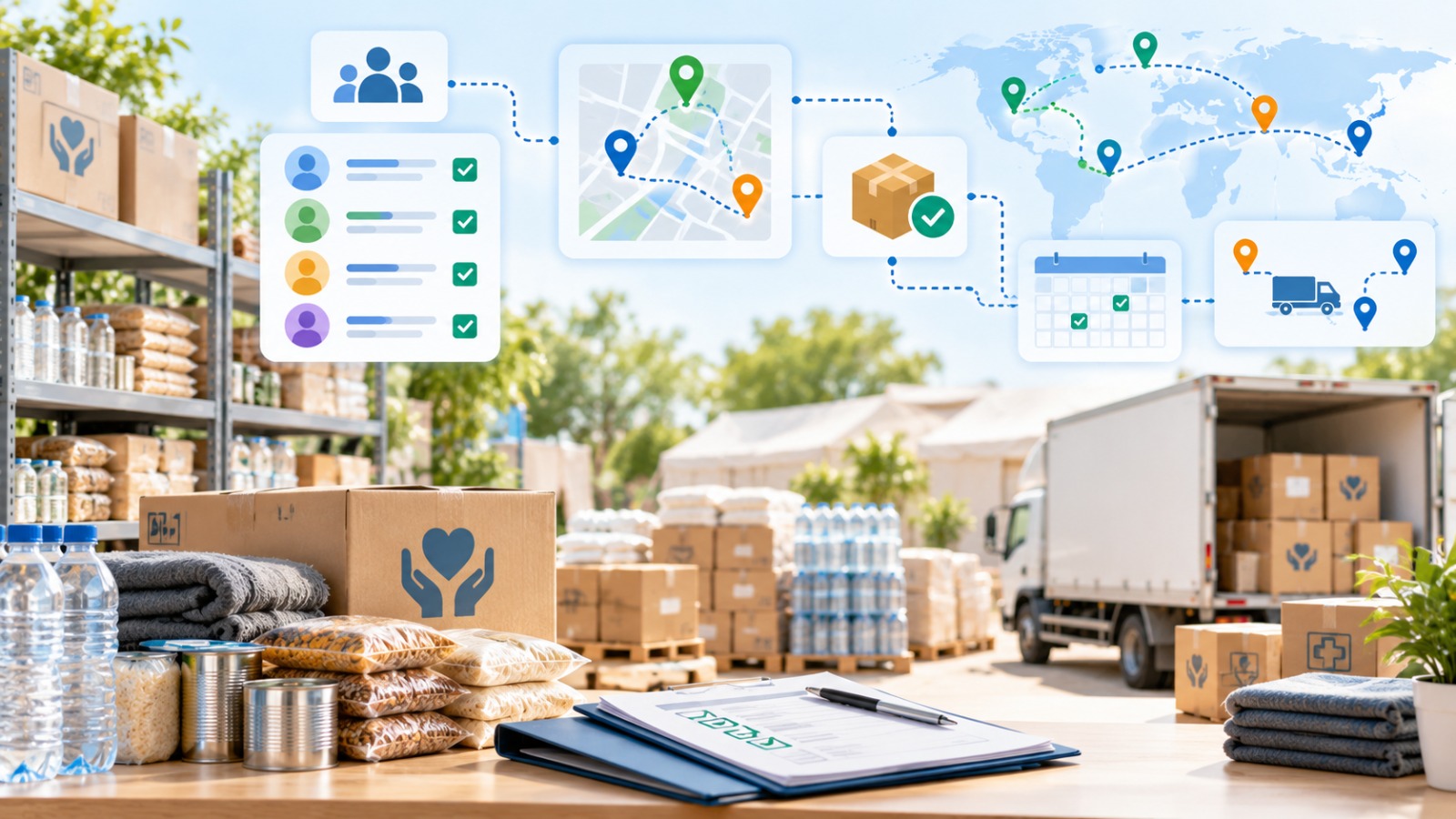
Charitable organisations and NGOs manage many activities to deliver support to the people who need it. They collect donations, coordinate volunteers, maintain beneficiary records, organise welfare projects, distribute resources, and report their progress to donors and trustees. When these activities are managed through separate spreadsheets, paper files, messaging apps, and manual processes, keeping everything organised can become difficult.
A welfare management system helps an organisation manage these activities through a more structured approach. Depending on its capabilities, the system may help teams organise donor information, track contributions, manage beneficiaries, coordinate welfare projects, and maintain records for reporting and review.
For NGOs, charitable trusts, foundations, and community organisations, the goal is straightforward: make welfare activities easier to coordinate, improve access to reliable information, and support responsible use of resources.
Understanding how a welfare management system works can help an organisation decide which processes need improvement and whether digital tools are appropriate for its needs.
What Is a Welfare Management System?
A welfare management system is a structured method or digital solution for organising and monitoring welfare activities, resources, beneficiaries, and related administrative processes. It helps charitable organisations coordinate the work involved in planning, delivering, and reviewing welfare programmes.
Depending on the organisation and the software selected, a welfare management system may support activities such as:
- Fundraising and donation record-keeping.
- Donor information management.
- Beneficiary registration and assistance records.
- Welfare project planning and coordination.
- Fund allocation and contribution tracking.
- Communication with relevant stakeholders.
- Project reporting and progress monitoring.
- Social impact measurement.
A welfare management system does not necessarily need to include every function. A small community organisation may need a simple way to track beneficiaries and distributions, while a larger NGO may need a more integrated approach to donor records, multiple projects, field activities, and reporting.
The most important consideration is whether the system supports the organisation’s actual welfare processes.
Why Do NGOs Need a Welfare Management System?
NGOs need an organised welfare management approach because delivering assistance involves several connected activities, people, and resources. When information is scattered or responsibilities are unclear, teams may struggle to coordinate work, prepare reports, and understand whether planned assistance has reached the intended beneficiaries.
A suitable system can help address common operational challenges.
1. How Can a Welfare Management System Reduce Manual Work?
A welfare management system can reduce repetitive administrative work by giving teams a consistent way to record, update, and retrieve information.
For example, staff members may otherwise maintain separate lists for beneficiaries, donations, project activities, and distributions. When the same information must be entered repeatedly, the risk of errors and duplication can increase.
A structured system can make routine tasks easier to manage, depending on its features. Staff may spend less time searching for records and more time coordinating services and supporting beneficiaries.
2. How Can It Improve Transparency and Accountability?
A welfare management system can support transparency by helping an organisation maintain records of contributions, project activities, resource allocation, and assistance delivered.
These records can help managers and trustees review what has happened and identify information that needs clarification. They can also support more consistent reporting to donors and other stakeholders.
However, software alone does not guarantee accountability. Organisations still need clear approval procedures, accurate data entry, appropriate access controls, and regular reviews.
3. How Can It Help Manage Beneficiaries?
Beneficiary management involves recording relevant information about people receiving assistance and tracking the support provided to them.
A suitable system can help an NGO maintain organised beneficiary records, identify assistance needs, record distributions, and coordinate follow-up activities.
For example, an organisation providing healthcare assistance may need to know which eligible individuals have received support, what assistance was provided, and whether further follow-up is required.
Beneficiary information must be handled carefully. Organisations should collect only necessary data, restrict access to authorised personnel, and avoid exposing sensitive personal details in reports or communications.
4. How Can It Improve Welfare Project Coordination?
Welfare projects often involve multiple tasks, deadlines, volunteers, suppliers, and field coordinators. A management system can help teams organise project plans, assign responsibilities, monitor progress, and document completed activities.
This is useful when an organisation runs several programmes at the same time, such as food distribution, educational support, and community healthcare assistance.
Clear project records help managers understand which activities are on schedule, where resources are needed, and which issues require attention.
What Are the Main Features of a Welfare Management System?
The features of a welfare management system vary by provider and organisational requirements. Before selecting a solution, NGOs should understand the functions they need and distinguish essential capabilities from optional additions.
1. Donor and Donation Management
Donor and donation management helps an organisation maintain organised records of supporters and contributions.
Depending on the system, relevant functions may include recording donor details, tracking contributions, maintaining donation histories, and preparing summaries for internal review.
Accurate donor records can also support more relevant communication, such as acknowledging contributions and sharing updates about the programmes donors support.
2. Beneficiary Record Management
Beneficiary record management helps organisations maintain information needed to assess needs, coordinate assistance, and document support delivered.
The exact information should depend on the programme. An educational initiative may need to record school-supply assistance, while a food distribution programme may need to track household-level deliveries.
A good process should avoid collecting unnecessary personal information and should establish clear rules for who can view or update records.
3. Welfare Project Management
Project management functions can help organisations define objectives, organise tasks, assign responsibilities, and record progress.
This can make it easier to compare planned activities with completed work and identify delays that may affect service delivery.
4. Fund and Resource Tracking
Fund and resource tracking helps teams understand what resources have been received, allocated, spent, or remain available.
Depending on the system, this may involve recording contributions, project budgets, expenses, or the distribution of non-financial resources.
Organisations should verify whether the chosen system supports their specific financial workflows. A welfare management system should not automatically be assumed to replace accounting software or professional financial oversight.
5. Communication and Reporting
Communication and reporting functions help teams organise updates and prepare summaries for managers, trustees, donors, or other relevant stakeholders.
Useful reports may describe contributions received, planned and completed activities, beneficiaries supported, resources used, and outstanding tasks.
Reports should be based on accurate information and clearly distinguish completed activities from intended outcomes.
6. Monitoring and Impact Tracking
Impact tracking helps an organisation assess whether its programmes are progressing toward their objectives.
For example, a programme may record the number of students who received learning materials and separately collect appropriate feedback about whether the materials met their needs.
Counting activities is useful, but it does not by itself prove long-term impact. Organisations should choose indicators that reflect their objectives and acknowledge the limitations of the information they collect.
How Does a Welfare Management System Work in Practice?
A welfare management system connects the activities involved in delivering assistance, from organising resources to reviewing results.
Consider a community organisation planning an educational support programme for 100 children.
Step 1: Plan the Programme
The organisation defines the purpose of the programme, identifies eligible beneficiaries, estimates its resource requirements, and assigns responsibilities to team members.
Step 2: Organise Contributions
The fundraising team records donations and maintains the information needed to understand the resources available for the programme.
Step 3: Maintain Beneficiary Records
The organisation records the information necessary to determine eligibility and coordinate support. Access to children’s personal information is limited to authorised team members.
Step 4: Allocate Resources
The team plans how school supplies and other educational materials will be purchased and distributed. Relevant costs and resource allocations are documented.
Step 5: Coordinate Distribution
Volunteers and coordinators use the programme plan to organise delivery. The team records the assistance provided and identifies any children who still need support.
Step 6: Review and Report
The organisation compares planned activities with actual delivery, reviews the resources used, and records relevant feedback.
It can then prepare an appropriate report explaining what was completed, what challenges arose, and what improvements may be needed.
In this example, the system helps connect fundraising, contributions, resources, welfare projects, beneficiaries, outcomes, and reporting. The result is a clearer process for managing the programme.
What Is the Difference Between a Welfare Management System and Manual Record-Keeping?
Manual record-keeping uses tools such as paper registers, spreadsheets, individual documents, and messaging applications to maintain organisational information. A welfare management system provides a more structured way to manage some or all of these activities.
Area | Manual record-keeping | Structured welfare management system |
Information storage | May be spread across files and tools | Can organise relevant records in a central system |
Updating records | Depends on individual processes | May provide standardised data-entry workflows |
Project coordination | Often relies on separate lists and messages | May connect tasks, responsibilities, and progress |
Reporting | May require manual consolidation | May support reports from recorded information |
Access control | Depends on how files are shared | May provide configurable user permissions |
Growth | Can become difficult as records increase | May support more structured processes as needs grow |
These differences depend on how an organisation works and which system it chooses. A well-maintained spreadsheet may be sufficient for a small initiative, while disconnected manual processes may become harder to manage as programmes expand.
The decision should be based on actual operational needs, not the assumption that every organisation must adopt specialised software.
What Challenges Can a Welfare Management System Help Solve?
A welfare management system may help organisations address recurring operational problems, provided that the system matches their needs and is used consistently.
Scattered records: Organised storage can make it easier to locate relevant donor, beneficiary, and project information.
Repeated data entry: Standardised workflows can reduce the need to record the same information in several places.
Unclear project progress: Structured activity records can help managers identify incomplete tasks and delays.
Time-consuming reporting: Consistent records can make it easier to prepare summaries and review project performance.
Limited coordination: Shared information can help authorised team members understand responsibilities and progress.
Difficulty tracking assistance: Beneficiary and distribution records can help organisations check what support has been delivered and what remains outstanding.
A system will not solve every problem automatically. If staff do not update records, procedures are unclear, or the organisation collects unreliable information, the resulting reports may still be inaccurate.
How Should an NGO Choose the Right Welfare Management System?
An NGO should choose a welfare management system based on its size, programmes, staff capacity, budget, data sensitivity, and operational priorities.
Before making a decision, consider the following steps.
1. Identify Your Main Operational Problems
List the tasks that currently take too much time or create the greatest difficulty.
Examples include finding donor records, tracking assistance, coordinating multiple projects, or preparing reports for trustees.
Prioritise problems that affect service delivery, accountability, or the reliability of records.
2. Define the Features You Actually Need
Separate essential requirements from functions that would simply be convenient.
A small charity may need beneficiary records and distribution tracking first. An organisation managing several programmes may also need donor management, project coordination, and consolidated reporting.
3. Review Data Security and Access
Ask how the system handles user permissions, sensitive beneficiary information, backups, data export, and account access.
Confirm that the organisation can restrict information according to team responsibilities and follow its own data protection policies.
4. Check Ease of Use
The system should be understandable to the people who will use it. Consider whether staff and volunteers can learn the required workflows without excessive training.
A system that is too complicated may lead to incomplete records and inconsistent adoption.
5. Understand Costs and Support
Review subscription charges, setup requirements, training, support, maintenance, and any additional costs associated with the functions you need.
The lowest initial price may not represent the lowest overall cost if the system requires extensive manual work or does not support important processes.
6. Test Before Full Implementation
Where possible, test the system with one project or a limited set of records.
Use the trial to evaluate data entry, reporting, permissions, and the team’s ability to complete routine tasks. Gather feedback before extending the system across the organisation.
What Are the Best Practices for Implementing a Welfare Management System?
Successful implementation depends on people and processes as much as technology. An organisation should establish clear procedures before expecting software to improve its operations.
Recommended practices include:
- Start with a manageable scope. Introduce the system for one or two important processes before expanding.
- Clean existing records. Review duplicate, outdated, and incomplete information before transferring it.
- Assign responsibility. Decide who will maintain records, review entries, and manage access.
- Train the team. Explain both how to use the system and why consistent records matter.
- Protect beneficiary privacy. Collect necessary information only and restrict access appropriately.
- Review data quality. Check records regularly for missing details, inconsistencies, and errors.
- Measure practical improvements. Review whether reporting takes less effort, project tracking is clearer, or records are more reliable.
- Improve gradually. Adapt workflows as the organisation learns what works and what needs adjustment.
A practical implementation should make everyday work clearer. It should not introduce unnecessary administrative steps that take attention away from beneficiaries.
How Does a Welfare Management System Support Welfare Governance?
A welfare management system can support welfare governance by helping an organisation connect resources, activities, decisions, and results in a more organised way.
Welfare governance is the broader framework for managing welfare activities responsibly. It includes clear responsibilities, appropriate resource allocation, beneficiary protection, transparency, reporting, and attention to outcomes.
A digital system may provide tools for maintaining records and coordinating activities, but governance also requires human judgement, ethical practices, internal controls, and regular oversight.
The relationship can be understood through this process:
Donors → Contributions → Funds → Welfare Projects → Beneficiaries → Outcomes → Reporting → Continued Support
Fundraising is one part of the process. The organisation must also manage how resources are allocated, how assistance is delivered, and how progress is reviewed and communicated.
When a welfare management system supports these connected activities, it can contribute to a stronger welfare governance framework.
Is a Welfare Management System Suitable for Small Charities?
Yes. A welfare management system can be useful for a small charity if it addresses a genuine operational need and remains affordable and manageable.
A volunteer-led organisation may begin with a simple digital register, standard templates, clear approval procedures, and regular project reviews. It can introduce specialised software when the number of programmes, beneficiaries, or records makes existing processes difficult to maintain.
The right starting point is not the most complex technology. It is the simplest reliable approach that helps the organisation manage its responsibilities, protect information, and deliver assistance effectively.
As the organisation grows, it can reassess whether a more integrated digital system would improve coordination and reporting.
What Should Organisations Consider Before Moving to Digital Welfare Management?
Before adopting a digital welfare management system, organisations should assess their current processes, data quality, staff capacity, and expectations.
They should also decide which information needs to be shared, which records must remain restricted, and how data will be maintained over time.
It is important to distinguish between recording an activity and proving an outcome. A system may show that supplies were distributed, for example, but evaluating whether those supplies improved educational participation may require additional information and follow-up.
Technology is most valuable when it supports responsible decisions and helps teams understand what is happening across their welfare programmes.
For NGOs and charitable trusts, the long-term objective should be a practical system that strengthens coordination, supports accountability, and keeps the needs of beneficiaries at the centre of the organisation’s work.
Frequently Asked Questions
What is a welfare management system?
A welfare management system is a structured method or digital solution for organising welfare activities, resources, beneficiaries, projects, and reporting. It helps organisations coordinate assistance and maintain reliable records.
Why do NGOs need a welfare management system?
NGOs may use a welfare management system to organise donor and beneficiary information, coordinate projects, track resources, improve reporting, and reduce difficulties caused by scattered records.
What features should a welfare management system have?
Relevant features may include donor management, contribution tracking, beneficiary records, welfare project management, resource tracking, communication, reporting, and impact monitoring. The right combination depends on the organisation’s needs.
How does a welfare management system help beneficiaries?
It can help organisations record assistance provided, coordinate services, identify outstanding needs, and plan follow-up activities while protecting beneficiaries’ personal information.
Can small NGOs use a welfare management system?
Yes. Small NGOs can begin with simple digital records and standard procedures, then adopt more integrated software as their programmes and administrative needs grow.
What is the difference between welfare management and welfare governance?
Welfare management focuses on organising and delivering welfare activities. Welfare governance is the broader framework that includes accountability, decision-making, responsible resource use, transparency, and oversight.
How can technology improve welfare management?
Technology can help organise information, track contributions, coordinate projects, maintain beneficiary records, and prepare reports. Its effectiveness depends on accurate data, clear processes, and appropriate oversight.
How should an NGO choose a welfare management system?
An NGO should assess its operational needs, essential features, ease of use, data security, cost, staff capacity, and reporting requirements before selecting a system.
NidhiMax Conclusion
How NidhiMax Can Help Organisations Build a More Organised Welfare System
Managing welfare activities requires coordination across fundraising, contributions, beneficiaries, projects, resources, and reporting. When these activities are handled through disconnected processes, maintaining accurate information and reviewing progress can become more difficult.
NidhiMax — Welfare Governance Platform is designed to help charitable organisations, NGOs, trusts, community organisations, and welfare institutions move toward a more organised digital welfare-management ecosystem.
For organisations exploring this approach, the first step is to identify where their current processes need improvement. Better organisation of records, clearer coordination, and more consistent reporting can provide a practical foundation for stronger welfare governance.
Every organisation has different requirements, so technology should be selected according to its actual workflows, resources, and responsibilities. The goal is to support effective welfare delivery while keeping transparency, accountability, and beneficiary needs at the centre.