 Post by

Charitable organisations, NGOs, and community institutions work to improve lives by providing education, healthcare, food, financial assistance, and other essential services. But delivering meaningful support involves much more than collecting donations and distributing resources. Organisations must coordinate people, manage funds, identify beneficiaries, monitor projects, and demonstrate how their work creates value.
When these activities are handled separately, important information can become difficult to track. Donor records may be scattered across spreadsheets, project updates may be delayed, and welfare activities may be harder to evaluate. These challenges can affect efficiency, transparency, and public trust.
This is where welfare governance becomes important. It provides a structured approach to managing welfare activities, resources, responsibilities, and outcomes so that charitable organisations can work more effectively and remain accountable to the communities they serve.
What Is Welfare Governance?
Welfare governance is the structured management of an organisation’s welfare activities, resources, people, projects, beneficiaries, accountability, reporting, and social impact. It helps ensure that support is planned, allocated, delivered, monitored, and reported in an organised manner.
For an NGO or charitable trust, welfare governance connects the different activities involved in delivering assistance. These may include fundraising, donor management, beneficiary identification, project execution, fund allocation, communication, and impact reporting.
For example, an organisation providing educational support to children needs to know:
- Where its funding comes from.
- How much money has been received.
- How funds are allocated to educational activities.
- Which children receive assistance.
- Whether the planned support has been delivered.
- What progress has been made.
- How the organisation communicates results to donors and stakeholders.
Welfare governance brings these responsibilities into a clearer framework.
It is not limited to software or administrative procedures. It also involves good decision-making, clear responsibilities, ethical practices, accurate records, and a commitment to accountability.
Why Does Welfare Governance Matter for NGOs and Charities?
Welfare governance matters because charitable organisations must use limited resources responsibly while ensuring that assistance reaches the people and communities it is intended to support.
Without a clear management structure, even a well-intentioned organisation can struggle with incomplete records, duplicated work, unclear responsibilities, and inconsistent reporting.
Here are some important reasons welfare governance deserves attention.
1. How Does Welfare Governance Improve Transparency?
Welfare governance improves transparency by helping organisations maintain clear records of donations, fund allocation, project activities, and the assistance provided to beneficiaries.
When information is organised, authorised team members can understand how resources move through the organisation. Donors and trustees can also receive clearer explanations of how funds are being used.
For example, a charity raising money for medical assistance should be able to document the amount collected, the expenses incurred, the assistance delivered, and the remaining funds.
Transparent records make it easier to answer questions and identify gaps before they become larger problems.
2. How Does It Strengthen Accountability?
Accountability means that people responsible for welfare activities can explain their decisions, actions, and use of resources.
A welfare governance framework helps define who approves expenditure, who manages beneficiary records, who supervises projects, and who prepares reports.
This clarity is especially useful when an organisation relies on volunteers, multiple field teams, or local community coordinators.
Clear responsibilities reduce confusion and make it easier to review whether activities are being completed as planned.
3. How Can Welfare Governance Improve Resource Allocation?
Welfare governance helps organisations make more informed decisions about how money, materials, staff time, and volunteer support are distributed.
A charity may have several programmes running at once, such as food distribution, healthcare assistance, and educational support. Without organised records, it may be difficult to understand which programmes need additional resources or whether planned funds have already been committed.
By maintaining reliable information about projects, expenses, and needs, organisations can make allocation decisions with greater clarity.
4. Why Is It Important for Building Donor Trust?
Donors are more likely to understand an organisation’s work when it communicates clearly about its activities, progress, and use of contributions.
Welfare governance supports this process by connecting donor contributions with the programmes they support and the results the organisation can reasonably report.
This does not mean promising a particular outcome for every donation. It means maintaining accurate records, communicating honestly, and explaining both achievements and challenges.
Consistent reporting can help charities build stronger relationships with existing supporters and give prospective donors a clearer understanding of their work.
What Are the Main Components of Welfare Governance?
Welfare governance includes several connected areas of organisational management. The exact structure depends on an organisation’s size, mission, resources, and the communities it serves.
1. Fundraising and Donation Management
Fundraising is often the starting point for a welfare programme. Organisations may receive support through individual donations, community campaigns, institutional contributions, or other appropriate funding sources.
Good governance requires clear records of contributions, appropriate handling of funds, and a way to understand how available resources support planned activities.
Donation management should also help organisations maintain accurate donor information and communicate appropriately with supporters.
2. Beneficiary Management
Beneficiary management involves organising information about the individuals or communities receiving assistance.
Depending on the programme, records may include eligibility details, the type of support required, assistance provided, and follow-up information.
Organisations should collect only information that is genuinely needed, restrict access to authorised people, and protect sensitive personal data. Beneficiaries should be treated with dignity, and access to assistance should follow fair and clearly explained criteria.
3. Welfare Project Management
Welfare projects need clear objectives, activities, responsibilities, timelines, and resource plans.
A project management process helps an organisation answer practical questions:
- What is the project intended to achieve?
- Who is responsible for each activity?
- What resources are required?
- How will progress be monitored?
- What happens if the project encounters delays?
- How will completion and results be documented?
These questions help teams coordinate their work and identify issues before they disrupt service delivery.
4. Fund Allocation and Expense Tracking
Organisations need to understand how funds are assigned to different programmes and how actual spending compares with the plan.
Maintaining clear allocation and expense records can help trustees and managers review spending, identify unexpected costs, and prepare accurate internal or external reports.
Financial management and welfare governance are closely connected, but they are not identical. Financial records show how money is received and spent, while welfare governance also examines how resources support activities, beneficiaries, and intended outcomes.
5. Communication and Reporting
Communication connects donors, trustees, staff, volunteers, beneficiaries, and community partners.
A structured reporting process helps ensure that relevant people receive timely and accurate updates. Reports may cover funds received, project progress, assistance delivered, challenges, and lessons learned.
Communication should be appropriate to each audience. A donor update, an internal project report, and a beneficiary notice may require different information and levels of detail.
6. Monitoring and Social Impact
Monitoring helps organisations determine whether activities are being carried out as planned. Impact assessment goes further by examining the changes associated with those activities.
For example, a food distribution programme may track the number of households receiving food packages. To understand its broader contribution, the organisation may also collect appropriate feedback about whether the support addressed the households’ immediate needs.
The measures used should match the programme’s goals. Organisations should avoid claiming that an observed change was caused entirely by their work when other factors may have contributed.
How Does Welfare Governance Work in Practice?
Welfare governance connects the stages of charitable work into a more organised process:
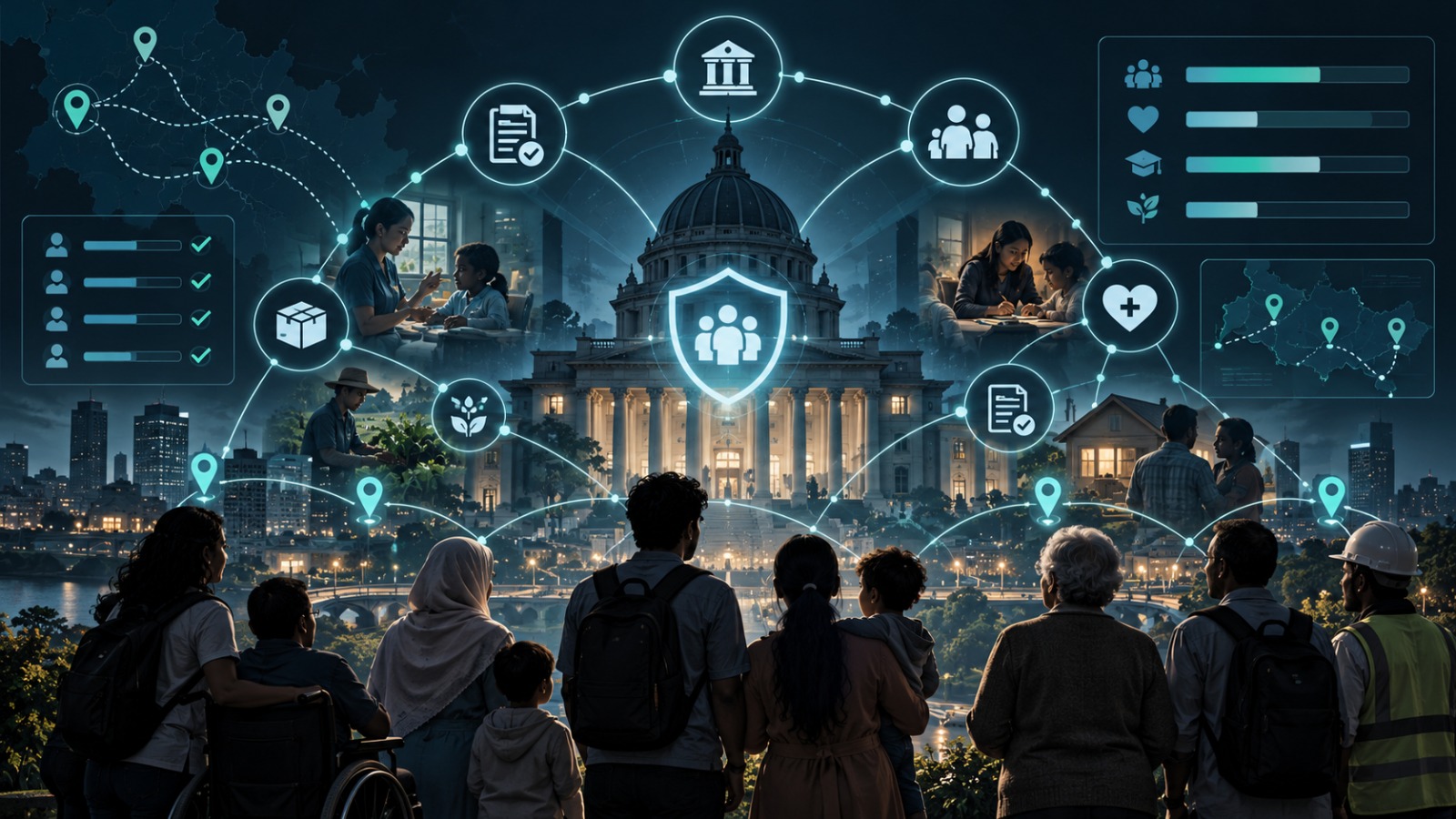
Donors → Contributions → Funds → Welfare Projects → Beneficiaries → Outcomes → Reporting → Continued Support
Each stage contributes to the next. When information is maintained consistently, organisations can better understand how resources move from fundraising to service delivery and reporting.
Consider a community organisation providing educational support to 100 children.
Step 1: Define the Welfare Objective
The organisation identifies the educational needs it intends to address. Its objective might be to provide school supplies and learning materials to eligible children in a particular community.
It establishes the intended activities, budget, eligibility criteria, responsibilities, and reporting approach.
Step 2: Organise Fundraising and Contributions
The organisation raises money from individual donors and community supporters. It records contributions, maintains appropriate supporting documentation, and tracks the funds available for the programme.
Step 3: Identify and Record Beneficiaries
The team identifies eligible children using the organisation’s established criteria. It maintains the information needed to coordinate support while protecting children’s personal details.
Step 4: Allocate Resources and Deliver Assistance
The organisation plans purchases, coordinates volunteers, distributes supplies, and records what has been delivered.
If some children require different materials, the team can document those needs and adjust the distribution plan appropriately.
Step 5: Monitor Progress
The organisation checks whether all planned activities have taken place. It records any delays, shortages, or changes and identifies actions that may be needed.
Step 6: Report Results
The team prepares a summary of contributions, expenditure, distribution activities, and relevant outcomes. It explains what was completed, what remains outstanding, and what could be improved in the next programme.
This example illustrates the practical value of welfare governance. Rather than treating fundraising, beneficiary records, project activities, and reporting as unrelated tasks, the organisation manages them as connected parts of one welfare initiative.
What Challenges Do NGOs Face Without a Welfare Governance Framework?
Many NGOs begin with a small team and a limited number of projects. Informal processes may work at first, but they can become difficult to maintain as programmes, donors, volunteers, and beneficiaries increase.
Common challenges include the following.
Scattered Information
Donation details may be stored in spreadsheets, beneficiary records in separate files, and project updates in messaging groups. Staff members may spend considerable time finding information or reconciling different records.
Unclear Roles and Responsibilities
When several people handle the same activity without defined responsibilities, tasks may be duplicated or overlooked. This can delay decisions and make it difficult to identify who should resolve a problem.
Limited Visibility Into Project Progress
Managers may know how much money has been raised but lack a clear view of what has been delivered, which activities are delayed, or what resources remain available.
Inconsistent Reporting
Preparing reports can become a time-consuming exercise if teams do not record information consistently throughout a project.
Difficulty Demonstrating Outcomes
Organisations may record the number of activities completed without measuring whether those activities addressed the needs they were designed to meet.
These challenges do not necessarily indicate poor intentions or ineffective leadership. Often, they show that existing processes need clearer structure as the organisation grows.
How Can an NGO Build an Effective Welfare Governance Framework?
An NGO does not need to introduce a complicated system immediately. A practical approach is to begin with its most important welfare activities and gradually improve the way information and responsibilities are managed.
1. Map Existing Welfare Processes
Start by documenting how the organisation currently raises funds, approves expenditure, identifies beneficiaries, delivers assistance, and reports progress.
Identify where information is stored, who maintains it, and where delays or duplication occur.
2. Define Roles and Approval Responsibilities
Clarify who is responsible for each major activity and who has the authority to approve important decisions.
For example, a project coordinator may manage day-to-day distribution while a designated manager approves changes to the project budget.
The exact responsibilities should reflect the organisation’s governance arrangements and internal policies.
3. Standardise Record-Keeping
Create consistent procedures for recording donations, beneficiary assistance, project activities, expenses, and outcomes.
Use clear field names, agreed reporting periods, and a consistent method of updating records. Establish checks to identify missing information and duplicate entries.
4. Set Meaningful Performance Indicators
Choose a small set of indicators that reflect the purpose of each welfare programme.
Depending on the activity, these might include:
- Number of eligible beneficiaries receiving assistance.
- Percentage of planned activities completed.
- Funds allocated and spent against the approved plan.
- Time taken to deliver support.
- Beneficiary feedback and reported needs.
- Progress toward the programme’s intended outcomes.
A useful indicator should help the organisation make a decision, not simply create another reporting task.
5. Establish a Regular Review Process
Review project progress, resource use, operational challenges, and beneficiary feedback at an appropriate frequency.
Use these reviews to identify what needs attention, assign follow-up actions, and document lessons for future programmes.
6. Protect Information and Respect Beneficiaries
Create clear rules for collecting, storing, sharing, and retaining personal information. Limit access according to responsibilities and avoid including unnecessary sensitive details in donor-facing reports.
For welfare organisations working with children, patients, or vulnerable communities, privacy and dignity should remain central to every process.
7. Choose Technology That Fits Actual Needs
Once core processes are understood, consider whether digital tools could make record-keeping, coordination, and reporting easier.
Start with the problems that consume the most time or create the greatest risk. A suitable system should support the organisation’s real workflows rather than force the team into unnecessary complexity.
How Can Technology Support Welfare Governance?
Technology can support welfare governance by making important information easier to organise, update, access, and review. It can help reduce repetitive administrative work and improve coordination when systems are chosen and implemented carefully.
Relevant capabilities may include:
- Centralised records: Keep relevant donor, contribution, beneficiary, and project information organised.
- Donation tracking: Record contributions and connect them with the appropriate fundraising activities or programmes.
- Project coordination: Track responsibilities, planned activities, and progress.
- Beneficiary records: Maintain necessary assistance records with appropriate access controls.
- Reporting support: Prepare clearer summaries using consistent and accurate data.
- Communication management: Help teams coordinate updates and communicate with relevant stakeholders.
- Impact monitoring: Organise programme indicators and beneficiary feedback to support evaluation.
Technology is most useful when the organisation has clear processes and people who understand how to use the system. It does not automatically create transparency or accountability. Reliable data, appropriate permissions, human oversight, and regular reviews remain essential.
Smaller charities can begin with well-maintained spreadsheets and documented procedures. As their needs become more complex, they may consider a more integrated welfare management system.
What Is the Difference Between Welfare Governance and Charity Management?
Charity management focuses on running an organisation and its day-to-day activities. It may include staffing, finances, fundraising, volunteer coordination, administration, and programme delivery.
Welfare governance provides a broader framework for ensuring that welfare activities and resources are managed responsibly, with clear accountability and attention to beneficiaries and outcomes.
The two concepts overlap. Effective charity management is an important part of welfare governance, but welfare governance places particular emphasis on how resources, activities, decisions, and results connect to the organisation’s welfare mission.
For example, charity management may ensure that an educational support programme has a budget and a team. Welfare governance also considers whether the intended children received the planned assistance, whether the process was fair, whether the resources were used appropriately, and how the organisation will report its results.
How Can Welfare Governance Help Small Charities?
Small charities can benefit from welfare governance because clear processes reduce dependence on individual memory and informal communication.
A volunteer-led organisation may not need a complex management system. It may begin with a shared contribution register, a beneficiary assistance log, a simple project plan, defined approval responsibilities, and a regular review meeting.
The goal is to establish a reliable process that the team can maintain.
As the organisation grows, it can introduce additional procedures and digital tools where they solve real problems. The framework should remain proportionate to the organisation’s size, available resources, and the sensitivity of the work it performs.
How Can Organisations Measure Whether Welfare Governance Is Working?
Organisations can assess their welfare governance by reviewing whether their processes improve the quality of decisions, the reliability of records, and the delivery of assistance.
Useful questions include:
- Can the organisation trace contributions and explain how funds were allocated?
- Are beneficiary records accurate, relevant, and appropriately protected?
- Are project responsibilities clearly assigned?
- Can managers identify delays and resolve operational issues?
- Are reports prepared using consistent and reliable information?
- Does the organisation collect meaningful beneficiary feedback?
- Are findings from project reviews used to improve future activities?
These questions can form the basis of a periodic internal review. Organisations may also establish simple indicators, such as the percentage of projects reviewed on schedule or the proportion of planned activities completed.
No single indicator can prove that welfare governance is effective. A balanced review should consider processes, resource use, service delivery, beneficiary experience, and the limitations of the available evidence.
What Should Charities Remember About Welfare Governance?
Welfare governance is an ongoing organisational practice, not a one-time administrative exercise. It requires clear responsibilities, reliable information, thoughtful resource allocation, ethical treatment of beneficiaries, and regular evaluation.
Charitable organisations can strengthen their approach by starting with a few practical priorities:
- Understand how funds, people, and activities move through the organisation.
- Establish clear responsibilities and consistent record-keeping.
- Connect fundraising and resource allocation with actual welfare activities.
- Monitor delivery and assess outcomes using relevant evidence.
- Communicate honestly with donors, trustees, beneficiaries, and other stakeholders.
- Improve processes gradually as organisational needs change.
The purpose is not to create more paperwork. It is to help the organisation make better decisions, use resources responsibly, and deliver welfare support in a more organised and accountable way.
Frequently Asked Questions
What is welfare governance in simple terms?
Welfare governance is the organised management of welfare activities, funds, people, projects, and beneficiaries, with a focus on accountability, transparency, and outcomes.
Why is welfare governance important for NGOs?
It helps NGOs manage resources responsibly, coordinate welfare projects, maintain reliable records, protect beneficiary information, and communicate their work clearly to donors and stakeholders.
What are the main components of welfare governance?
Key components include fundraising management, donation tracking, beneficiary management, welfare project coordination, resource allocation, communication, reporting, and impact monitoring.
How is welfare governance different from charity management?
Charity management focuses on running an organisation’s activities. Welfare governance provides a broader framework for connecting those activities with responsible resource use, accountability, beneficiary needs, and intended outcomes.
Can small NGOs implement welfare governance?
Yes. Small NGOs can begin with documented procedures, clear responsibilities, consistent records, simple project plans, and regular reviews before introducing more advanced digital tools.
How can technology improve welfare governance?
Technology can help organise donor and beneficiary information, track contributions, coordinate projects, support reporting, and monitor programme progress when supported by accurate data and appropriate oversight.
How does welfare governance build donor trust?
It helps organisations maintain reliable records and explain how contributions support welfare activities. Clear, honest reporting allows donors to understand progress, spending, challenges, and outcomes.
How can an NGO evaluate its welfare governance system?
An NGO can review record accuracy, project completion, fund allocation, reporting consistency, beneficiary feedback, and whether findings from reviews lead to improvements.
NidhiMax Conclusion
How NidhiMax Can Help Build a Better Welfare Governance System
Welfare organisations need a clear view of how their resources, people, projects, and beneficiaries connect. When these activities are managed through disconnected processes, it can become harder to coordinate work, maintain reliable records, and explain results.
NidhiMax — Welfare Governance Platform is designed to help charitable organisations, NGOs, trusts, community organisations, and welfare institutions move toward a more organised digital welfare-management ecosystem.
For organisations reviewing their current processes, a useful first step is to identify where information is fragmented, where coordination is difficult, and which activities would benefit most from better organisation.
The right approach will depend on each organisation’s mission, scale, available resources, and operational needs. Technology should support these needs while keeping transparency, accountability, and beneficiary welfare at the centre.