 Post by
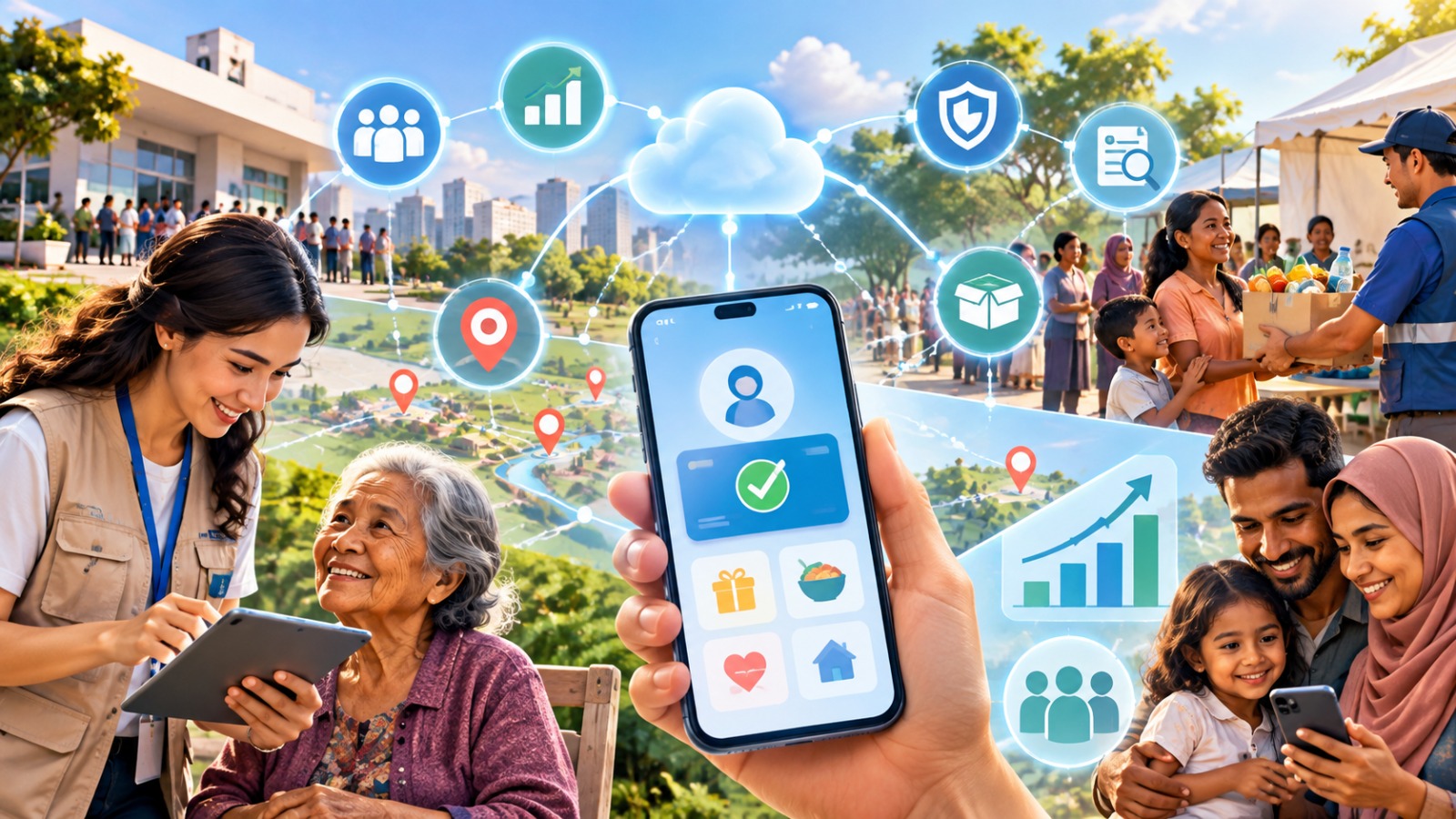
Welfare distribution is one of the most important responsibilities of charitable organisations, NGOs, trusts, and community welfare institutions. Whether an organisation provides educational assistance, distributes food, supports healthcare needs, or delivers emergency relief, its success depends on reaching the right people with the right resources at the right time.
However, managing welfare distribution can become challenging as programmes grow. Beneficiary records may be maintained in spreadsheets, distribution details may be recorded on paper, and different teams may struggle to share updated information. These gaps can make it difficult to track resources, identify unmet needs, and demonstrate how donations have been used.
Technology can improve welfare distribution by helping organisations maintain accurate beneficiary records, coordinate welfare projects, track resources, document assistance, and generate clear reports. When implemented thoughtfully, digital tools can reduce administrative effort, improve transparency, and help charitable organisations make better-informed decisions.
For NGOs and welfare institutions in India, adopting practical digital systems can be an important step towards delivering assistance more efficiently while maintaining accountability to beneficiaries, donors, and other stakeholders.
What Is Welfare Distribution?
Welfare distribution is the process of identifying people who need assistance, allocating available resources, delivering support, and recording the results.
Depending on the organisation’s purpose, welfare distribution may include:
- Providing food kits to families experiencing financial hardship.
- Distributing educational materials to students.
- Supporting medical treatment and healthcare expenses.
- Delivering emergency supplies after floods or other disasters.
- Providing financial assistance to eligible beneficiaries.
- Distributing clothing, essential household items, or other relief materials.
Effective welfare distribution involves more than handing over goods or transferring funds. It also requires planning, beneficiary identification, resource management, coordination, documentation, and follow-up.
For example, an NGO organising an education-support programme needs to understand how many students require assistance, what each student needs, how much funding is available, which resources have been distributed, and whether any students still require support.
A structured distribution process helps the organisation answer these questions and manage its welfare activities responsibly.
Why Do NGOs Face Challenges in Welfare Distribution?
NGOs often face welfare distribution challenges because they must coordinate limited resources, multiple stakeholders, changing beneficiary needs, and time-sensitive activities.
Some common challenges include the following.
1. Inaccurate or Incomplete Beneficiary Records
When beneficiary information is collected through paper forms, messaging applications, or separate spreadsheets, maintaining accurate records becomes difficult.
An organisation may struggle to determine whether a beneficiary has already received assistance, whether their contact details are current, or whether their needs have changed.
A centralised beneficiary record can help authorised staff review relevant information and reduce avoidable duplication.
2. Difficulty Tracking Resources
Welfare programmes may involve money, food supplies, medicines, school materials, clothing, and other essential items.
Without a consistent tracking process, it can be difficult to determine how much stock is available, what has been allocated, and what remains to be distributed.
This can lead to delays, unnecessary purchases, or shortages during important welfare activities.
3. Limited Visibility into Fund Allocation
Donations are often collected for specific welfare purposes. Organisations need a clear record of how available funds are allocated to projects and how expenditure relates to planned activities.
When financial records and distribution records are maintained separately, preparing a complete picture of a programme can require considerable manual effort.
4. Communication Gaps Between Teams
A welfare programme may involve field workers, volunteers, administrators, trustees, and local community representatives.
If these teams rely on different records or outdated updates, coordination becomes harder. Staff may visit the same location twice while another community receives insufficient attention.
Shared, up-to-date information can help teams coordinate responsibilities and respond more effectively.
5. Time-Consuming Reporting
NGOs may need to prepare internal updates, project summaries, donor communications, and records of assistance provided.
When information is scattered across paper documents and individual files, compiling reports can consume time that staff could otherwise spend on programme delivery.
Technology can help bring these records together, provided that information is entered consistently and checked for accuracy.
How Can Technology Improve Welfare Distribution?
Technology improves welfare distribution by connecting beneficiary information, resource allocation, project activities, distribution records, and reporting within a more organised workflow.
Rather than treating each distribution event as an isolated activity, an organisation can use digital tools to manage the entire process.
1. How Can Digital Beneficiary Management Improve Welfare Delivery?
Digital beneficiary management allows an organisation to maintain structured records of the people or households it supports.
Depending on the programme, records may include:
- Beneficiary name or approved identification reference.
- Contact information, where necessary.
- Household or community details relevant to the programme.
- Type of assistance requested or approved.
- Eligibility or assessment status.
- Assistance previously received.
- Follow-up requirements.
The organisation should collect only the information needed for its legitimate welfare activities and restrict access to authorised personnel.
Practical example: Imagine a charitable trust supporting 100 children with school supplies. Instead of maintaining separate handwritten lists for each distribution event, the trust records the approved beneficiaries and the assistance each child receives.
Before the next distribution, the team can review the records to identify children who have already received the planned supplies and those who still need assistance.
This makes planning easier and helps the organisation respond to individual needs without relying entirely on memory or scattered documents.
Digital records should support human decision-making, not automatically exclude people simply because their information is incomplete or a record contains an error.
2. How Can Technology Help NGOs Track Welfare Resources?
Digital inventory and allocation records help NGOs monitor the resources available for a welfare programme.
For material distribution, an organisation can record:
- Items received from donors or suppliers.
- Quantities available in stock.
- Items allocated to each welfare project.
- Quantities distributed.
- Remaining stock.
- Damaged, expired, or unusable items, where applicable.
For financial assistance, the organisation can maintain records of approved budgets, fund allocations, expenditure, and the assistance provided.
These records help administrators identify shortages before a distribution event and make more informed purchasing or allocation decisions.
Example: An NGO plans to distribute 200 food kits across four communities. A digital tracking sheet or suitable inventory system can show the number of kits assigned to each location, the quantity delivered, and the remaining stock.
If one location receives fewer kits than planned, the team can investigate the discrepancy and arrange appropriate follow-up.
The system does not eliminate the need for physical stock checks, delivery confirmations, or financial reconciliation. Instead, it gives the organisation a clearer starting point for those checks.
3. How Can Digital Tools Improve Beneficiary Identification?
Digital forms and assessment workflows can help NGOs collect information consistently and review assistance requests more systematically.
For example, a healthcare-support organisation may receive requests from several families. A structured process can help staff record the nature of each request, the documents required for assessment, the review status, and the assistance approved.
This reduces reliance on informal communication and makes it easier to identify requests that require further attention.
However, beneficiary identification should remain fair and sensitive to local circumstances. Digital tools must not become barriers for people who lack smartphones, internet access, official documentation, or digital literacy.
Organisations should provide alternatives such as assisted registration, paper forms, and in-person support where necessary.
4. How Can Technology Improve Welfare Project Coordination?
Project management tools help organisations coordinate distribution activities across teams, locations, and timelines.
A digital project record may include:
- Project objectives and intended beneficiaries.
- Approved budget and available resources.
- Distribution locations and schedules.
- Staff and volunteer responsibilities.
- Procurement and preparation status.
- Distribution progress.
- Outstanding tasks and follow-up actions.
For an NGO operating in multiple villages, a shared project view can help administrators understand which locations have completed distribution and which still require attention.
It can also help teams prepare for future activities by identifying delays, resource shortages, or repeated operational difficulties.
Technology is particularly useful when several people contribute to a programme. Everyone works from a more consistent source of information instead of depending on individual updates.
5. How Can Digital Records Improve Transparency and Accountability?
Digital records can make welfare distribution more transparent by documenting what was planned, what was approved, what was delivered, and what remains outstanding.
A useful recordkeeping process may connect:
- Donations received for a programme.
- Funds or materials allocated to the programme.
- Beneficiaries approved for assistance.
- Welfare activities completed.
- Assistance actually distributed.
- Supporting documents and verification records.
- Outcomes and follow-up requirements.
This creates a clearer relationship between the resources entrusted to an organisation and the assistance it provides.
For example, a donor supporting an education programme may want to understand how contributions were used. The NGO can use its financial and distribution records to prepare a programme update that explains the resources received, the assistance delivered, and the remaining needs.
Transparency does not mean publishing personal beneficiary details. Reports should protect private information and disclose only what is appropriate for the intended audience.
Digital records also need appropriate safeguards. Access permissions, review procedures, backup arrangements, and clear responsibility for updating records are important parts of accountability.
6. How Can Technology Improve Communication With Beneficiaries and Donors?
Clear communication helps beneficiaries understand when and where assistance will be delivered. It also helps donors understand the progress of the programmes they support.
Depending on the audience and the organisation’s needs, communication may take place through phone calls, SMS, email, messaging applications, or printed notices.
Technology can support activities such as:
- Sending distribution schedules and reminders.
- Informing beneficiaries about changes or delays.
- Coordinating volunteers and field staff.
- Sharing project progress with donors.
- Collecting feedback after assistance is delivered.
- Following up on unresolved requests.
For example, an NGO organising a community health camp can communicate the date, venue, and relevant preparation instructions to registered participants. If the schedule changes, the team can send an update through the communication channels beneficiaries can access.
Organisations should obtain appropriate consent for communications, protect contact details, and avoid sharing sensitive information in group messages.
7. How Can Technology Help NGOs Measure Welfare Outcomes?
Technology can help NGOs distinguish between the activities they complete and the outcomes they achieve.
An activity describes what an organisation does. An outcome describes the change it seeks to create or the result it observes.
For a food distribution programme, useful activity measures may include the number of food kits distributed and the number of distribution events completed. Outcome-related information may include beneficiary feedback, whether assistance reached households as intended, or whether identified food-support needs remain unmet.
For an education programme, records may include students receiving supplies, attendance at support sessions, and follow-up information about their educational needs.
Organisations should select measures that match their programme objectives and that they can reasonably collect and verify.
Digital reports can help managers review progress, identify gaps, and improve future activities. However, distributing more items does not automatically mean that a programme has achieved a better social outcome. Meaningful evaluation requires context, feedback, and appropriate evidence.
What Are the Main Benefits of Using Technology for Welfare Distribution?
The main benefits of technology for welfare distribution include better recordkeeping, more coordinated operations, clearer resource tracking, stronger accountability, and more informed programme planning.
Area | Potential benefit |
Beneficiary management | More organised records and easier follow-up |
Resource management | Better visibility into available and allocated supplies |
Fund tracking | Clearer records of budgets, allocations, and expenditure |
Project coordination | Improved communication between staff and volunteers |
Distribution records | Easier review of completed and pending assistance |
Donor communication | More consistent programme updates |
Reporting | Less dependence on manually combining scattered records |
Impact assessment | Better access to programme activity and outcome information |
The extent of these benefits depends on the quality of the organisation’s processes, the suitability of its technology, and how consistently staff maintain the records.
A digital system cannot automatically correct unclear procedures, inaccurate data, or poor oversight. Technology works best when it supports sound management practices.
How Can an NGO Introduce Technology Into Its Welfare Distribution Process?
An NGO does not need to digitise every activity at once. A gradual approach allows the organisation to learn what works, train its team, and address problems before expanding.
Step 1: Map the Existing Distribution Process
Start by documenting how the organisation currently handles welfare distribution.
Identify how beneficiaries are registered, how requests are assessed, how resources are approved, how assistance is delivered, and how results are recorded.
Ask the people doing the work where delays, duplication, or communication gaps occur.
Step 2: Identify the Most Important Problem to Solve
Choose one clear priority instead of attempting to change every process simultaneously.
For example, the immediate need may be to maintain an accurate beneficiary list, monitor food-kit inventory, track assistance requests, or prepare project reports more efficiently.
A defined problem makes it easier to choose an appropriate tool and evaluate whether it is useful.
Step 3: Choose Technology That Fits the Organisation
The right solution depends on the size of the organisation, the complexity of its programmes, available funding, staff capacity, and internet connectivity.
Possible starting points include:
- Shared spreadsheets for small, straightforward programmes.
- Digital forms for collecting beneficiary requests.
- Inventory tools for tracking goods and supplies.
- Project management systems for coordinating activities.
- Integrated welfare management platforms for organisations that need connected processes across multiple programmes.
Before selecting a system, review its cost, usability, data export options, security arrangements, training requirements, and ability to support the organisation’s actual workflow.
Avoid paying for complex features that the organisation does not need or cannot maintain.
Step 4: Establish Clear Data and Recordkeeping Rules
Decide what information must be recorded, who is responsible for updating it, and how entries will be checked.
Create consistent procedures for beneficiary registration, assistance approval, distribution confirmation, and record correction.
For example, every food-kit distribution might require the date, location, quantity, programme reference, and an appropriate confirmation of delivery.
The exact information should depend on the nature of the assistance and the organisation’s privacy obligations.
Step 5: Train Staff and Volunteers
Technology adoption depends on the people who use the system.
Provide practical training using realistic scenarios, such as registering a beneficiary, recording an allocation, confirming a delivery, or correcting an entry.
Assign a responsible person to answer questions and review records during the initial implementation.
Where volunteers have different levels of digital experience, keep instructions simple and offer support in an accessible language.
Step 6: Test the System With One Welfare Programme
Run a small pilot before expanding the process across the organisation.
For example, an NGO that operates several welfare programmes might first digitise the distribution of educational materials for one group of students.
During the pilot, check whether the records are accurate, staff can use the system, distribution details are easy to retrieve, and reporting has become more manageable.
Use feedback to correct problems before extending the system to other programmes.
Step 7: Review Results and Improve the Process
After the pilot, assess practical indicators such as:
- Time taken to prepare distribution lists.
- Completeness and accuracy of records.
- Number of unresolved or duplicate entries.
- Ability to reconcile allocated and distributed resources.
- Time needed to prepare programme reports.
- Feedback from beneficiaries and staff.
- Cost of maintaining the system.
Use the findings to decide whether to refine the process, provide additional training, or introduce further digital tools.
What Challenges Should NGOs Consider Before Adopting Digital Welfare Systems?
Digital welfare systems can improve operations, but organisations should plan for practical and ethical challenges before implementation.
Data Privacy and Security
Beneficiary records may contain personal, financial, educational, or health-related information. Unnecessary collection or careless sharing can expose people to harm.
Collect only the information required for the programme, limit access according to responsibilities, use appropriate security controls, and establish procedures for data retention and deletion.
Internet Access and Digital Literacy
Some communities have limited connectivity or rely on shared devices. Staff and beneficiaries may also have different levels of digital literacy.
Choose tools that suit field conditions. Where necessary, provide offline or paper-based alternatives and synchronise records through an approved process when connectivity becomes available.
Implementation and Maintenance Costs
Software subscriptions, devices, staff training, technical support, and data migration can all involve costs.
Organisations should evaluate the total cost of ownership rather than considering only the initial price. They should also decide who will maintain the system when staff or volunteers change.
Data Accuracy
A digital database can still contain incorrect information. Duplicate beneficiary entries, missing distribution records, and unverified updates can undermine decision-making.
Regular reviews, consistent data-entry rules, and appropriate checks help maintain reliable records.
Fairness and Human Oversight
Automated processes can help organise requests, but welfare decisions often require local knowledge and human judgement.
Organisations should provide a way to review disputed records, correct errors, and consider urgent needs. No person should be denied essential assistance solely because a digital system cannot process their case correctly.
How Can Small Charities Improve Welfare Distribution on a Limited Budget?
Small charities can begin improving welfare distribution with a few simple, consistent digital practices rather than investing immediately in a large software system.
A practical starting plan is to:
- Maintain one controlled master record of approved beneficiaries.
- Use a standard form to record assistance requests.
- Keep a separate, clearly organised record of stock or funds allocated.
- Record each completed distribution promptly.
- Reconcile planned and actual distribution quantities.
- Prepare a short monthly summary of activities, spending, and outstanding needs.
- Back up records securely and restrict access to authorised people.
For instance, a neighbourhood charity distributing essential groceries can start with a structured beneficiary list, a stock register, and a distribution log. These records can be maintained in suitable spreadsheet tools if the programme is small and access is properly controlled.
As the organisation grows, it may find that separate spreadsheets become difficult to maintain. At that point, an integrated system may be worth considering.
The important first step is to establish reliable processes. Technology should make those processes easier to follow, not introduce unnecessary complexity.
What Is the Role of Welfare Governance in Digital Welfare Distribution?
Welfare governance is the structured management of an organisation’s welfare activities, resources, people, projects, beneficiaries, accountability, reporting, and impact.
It connects the different stages of charitable work so that fundraising, resource allocation, distribution, and reporting are managed as parts of the same overall process.
Consider an NGO raising donations for an education-support programme. Collecting contributions is only the beginning. The organisation must also plan the programme, approve expenditure, identify students who need assistance, arrange supplies, document distribution, communicate progress, and review whether the support addressed the intended needs.
The relationship can be understood as:
Donors → Contributions → Funds → Welfare Projects → Beneficiaries → Outcomes → Reporting → Continued Support
Each stage depends on reliable information from the others.
When donation records are disconnected from project records, or beneficiary records are disconnected from distribution details, administrators may find it difficult to understand the programme as a whole.
A structured digital welfare-management ecosystem can help connect these activities and support more consistent oversight.
Welfare governance also involves people and policies, not just software. Trustees, administrators, field teams, and volunteers need clear responsibilities, appropriate approval procedures, and a shared understanding of how resources should be managed.
Technology provides the supporting infrastructure; responsible governance determines how it is used.
How Can NGOs Choose the Right Welfare Distribution Technology?
NGOs should choose welfare distribution technology based on their operational needs, available resources, privacy requirements, and plans for growth.
Before adopting a solution, consider the following questions:
- Does it support the organisation’s actual distribution process?
- Can beneficiary and project records be organised in a useful way?
- Can staff record the allocation and delivery of resources?
- Are permissions available to limit access to sensitive information?
- Can reports be prepared without excessive manual work?
- Is the system practical for field workers and volunteers?
- Does it work under the organisation’s connectivity conditions?
- Are training, support, maintenance, and future costs manageable?
- Can the organisation retrieve its records if it changes systems?
- Does the solution support human review and correction of errors?
Ask the provider to demonstrate relevant workflows using a realistic example from your organisation.
For instance, request a demonstration showing how a beneficiary is registered, assistance is approved, resources are allocated, distribution is recorded, and a programme report is prepared.
This helps decision-makers evaluate the complete workflow rather than judging a system only by its appearance or feature list.
The best choice is the system that staff can use consistently and that strengthens the organisation’s ability to deliver assistance responsibly.
Frequently Asked Questions
1. How can technology improve welfare distribution?
Technology can improve welfare distribution by organising beneficiary records, tracking resources, coordinating teams, recording assistance, and generating reports. These capabilities help NGOs manage welfare programmes with greater visibility and consistency.
2. Why is digital beneficiary management important for NGOs?
Digital beneficiary management helps NGOs maintain organised records of assistance requests, approved beneficiaries, and support already provided. It can make follow-up easier and help identify gaps, provided that records are accurate and access is appropriately controlled.
3. What technology can NGOs use for welfare distribution?
NGOs can use digital forms, spreadsheets, inventory management tools, project management systems, and integrated welfare management platforms. The appropriate option depends on the organisation’s size, programme complexity, budget, and operational requirements.
4. How can NGOs track the distribution of donated resources?
NGOs can maintain records of resources received, quantities allocated, distribution dates, delivery confirmations, and remaining stock. Regular reconciliation between planned and actual distribution helps identify discrepancies.
5. How does technology improve transparency in welfare activities?
Technology can connect donation records, fund allocations, project expenses, beneficiary assistance, and distribution records. These records help organisations prepare clearer reports for trustees, donors, and other stakeholders while protecting beneficiary privacy.
6. Can small NGOs use technology for welfare distribution on a limited budget?
Yes. Small NGOs can start with structured spreadsheets, digital forms, and consistent distribution logs. They can adopt more integrated software as their programmes grow and their operational requirements become more complex.
7. What are the main challenges of digital welfare distribution?
Common challenges include data privacy, inaccurate records, limited internet access, digital literacy gaps, implementation costs, and staff training. Clear procedures, appropriate security measures, and human oversight can help address these issues.
8. What is the difference between welfare management and welfare governance?
Welfare management focuses on organising and carrying out welfare activities. Welfare governance provides the broader structure for managing resources, responsibilities, projects, beneficiaries, accountability, reporting, and outcomes across the organisation.
NidhiMax Conclusion
How NidhiMax Can Help Build a Better Welfare Governance System
Technology can make welfare distribution more organised, but lasting improvements depend on how well an organisation connects its people, resources, beneficiaries, projects, and reporting processes.
For NGOs, charitable trusts, foundations, and community organisations, the goal should be to create a reliable system that supports day-to-day welfare activities while strengthening transparency and accountability.
NidhiMax — Welfare Governance Platform is focused on helping charitable organisations move towards a more organised digital welfare-management ecosystem. Its broader positioning aligns with the need to coordinate fundraising, donor information, welfare projects, beneficiary-related processes, and organisational reporting within a structured approach to welfare governance.
Every organisation has different requirements. A small community initiative may need better distribution records, while a larger welfare institution may need a more coordinated way to manage multiple programmes and stakeholders. Technology decisions should reflect these differences rather than introduce unnecessary complexity.
Better welfare distribution begins with understanding community needs and building reliable processes to ensure that assistance reaches the people it is intended to support.