
 Post by
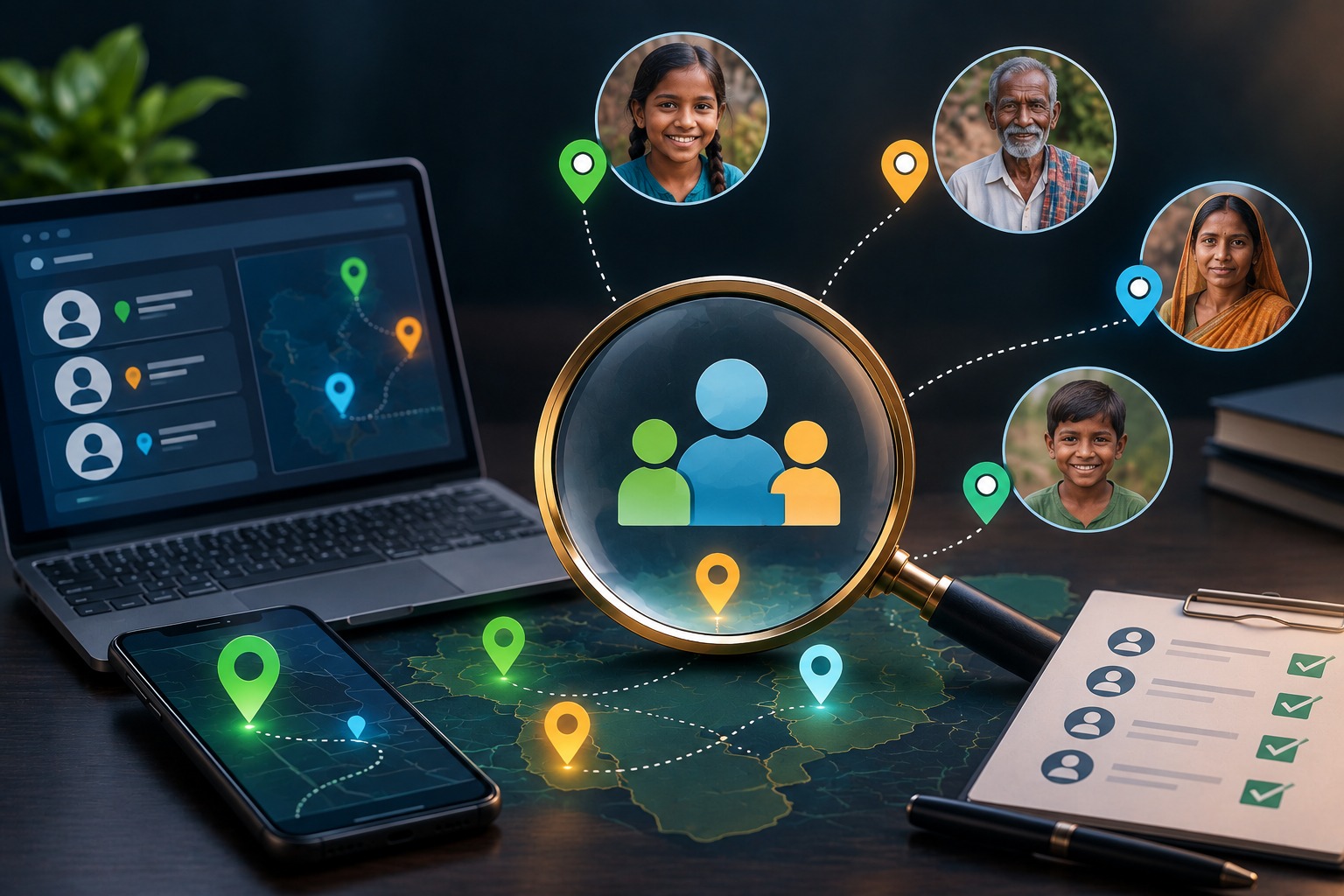
Charities and NGOs need to know who they are helping, what support beneficiaries receive, and whether their welfare programmes are meeting their intended goals. Without an organised tracking system, beneficiary information can become scattered across paper registers, spreadsheets, WhatsApp messages, and individual staff records.
Charities can track beneficiaries by maintaining an organised beneficiary database, recording the support provided to each person or household, monitoring welfare project participation, updating records regularly, and reviewing outcomes. A structured process helps organisations coordinate assistance, reduce duplicate records, protect sensitive information, and report their work more clearly.
For NGOs, charitable trusts, foundations, and community organisations, beneficiary tracking is an important part of responsible welfare management. It helps teams understand where assistance is going, identify outstanding needs, and make better decisions about the use of limited resources.
This guide explains how charities can build a practical beneficiary tracking system, what information to maintain, which challenges to avoid, and how technology can support more accountable welfare operations.
What Is Beneficiary Tracking in a Charity?
Beneficiary tracking is the process of recording, updating, and reviewing information about the people or communities receiving support from a charitable organisation. It helps an NGO understand who receives assistance, what support they receive, when it is delivered, and what further support may be needed.
Depending on the organisation’s work, beneficiaries may include:
- Children receiving educational assistance.
- Families receiving food or essential supplies.
- Patients receiving healthcare support.
- Individuals receiving financial assistance.
- Communities participating in development programmes.
- People affected by emergencies or natural disasters.
A beneficiary tracking system provides a structured record of these activities. Instead of relying on memory or disconnected documents, staff can refer to organised information when coordinating projects, preparing reports, or planning future assistance.
For example, an NGO supporting schoolchildren might record each child’s enrolment, the educational assistance provided, the date of distribution, and whether additional support is required.
The purpose is not simply to collect personal information. It is to ensure that welfare assistance is delivered responsibly and that the organisation can understand and document its work.
Why Is Beneficiary Tracking Important for Charities?
Beneficiary tracking helps charities coordinate assistance, maintain reliable records, monitor project progress, and demonstrate accountability to trustees, donors, and other stakeholders.
When beneficiary records are incomplete or outdated, organisations may struggle to determine whether support has reached the intended recipients. Good tracking practices help address these problems.
1. How does beneficiary tracking prevent duplicate assistance?
A consistent beneficiary identification process helps staff recognise existing records before creating new ones. This reduces the risk of recording the same person multiple times or distributing the same type of assistance unintentionally.
For example, if an NGO distributes food kits across several local communities, staff can check existing records before registering a household for another distribution. Where repeated assistance is necessary, the record should show the reason and the dates of support.
Organisations should avoid relying on names alone, because different people may share the same name. A suitable internal reference number, combined with carefully verified information, can help identify records more reliably.
2. How does tracking improve transparency and accountability?
Beneficiary records help an organisation document how its welfare activities are carried out. When connected with project and distribution records, they can show which programme delivered assistance, when it happened, and what resources were used.
This information can support:
- Internal reviews by programme managers.
- Reporting to trustees and governing bodies.
- Donor updates about funded activities.
- Planning for future welfare programmes.
- Identification of gaps in assistance.
Tracking records do not automatically prove that a programme has achieved its goals. However, accurate records provide an important foundation for assessing delivery and outcomes.
3. How can beneficiary tracking improve resource allocation?
Tracking helps charities understand the needs they are addressing and the support they have already provided. This information can help managers plan available funds, supplies, staff time, and future project activities.
For example, an organisation supporting families with essential supplies can review the number of households registered, the quantity of supplies distributed, and the households still awaiting assistance.
This makes it easier to identify operational gaps and plan the next distribution more effectively.
4. How does beneficiary tracking support donor confidence?
Donors often want to understand how their contributions support an organisation’s charitable activities. Well-maintained project and beneficiary records can help the organisation prepare clearer reports about the assistance delivered.
However, transparency does not require publishing beneficiaries’ private information. Charities should share appropriate project summaries and anonymised information where possible, while protecting personal identities and sensitive details.
What Information Should a Charity Record About Its Beneficiaries?
A charity should record the information needed to deliver assistance, coordinate services, and evaluate its programmes. The exact fields depend on the organisation’s purpose, the type of support provided, and the sensitivity of the information involved.
A practical beneficiary record may include the following categories.
Information category | Examples |
Beneficiary reference | Unique internal ID or reference number |
Basic details | Name and only the necessary contact information |
Location | Relevant village, ward, or service area |
Household details | Household size or other relevant information, where needed |
Programme details | Welfare project or service the person is enrolled in |
Assistance history | Type of support, date, quantity, or amount provided |
Assessment status | Application received, verified, approved, or awaiting review |
Follow-up details | Next review date or pending assistance |
Record updates | Date of last update and responsible staff member |
Not every charity needs every field. An organisation providing school supplies may need different information from one offering healthcare assistance or emergency relief.
Should charities collect identity documents and sensitive information?
Charities should collect sensitive information only when it is necessary for a legitimate programme purpose and there is an appropriate way to protect it.
Before collecting identity documents, financial details, health information, or information about children, organisations should consider whether the information is genuinely required. Access should be limited to authorised people, and records should be retained only as long as justified by the organisation’s needs and applicable requirements.
A useful rule is to collect the minimum information necessary to provide and monitor the service. More data does not automatically mean better beneficiary management.
How Can Charities Track Beneficiaries Step by Step?
Charities can establish a beneficiary tracking system by defining their process, creating consistent records, documenting assistance, assigning responsibility, and reviewing information regularly.
The following steps can help organisations build a system that suits their size and available resources.
Step 1: Define the purpose of beneficiary tracking
Begin by identifying what the organisation needs to monitor.
Ask questions such as:
- Who receives assistance from our organisation?
- Which welfare programmes do we operate?
- What information is necessary to deliver each service?
- How do we decide whether someone qualifies for support?
- How do we record repeated assistance?
- What reports do managers and trustees need?
Clear answers prevent unnecessary data collection and make the tracking process easier for staff and volunteers to follow.
Step 2: Create a central beneficiary register
A central beneficiary register brings essential records together instead of keeping them in separate files maintained by different teams.
Depending on the organisation’s resources, this could begin with a carefully managed spreadsheet or use a suitable beneficiary management system.
Each beneficiary should have a consistent reference number. Records should follow the same format so staff can find information without guessing how it was entered.
For example, use consistent date formats and standard programme names rather than entering the same project under several different labels.
For smaller organisations, a spreadsheet may be sufficient initially. As the number of programmes, users, and records grows, the organisation may need more structured access controls and workflows.
Step 3: Register beneficiaries through a clear process
The registration process should explain what information is collected, why it is needed, who can access it, and how it will be updated.
A practical process may include:
- Receive an application or identify a potential beneficiary through an appropriate outreach process.
- Explain the purpose of registration and provide relevant privacy information.
- Collect only the necessary details.
- Check information against the programme’s eligibility criteria.
- Create a new record or update an existing one.
- Record the review decision and any outstanding requirements.
Registration should be accessible to the communities the organisation serves. Where people have limited internet access or face language barriers, an assisted or offline registration process may be more appropriate.
Step 4: Record the assistance provided
Registration alone does not show what a beneficiary has received. Charities should maintain a history of assistance linked to the relevant beneficiary and welfare project.
For each distribution or service, record relevant details such as:
- Type of assistance.
- Date of delivery.
- Quantity or amount, where applicable.
- Associated welfare project.
- Delivery or completion status.
- Responsible staff member or team.
- Follow-up action, if required.
For example, an education-support programme could record when a student received books, a school uniform, or financial assistance for education-related expenses.
This history helps staff understand previous support and coordinate future assistance more responsibly.
Step 5: Assign responsibility for maintaining records
Beneficiary information becomes unreliable when nobody is responsible for updating it.
Charities should assign clear responsibilities to programme coordinators, field workers, data-entry staff, or other authorised team members.
A simple division of responsibility might look like this:
- Field staff: Record registration details and assistance delivered.
- Programme coordinators: Review records and check pending cases.
- Managers: Monitor programme progress and resolve operational issues.
- Authorised reviewers: Check record quality and prepare appropriate reports.
The exact roles will depend on the organisation’s size. In a small NGO, one person may handle several responsibilities, but the process should still be clear.
Step 6: Review records regularly
Beneficiary tracking is an ongoing activity, not a one-time registration exercise.
Schedule periodic reviews to identify:
- Missing or inconsistent information.
- Duplicate records.
- Assistance that has not been recorded as completed.
- Applications awaiting review.
- Beneficiaries requiring follow-up.
- Records that should be corrected or archived.
For programmes involving ongoing assistance, updates may be required after every service delivery or at regular assessment intervals. For one-time relief distributions, the review process may focus on delivery records and reconciliation.
Step 7: Prepare reports for decision-making
Beneficiary records become more useful when they help the organisation answer practical questions.
Reports might show:
- The number of beneficiaries registered for a project.
- The number who received assistance during a particular period.
- The types of assistance delivered.
- Pending applications or follow-up activities.
- Distribution totals by location or programme.
- Changes in beneficiary needs over time, where reliably measured.
Reports should clearly distinguish between people registered, people approved, people who received assistance, and people whose outcomes have been assessed. These are different measures and should not be treated as interchangeable.
What Is the Difference Between Beneficiary Registration and Beneficiary Tracking?
Beneficiary registration records a person’s entry into a programme, while beneficiary tracking follows their participation, assistance history, and relevant progress over time.
Beneficiary registration | Beneficiary tracking |
Creates the initial record | Maintains the record over time |
Captures necessary basic information | Updates relevant information as circumstances change |
Records application or enrolment | Records assistance delivered |
Documents initial assessment | Tracks follow-ups and pending support |
Establishes programme participation | Supports monitoring and reporting |
Both processes are important. Registration provides the starting point, while tracking helps the organisation manage its welfare activities after enrolment.
For example, registering a family for food assistance establishes its programme record. Tracking documents each distribution, any relevant change in needs, and whether further action is required.
How Can Small Charities Track Beneficiaries With Limited Resources?
Small charities can begin with a simple, consistent process rather than investing immediately in a complex system. The priority is to maintain accurate records, define responsibilities, and protect beneficiary information.
A practical starting approach includes:
- Use one controlled register: Keep the main beneficiary record in one authorised location.
- Create a standard template: Use consistent fields and formats.
- Assign unique references: Make it easier to distinguish between records.
- Record each assistance activity: Update the register when support is delivered.
- Set a review schedule: Check for missing entries and duplicates.
- Control access: Restrict sensitive information to people who need it.
- Maintain secure backups: Make sure records can be recovered if a device or file is lost.
A spreadsheet can work for a small, straightforward programme, provided it is maintained carefully and protected appropriately. It becomes harder to manage when multiple teams update separate copies, projects share beneficiaries, or reporting requires repeated manual reconciliation.
The right approach is to choose a system that matches the organisation’s actual workload and operational needs.
What Challenges Do Charities Face When Tracking Beneficiaries?
Charities commonly face incomplete records, duplicate entries, inconsistent data, disconnected systems, and limited staff capacity. These issues can reduce the reliability of beneficiary information and make programme coordination more difficult.
Incomplete or outdated information
Beneficiary circumstances may change, and records can become outdated when staff do not have a clear update process.
How to address it: Set a schedule for reviewing relevant information and update records whenever a significant programme-related change is reported or verified.
Duplicate beneficiary records
A person may be registered more than once because of spelling variations, different contact details, or separate registration drives.
How to address it: Use a unique internal reference and establish a process for checking possible duplicates before creating new records. Any matching process should be reviewed carefully to avoid merging different people incorrectly.
Disconnected records across projects
An organisation may keep education assistance in one spreadsheet, food distribution in another, and healthcare support in paper registers. This makes it difficult to understand the complete assistance history where programmes overlap.
How to address it: Use consistent beneficiary references and link assistance records to the appropriate projects. Consider a shared system when the organisation’s scale makes manual coordination difficult.
Limited staff time
Field workers and volunteers may struggle to complete records while delivering services, especially during emergencies or large distributions.
How to address it: Simplify data-entry forms, train staff, assign clear responsibilities, and record essential information at the point of service wherever practical. Additional details can be reviewed later if the process allows it.
Privacy and data security risks
Beneficiary registers may contain sensitive information about children, health, household circumstances, or financial needs.
How to address it: Limit collection, restrict access, use secure storage, train staff, and establish procedures for correcting, retaining, and deleting records. Obtain appropriate consent or other lawful authority where required, particularly when dealing with children or sensitive information.
Difficulty measuring actual outcomes
Recording the number of beneficiaries served does not automatically show whether their circumstances improved.
How to address it: Define realistic programme objectives and collect appropriate outcome information. For an education programme, this might include whether enrolled students continued receiving the intended support or whether agreed educational milestones were reached, where it is appropriate and feasible to assess them.
How Can Technology Help Charities Track Beneficiaries?
Technology can help charities maintain centralised records, document assistance, coordinate teams, and prepare reports more efficiently. The most suitable solution depends on the organisation’s size, programme complexity, staff capacity, and data protection needs.
Different tools serve different purposes.
Tool or system | How it can help |
Spreadsheets | Maintain basic beneficiary lists and assistance records |
Digital forms | Standardise registration and data collection |
Project management tools | Track tasks, responsibilities, and programme activities |
Database systems | Organise records and support structured searches |
Beneficiary management software | Support beneficiary information and assistance workflows, depending on the product |
Welfare governance platforms | Help organisations consider beneficiary management alongside projects, resources, accountability, and reporting |
Before selecting a tool, charities should confirm that its actual features match their needs. They should also assess user permissions, data export, backups, ease of use, training requirements, and the ability to correct inaccurate records.
What should NGOs look for in beneficiary tracking software?
NGOs evaluating beneficiary tracking software should prioritise reliable record management, practical workflows, suitable reporting, and safeguards for personal information.
Useful evaluation questions include:
- Can we maintain consistent beneficiary records?
- Can we record assistance against the correct project?
- Can authorised staff update records without creating unnecessary duplicates?
- Can we identify pending cases and follow-up actions?
- Can we generate reports relevant to programme managers and trustees?
- Can we control who views or changes sensitive information?
- Can we export records if we need to change systems?
- Is the system easy for field staff and volunteers to learn?
- Are the cost and maintenance requirements appropriate for our organisation?
A technology purchase should follow an assessment of the existing process. Software cannot compensate for unclear eligibility criteria, missing responsibilities, or poorly defined recordkeeping practices.
How Can Beneficiary Tracking Improve Welfare Project Reporting?
Beneficiary tracking improves welfare project reporting by connecting records of assistance with the activities, resources, and objectives of a programme. This helps charities explain what they planned, what they delivered, and what they have learned.
Consider an NGO running an education-support programme for 100 children.
The organisation could use beneficiary records to document enrolment, educational materials distributed, assistance dates, and relevant follow-up activities. It could link these records to project expenditure and funding information, where the necessary financial records are available.
At the end of the reporting period, the organisation could prepare a summary showing:
- How many children were registered.
- How many received the planned educational support.
- What assistance was delivered.
- Which activities remain incomplete.
- What further needs were identified.
- What evidence is available about programme outcomes.
If a donor funded a specific part of the programme, the NGO could use the relevant project records to prepare an appropriate funding report. It should not assume that every donation can be attributed to a particular beneficiary unless the funding arrangements and accounting records support that connection.
This is where beneficiary management connects with the broader idea of Welfare Governance: the structured management of an organisation’s welfare activities, resources, people, projects, beneficiaries, accountability, reporting, and impact.
The wider process can be understood as:
Donors → Contributions → Funds → Welfare Projects → Beneficiaries → Outcomes → Reporting → Continued Support
Beneficiary tracking is one important part of this chain. When records are connected appropriately, charities can better explain how resources support welfare activities and how those activities are monitored.
What Are the Best Practices for Responsible Beneficiary Tracking?
Responsible beneficiary tracking combines accurate recordkeeping with respect for the dignity, privacy, and needs of the people receiving support.
Charities can follow these best practices:
- Collect only necessary information. Avoid asking for personal details that do not support the programme’s purpose.
- Explain why information is needed. Beneficiaries should understand how their information will be used.
- Keep records current. Establish clear procedures for updating and correcting information.
- Use consistent identification methods. Reduce duplicate records without relying on names alone.
- Document assistance promptly. Record distributions and services while details are available.
- Restrict access appropriately. Staff should see only the information needed for their responsibilities.
- Maintain secure backups. Protect records against accidental loss or damage.
- Separate delivery from outcomes. Record what was provided and assess results separately.
- Train staff and volunteers. Make sure everyone follows the same process.
- Review the system periodically. Remove unnecessary complexity and address recurring errors.
Beneficiaries should be treated as people with dignity and agency, not simply as entries in a database. The system should support better service delivery without creating unnecessary barriers to assistance.
Frequently Asked Questions
How can charities track beneficiaries effectively?
Charities can track beneficiaries by maintaining a central register, assigning consistent reference numbers, recording assistance provided, updating information regularly, and reviewing records for errors and outstanding needs.
What information should an NGO collect about beneficiaries?
An NGO should collect only the information needed for its programme, such as a beneficiary reference, relevant contact or location details, programme enrolment, assistance history, and necessary follow-up information.
Can small NGOs track beneficiaries using Excel?
Yes. A spreadsheet can work for a small programme if it has consistent fields, controlled access, regular updates, and secure backups. Organisations with multiple teams or complex reporting needs may require a more structured system.
What is beneficiary management software?
Beneficiary management software is a digital tool used to organise information about people receiving support and, depending on the product, record assistance, follow-up activities, and programme participation.
How can charities prevent duplicate beneficiary records?
Charities can reduce duplicates by using unique internal reference numbers, applying consistent registration procedures, checking possible matches before creating new records, and reviewing suspected duplicates carefully.
How can NGOs protect beneficiary data?
NGOs can protect beneficiary data by collecting only necessary information, limiting access to authorised users, securing digital and paper records, training staff, and establishing procedures for data correction and retention.
What is the difference between beneficiary tracking and impact measurement?
Beneficiary tracking records who received support and what assistance was delivered. Impact measurement examines whether the programme contributed to intended changes or outcomes. Tracking provides useful evidence, but it does not establish impact on its own.
How does beneficiary tracking improve charity transparency?
Beneficiary tracking helps charities document assistance delivered, monitor project activities, and prepare clearer reports. Organisations can share appropriate summaries with donors and trustees while protecting beneficiaries’ private information.
How NidhiMax Can Help: Building a Better Welfare Governance System
Beneficiary tracking is most useful when it forms part of an organised approach to welfare management. Charities need to understand not only who receives support, but also how their programmes operate, how resources are managed, and how progress is documented.
NidhiMax — Welfare Governance Platform is focused on helping charitable organisations, NGOs, trusts, community organisations, and welfare institutions move towards a more organised digital welfare-management ecosystem.
For organisations reviewing their beneficiary management processes, a welfare governance approach encourages them to consider beneficiary records alongside welfare projects, fundraising, donor management, accountability, communication, and reporting.
The right system should reflect the organisation’s actual activities, the needs of its beneficiaries, the responsibilities of its staff, and the safeguards required for its information. Before adopting any platform, organisations should evaluate its available capabilities against these requirements.