 Post by
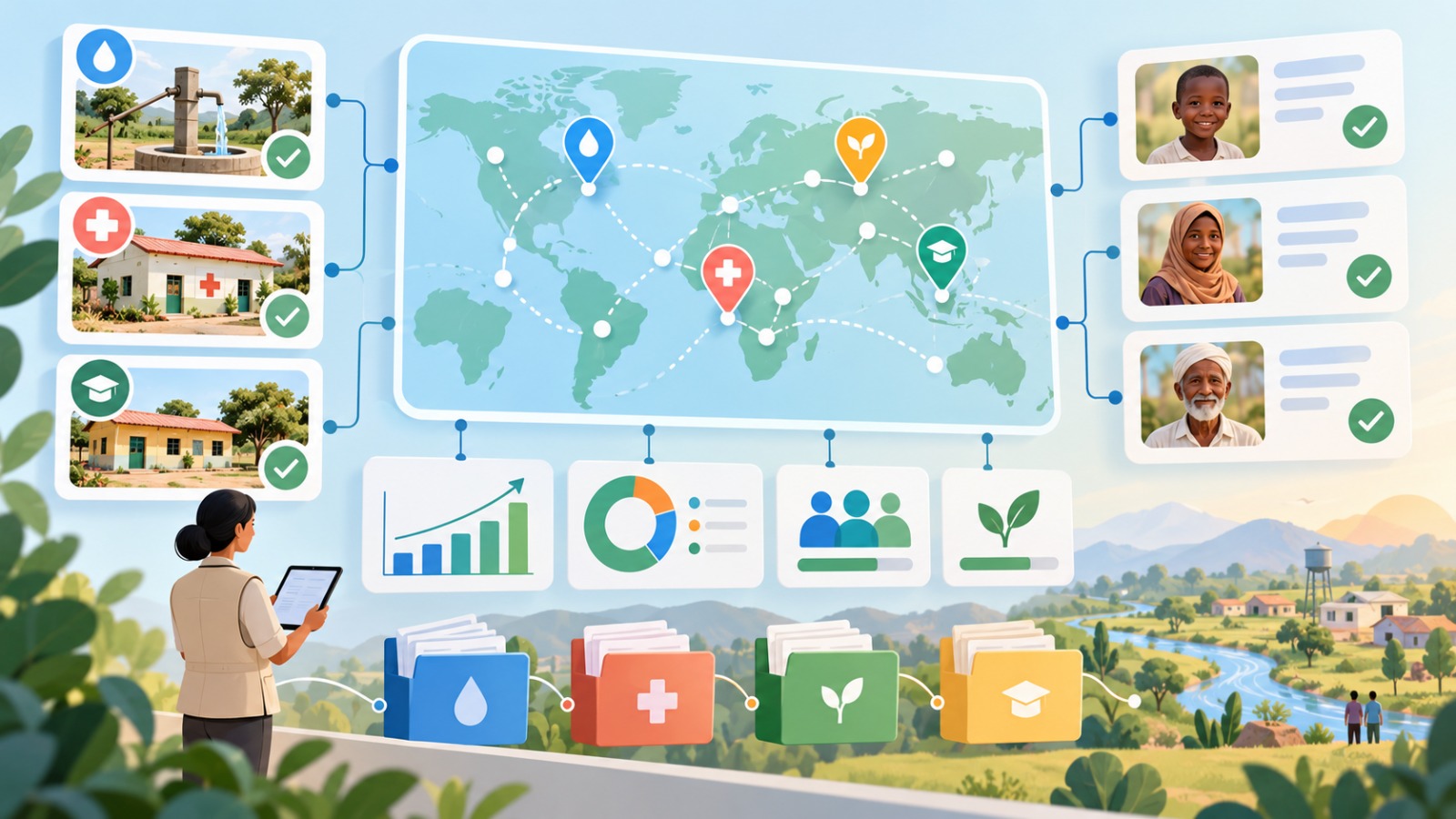
For NGOs, charitable trusts, and community organisations, tracking welfare projects and beneficiaries is essential to delivering assistance responsibly. Whether an organisation provides educational support, healthcare assistance, food distribution, or emergency relief, it needs reliable information about the activities being carried out, the people receiving support, and the resources being used.
However, maintaining these records can become difficult as an organisation grows. Beneficiary details may be spread across spreadsheets, project updates may remain with field workers, and financial information may be stored separately from programme records. As a result, administrators can struggle to understand project progress, identify pending assistance, and prepare accurate reports.
NGOs can track welfare projects and beneficiaries more effectively by maintaining organised project records, using consistent beneficiary identification procedures, monitoring activities, documenting assistance, and reviewing progress regularly. A suitable digital system can bring this information together, helping teams improve coordination, transparency, and accountability.
For organisations operating in India, the objective is to build a reliable process that connects project planning, fundraising, resource allocation, beneficiary support, and reporting.
What Does It Mean to Track Welfare Projects and Beneficiaries?
Tracking welfare projects means monitoring the activities, resources, timelines, and progress of an organisation’s welfare initiatives. Tracking beneficiaries means maintaining appropriate records of the people or communities receiving assistance and documenting the support provided to them.
These two processes are closely connected. Project records show what an organisation plans to deliver, while beneficiary records help establish whether the intended support has reached the appropriate people.
For example, an NGO running an education-support programme may need to track:
- The programme’s objectives and budget.
- The students who have been assessed and approved for assistance.
- The learning materials or financial support provided.
- The dates on which assistance was delivered.
- The activities completed by the project team.
- The funds received and expenditure recorded.
- The results and follow-up actions documented.
When these records are maintained consistently, the organisation can understand what has been completed, what remains pending, and where additional attention is required.
Why Is Beneficiary and Welfare Project Tracking Important for NGOs?
Beneficiary and project tracking helps NGOs understand whether planned activities are being completed, resources are being used appropriately, and assistance is reaching the intended communities.
Without a reliable tracking process, even a well-intentioned organisation can experience avoidable problems.
1. It Helps Prevent Duplicate or Missed Assistance
When beneficiary records are maintained by different teams, the same person may appear more than once or an eligible person may be overlooked during follow-up.
A consistent registration and verification process helps staff identify existing records, review eligibility, and document the assistance provided.
2. It Improves Project Monitoring
Project tracking helps administrators compare planned activities with actual progress.
For example, if an organisation plans to distribute educational materials before the start of a school term, its project records should show procurement progress, distribution schedules, pending tasks, and completed deliveries.
This information allows the team to respond to delays before they affect the entire programme.
3. It Supports Financial Accountability
NGOs need to understand how contributions and other available resources support their welfare activities.
Linking project records with appropriate financial documentation helps management review budgets, recorded expenditure, fund allocation, and outstanding commitments.
Financial tracking should distinguish between donations pledged, donations received, funds allocated, and expenditure incurred.
4. It Makes Reporting More Reliable
When project and beneficiary information is updated throughout implementation, staff can prepare progress reports without collecting every detail from scratch.
These reports can help trustees, programme managers, and relevant donors understand the activities completed, the resources used, the challenges encountered, and the next steps.
5. It Helps Organisations Learn From Their Work
Tracking provides information that can guide future decisions.
For example, an NGO may discover that beneficiary verification takes longer than expected or that a particular distribution process requires additional volunteers. Documenting these issues helps the organisation improve its planning.
How Can NGOs Track Welfare Projects and Beneficiaries Step by Step?
NGOs can establish an effective tracking process by creating a project register, maintaining consistent beneficiary records, documenting assistance, monitoring financial activity, and reviewing results at regular intervals.
The following steps can help organisations build a practical system.
Step 1: Create a Central Register of Welfare Projects
Start by listing all active and planned welfare initiatives in one organised register.
For each project, record the information needed to manage its activities:
- Project name and purpose.
- Target community or beneficiary group.
- Project coordinator.
- Start date and expected completion date.
- Approved budget.
- Planned activities.
- Funding sources and applicable restrictions.
- Expected outputs and outcomes.
- Reporting schedule.
Each project should have a unique reference or identifier to make records easier to locate.
For example, an NGO operating education support, healthcare assistance, and food distribution programmes should maintain distinct project records even if the same administrative team oversees all three.
Step 2: Develop a Consistent Beneficiary Registration Process
A consistent registration process helps staff collect the information required to assess eligibility and coordinate assistance.
Depending on the project, a beneficiary record might include:
- A unique beneficiary reference.
- Basic identifying information required for the programme.
- Location or community served.
- Eligibility or assessment status.
- Assistance requested.
- Assistance approved.
- Relevant dates and follow-up requirements.
The organisation should collect only the information necessary for its work. Sensitive information, particularly health and financial details, requires appropriate safeguards and restricted access.
Establish clear procedures for correcting records and reviewing changes so that outdated information does not continue to influence decisions.
Step 3: Record Every Instance of Assistance
Beneficiary registration alone does not establish whether assistance was delivered.
NGOs should maintain a record of each relevant assistance event, including what was provided, when it was delivered, and which project supported it.
For example, an education-support programme might record the distribution of school bags, books, uniforms, or approved financial assistance.
A healthcare programme may need a different record structure suited to its activities and privacy requirements.
Documenting assistance helps staff review beneficiary history, identify outstanding commitments, and reduce accidental duplication.
Step 4: Track Project Activities and Responsibilities
Break each welfare project into manageable activities and assign responsibility for each one.
For an education programme, the activities might include:
- Identifying potential beneficiaries.
- Reviewing applications.
- Approving eligible students.
- Preparing the project budget.
- Organising fundraising and resources.
- Purchasing educational materials.
- Distributing assistance.
- Recording delivery and preparing reports.
For each activity, record the assigned person, target date, current status, and relevant notes.
A clear task structure makes it easier for project coordinators to identify delays and follow up with the right team members.
Step 5: Monitor Project Budgets and Funds
Financial records should be organised so administrators can understand the resources available to each project and how they are being used.
Useful information includes:
- Approved budget.
- Contributions received.
- Funds allocated.
- Expenditure supported by documentation.
- Remaining budget.
- Pending payments or commitments, where applicable.
Where donors specify that contributions must support a particular purpose, record the restriction and follow the organisation’s applicable financial procedures.
Project tracking should complement proper accounting and financial controls rather than replace them.
Step 6: Define Meaningful Progress Indicators
Progress indicators help organisations assess whether a project is moving towards its objectives.
The indicators should reflect the purpose of each initiative rather than follow a single formula for every project.
For example:
Project type | Possible tracking indicators |
Education support | Students assessed, students supported, learning materials distributed, follow-ups completed |
Healthcare assistance | Cases assessed, assistance approved, support delivered, follow-ups completed |
Food distribution | Distribution activities completed, households reached, supplies distributed, remaining stock |
Emergency relief | Requests assessed, relief packages delivered, pending cases, distribution locations covered |
Community development | Activities completed, participants involved, milestones achieved, outcomes documented |
It is important to distinguish outputs from outcomes. The number of food packages distributed is an output. Evidence of how the assistance affected food access or household needs relates to outcomes.
Both may be useful, but they answer different questions.
Step 7: Review Records Regularly
Establish a schedule for reviewing project progress and beneficiary records.
During a review, project coordinators can ask:
- Are activities progressing according to the plan?
- Have approved beneficiaries received their assistance?
- Are any requests still pending?
- Are project records complete and up to date?
- Are recorded expenditure and available budgets consistent?
- Have any issues or delays been reported?
- Is follow-up required?
The review frequency should match the project’s size, urgency, and operational complexity.
Document important decisions and assign responsibility for resolving outstanding issues.
Step 8: Prepare Project and Beneficiary Reports
Reports should summarise relevant information from project records in a format that is easy to understand.
A project report might include objectives, activities completed, beneficiaries supported, funds used, challenges, documented outcomes, and planned next steps.
A beneficiary report may focus on eligibility, assistance history, pending requests, or follow-up needs, depending on the purpose and authorised audience.
Avoid including personal information that the report’s readers do not need. Internal operational reports and external donor reports may require different levels of detail.
How Can NGOs Track Beneficiaries Using Spreadsheets?
Spreadsheets can be a practical starting point for smaller NGOs that manage a limited number of projects and beneficiaries. They can help teams organise records, filter information, maintain basic lists, and prepare simple summaries.
However, spreadsheets require consistent processes and careful access management.
To make a spreadsheet-based system more reliable:
- Create a separate project register.
- Assign a unique reference to each beneficiary.
- Maintain a separate record of assistance provided.
- Use consistent field names and date formats.
- Restrict editing access to authorised team members.
- Review duplicate records and incomplete entries regularly.
- Maintain appropriate backups.
- Establish a clear process for updating and correcting information.
Avoid storing every detail in one oversized spreadsheet. Separating project information, beneficiary records, assistance events, and financial records can make the system easier to maintain.
As the organisation grows, multiple versions, conflicting edits, and manual reporting may become difficult to manage. At that point, it may be useful to assess whether a more structured digital welfare-management system is appropriate.
What Challenges Do NGOs Face When Tracking Beneficiaries?
NGOs commonly face challenges involving incomplete information, duplicate records, inconsistent updates, limited coordination, and the protection of beneficiary data.
Understanding these issues helps organisations choose suitable processes and tools.
Incomplete or Outdated Records
Beneficiary details can change, and field teams may not always update records immediately.
What to do: Assign responsibility for updates, review records periodically, and record when information was last verified.
Duplicate Beneficiary Entries
The same person may be registered under different spellings or through different project teams.
What to do: Use a consistent identification process, review possible duplicates, and verify records before merging them. Avoid using sensitive identifiers unnecessarily.
Disconnected Project Information
Project coordinators may maintain separate records that are difficult for management to compare.
What to do: Use a shared project register and standard reporting formats. A central platform may be useful when the volume and complexity of information increase.
Limited Field Connectivity
Some welfare activities take place in communities where internet access is unreliable.
What to do: Plan how field workers will record and securely transfer updates. If offline access is essential, verify that the selected system supports it rather than assuming that every platform does.
Privacy and Data Security
Beneficiary records may include personal, financial, or medical information that should not be widely accessible.
What to do: Collect only necessary information, obtain appropriate consent where required, restrict access, and establish procedures for secure storage, sharing, retention, and deletion.
Time-Consuming Reports
Staff may spend significant time combining spreadsheets and chasing updates from different teams.
What to do: Standardise data entry and reporting schedules. Consider tools that can produce the summaries the organisation actually needs, and verify the accuracy of reports before sharing them.
How Can Technology Improve Welfare Project and Beneficiary Tracking?
Technology can improve welfare project tracking by bringing relevant information into a more structured system, reducing repetitive administrative work where suitable tools support it, and making project updates easier to review.
A suitable digital system may help an organisation coordinate:
- Project records: Objectives, budgets, timelines, activities, and responsibilities.
- Beneficiary records: Registration, assessment, assistance history, and follow-up.
- Financial information: Contributions, allocations, expenditure, and supporting records.
- Team coordination: Assigned responsibilities, progress updates, and pending tasks.
- Reporting: Project summaries, beneficiary counts, activity progress, and documented outcomes.
Before choosing a solution, NGOs should verify which of these capabilities are available and whether they match their operating requirements.
A centralised platform does not automatically ensure accurate information. Teams still need to enter data consistently, review records, and follow appropriate approval procedures.
Technology should support the organisation’s established processes and make them easier to follow.
How Does Beneficiary Tracking Improve Donor Transparency?
Beneficiary tracking can support donor transparency by helping an organisation explain how its programmes operate, what assistance has been delivered, and what progress has been documented.
Donors often want to understand how their contributions support a charitable purpose. Clear project and assistance records help an organisation prepare meaningful updates without relying on vague descriptions.
For example, an NGO running a school-supply campaign can document the contributions received, the resources purchased, the distribution activities completed, and the number of students supported.
The organisation can then prepare a report explaining what was delivered and what remains pending.
However, beneficiary tracking should never come at the expense of privacy. Donor reports should avoid disclosing personal details, medical information, addresses, or photographs without appropriate authorisation and safeguards.
A responsible reporting process communicates progress honestly, including challenges and delays, while protecting the dignity of the people receiving assistance.
What Is the Role of Welfare Governance in Project Tracking?
Welfare governance is the structured management of an organisation’s welfare activities, resources, people, projects, beneficiaries, accountability, reporting, and impact.
Project tracking and beneficiary management are important parts of this broader approach. They help connect fundraising and resource allocation with actual programme delivery and the review of results.
The relationship can be understood as:
Donors → Contributions → Funds → Welfare Projects → Beneficiaries → Outcomes → Reporting → Continued Support
Each stage depends on reliable information.
Donor records help document contributions. Financial records show how resources are allocated and spent. Project records document activities. Beneficiary records show who received assistance. Outcome monitoring helps the organisation assess what changed, while reporting communicates progress to relevant stakeholders.
When these processes are coordinated, administrators can develop a clearer understanding of how the organisation’s resources support its welfare objectives.
This is particularly important for NGOs managing several initiatives at once. Fundraising alone does not provide a complete picture of welfare delivery; effective governance connects the resources raised with the activities carried out and the results documented.
What Should NGOs Look for in a Welfare Management Platform?
NGOs should choose a welfare management platform based on their actual project workflows, beneficiary-record requirements, reporting needs, budget, and data-protection responsibilities.
Before adopting a platform, assess the following:
Project tracking: Can the organisation maintain distinct project records, activities, deadlines, and responsibilities?
Beneficiary management: Can authorised staff organise beneficiary information and record assistance history appropriately?
Financial visibility: Can teams review project budgets, recorded contributions, allocations, and expenditure without confusing these categories?
Reporting: Can the system provide the project summaries and beneficiary reports the organisation needs?
User permissions: Can access be restricted according to staff responsibilities?
Data protection: Are suitable security measures, backups, retention procedures, and data-export options available?
Ease of use: Can staff and volunteers use the system with reasonable training?
Scalability: Can the system accommodate additional projects and reporting requirements as the organisation develops?
Ask for a demonstration using realistic scenarios from your own organisation. Verify the specific capabilities you require, along with costs, support arrangements, and the process for migrating or exporting records.
The most appropriate system is one the organisation can use consistently and responsibly.
Practical Example: Tracking an Education-Support Project for 100 Children
Imagine a community organisation running an education-support programme for 100 children. The programme provides learning materials and assistance to eligible students.
The organisation needs to coordinate fundraising, beneficiary assessment, purchases, distribution, and reporting.
It begins by creating a project record with the programme objectives, budget, activities, coordinator, and reporting schedule.
Next, the team registers eligible students using unique beneficiary references and records the assistance approved for each student. Sensitive information is collected only when necessary and is accessible only to authorised personnel.
As the programme progresses, staff record contributions received, educational materials purchased, distributions completed, and any outstanding assistance. The project coordinator reviews pending tasks and follows up on incomplete records.
At the end of the reporting period, the organisation reviews:
- How many students were assessed and approved.
- How many students received the planned assistance.
- What materials or other support were delivered.
- How the recorded expenditure compares with the approved budget.
- Whether any students require further assistance.
- What outcomes have been documented and what still needs evaluation.
The organisation can then prepare an accurate project summary for management and relevant donors.
This example shows how beneficiary records, project activities, financial tracking, and reporting can work together. The same principles can be adapted to healthcare assistance, food distribution, emergency relief, and other welfare initiatives.
How NidhiMax Can Help Organisations Move Towards Better Welfare Governance
Tracking welfare projects and beneficiaries is part of a larger responsibility: ensuring that charitable resources are managed carefully and that welfare activities are organised, documented, and reviewed appropriately.
NidhiMax — Welfare Governance Platform is focused on helping NGOs, charitable trusts, community organisations, and welfare institutions move towards a more organised digital welfare-management ecosystem.
For an organisation evaluating its current processes, welfare governance provides a useful framework for considering how project management, beneficiary information, fundraising, contributions, communication, and reporting fit together.
The right approach depends on each organisation’s size, activities, internal procedures, and reporting requirements. Before adopting any platform, verify that its available capabilities meet the organisation’s specific needs.
By establishing clear processes and choosing suitable technology, NGOs can work towards more reliable project records, better coordination, responsible beneficiary management, and clearer reporting.
To learn more about the NidhiMax approach to welfare governance, visit NidhiMax.com.
Frequently Asked Questions
1. How can NGOs track welfare projects and beneficiaries?
NGOs can track welfare projects and beneficiaries by maintaining a central project register, consistent beneficiary records, assistance histories, project budgets, activity updates, and regular progress reports.
2. What is beneficiary tracking in an NGO?
Beneficiary tracking is the process of recording relevant information about people or communities receiving assistance and documenting their eligibility, support received, and follow-up requirements.
3. How can small NGOs maintain beneficiary records?
Small NGOs can begin with structured spreadsheets, unique beneficiary references, standard data fields, regular reviews, restricted access, and secure backups. They can assess digital platforms as their needs grow.
4. Why is project tracking important for NGOs?
Project tracking helps NGOs monitor activities, review budgets, identify delays, document assistance, assess progress, and prepare more reliable reports for management and relevant stakeholders.
5. How can NGOs prevent duplicate beneficiary records?
NGOs can use consistent registration procedures, unique beneficiary references, duplicate checks, and careful verification before merging records. They should avoid collecting unnecessary sensitive identifiers.
6. How does beneficiary tracking improve donor transparency?
Beneficiary tracking helps NGOs document assistance delivered and prepare clearer project updates. Donor communications should report progress accurately while protecting beneficiaries’ personal information and dignity.
7. What should NGO beneficiary management software include?
Useful capabilities may include beneficiary registration, assistance history, project-wise records, access permissions, reporting, data protection measures, and options to export records. Organisations should verify available features before choosing a platform.
8. How does welfare governance support NGO project management?
Welfare governance connects fundraising, contributions, resource allocation, project implementation, beneficiary support, monitoring, and reporting within a structured management approach. It helps organisations oversee their welfare activities more coherently.
NidhiMax Conclusion
The final section, “How NidhiMax Can Help Organisations Move Towards Better Welfare Governance,” is included at the end of the blog article above. It introduces NidhiMax after the educational content, explains the broader welfare-governance approach, and directs readers to NidhiMax.com without making unverified product claims.