
 Post by
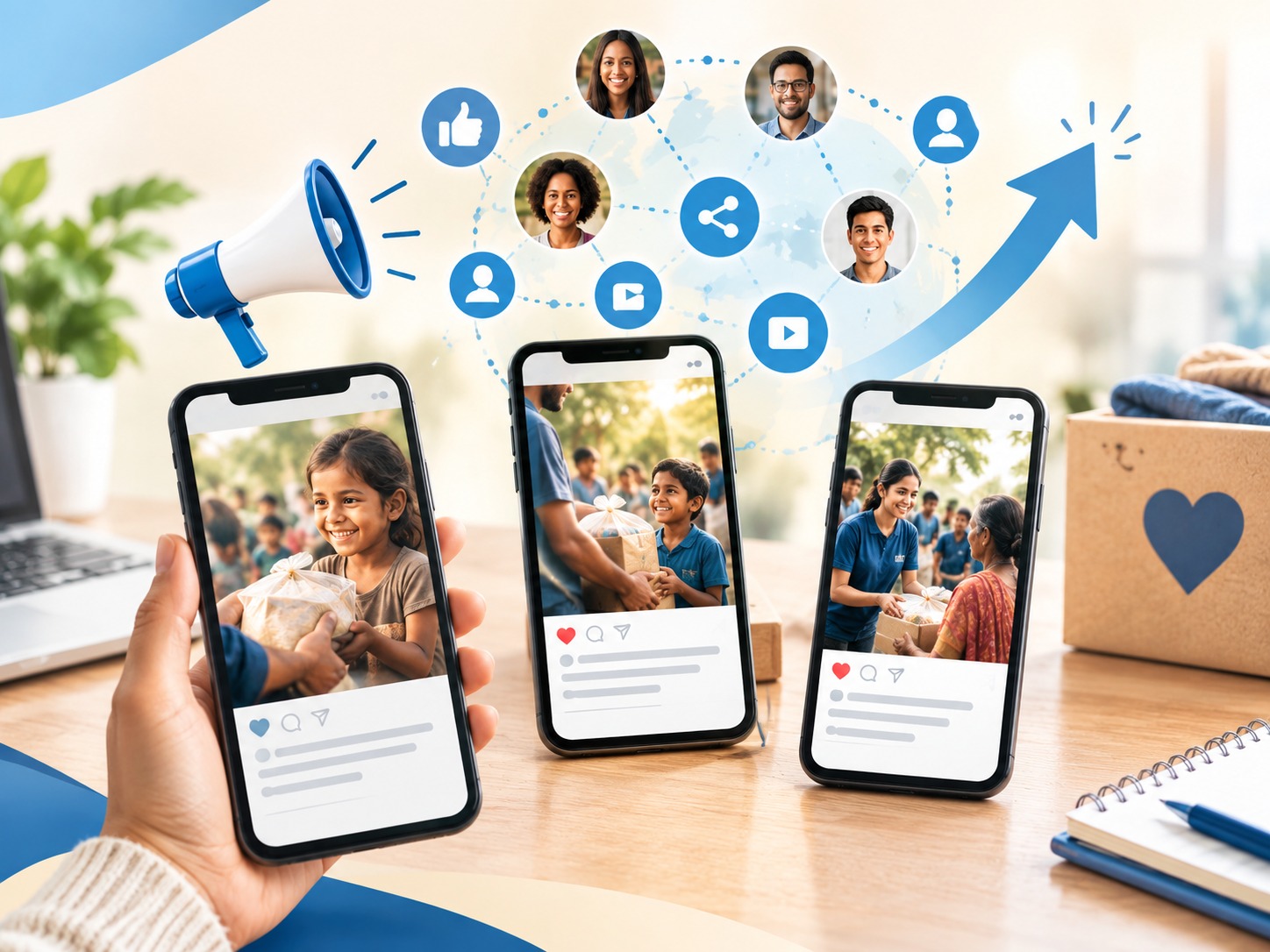
A charity campaign can have a meaningful cause, a well-defined goal, and a strong team behind it, yet still struggle to reach enough people. For NGOs and charitable organisations, the challenge is often not simply collecting donations. It is getting people to notice the campaign, understand why it matters, trust the organisation, and feel motivated to share or support it.
A viral charity campaign can help a welfare organisation reach a much wider audience through social sharing, messaging apps, community networks, and digital fundraising channels. However, going viral should not be the only objective. A successful campaign should turn attention into meaningful action while maintaining transparency, donor trust, and accountability.
So, how can an NGO create a charity campaign that people genuinely want to share?
The answer lies in combining a clear cause, a human story, strong communication, easy donation options, consistent engagement, and responsible campaign management.
What Is a Viral Charity Campaign?
A viral charity campaign is a fundraising or awareness campaign that spreads rapidly because people find the message meaningful enough to engage with and share.
For a charity, virality can come from several sources:
- Social media shares
- WhatsApp forwarding
- Community groups
- Supporter networks
- Short-form videos
- Personal recommendations
- Influencer or community participation
- Emotional storytelling
- Timely fundraising appeals
- User-generated content
A campaign does not have to reach millions of people to be successful. For a local NGO, a campaign that reaches the right community and attracts genuine supporters may be far more valuable than one that receives large numbers of views without generating donations or useful engagement.
Why Do Some Charity Campaigns Spread Faster Than Others?
Charity campaigns tend to spread when people quickly understand the problem, connect emotionally with the cause, trust the organisation, and have an easy way to participate.
People are more likely to share a campaign when the message answers four basic questions:
- What is happening?
- Why does it matter?
- What can I do to help?
- How will my support make a difference?
A campaign with a complicated message may lose attention before people understand the cause. A simple and specific message is easier to remember and share.
For example, instead of saying:
“Support our organisation’s community development activities.”
A campaign might communicate:
“Help provide learning materials for children attending our community education programme.”
The second message gives the audience a clearer picture of the purpose.
How Can an NGO Create a Charity Campaign That Goes Viral?
An NGO can increase the potential reach of a charity campaign by combining a specific goal, compelling storytelling, shareable content, trusted communication, simple donation methods, and active community participation.
Here is a practical process.
1. Start With a Clear Campaign Goal
Every campaign should begin with a specific objective.
Instead of creating a general fundraising appeal, define exactly what the campaign is trying to support.
For example:
- Education support
- Healthcare assistance
- Food distribution
- Emergency relief
- Community development
- Support for elderly people
- Livelihood assistance
- Welfare infrastructure
- A specific community project
A clear goal makes it easier for donors to understand what their contribution is supporting.
2. Set a Specific Fundraising Target
A fundraising campaign should have a defined financial objective when appropriate.
For example:
“We are raising funds to support an education programme for children in our local community.”
The organisation can then explain what the funds are intended to support and how the project will be managed.
Avoid creating artificial urgency or making promises that cannot be supported. Donors should receive realistic information about the campaign.
3. Tell a Human Story
Storytelling is one of the most important parts of a shareable charity campaign.
People often respond more strongly to a real human situation than to a general organisational statement.
A useful charity story can explain:
- The situation
- The people affected
- The challenge
- What the organisation is doing
- What support is needed
- What the expected outcome is
For example, imagine a community organisation running an education-support programme for 100 children.
Instead of simply announcing that the organisation needs donations, the campaign could explain what the programme provides, why the support is needed, what activities are planned, and how supporters can contribute.
The story should protect the dignity and privacy of beneficiaries. Avoid presenting vulnerable people merely as fundraising material.
How Can Charity Storytelling Encourage People to Share?
Charity storytelling encourages sharing when the audience feels informed, emotionally connected, and confident that sharing the story can help the cause.
A strong story should be:
- Specific: Explain the actual issue.
- Human: Show the people behind the cause respectfully.
- Authentic: Use genuine information and experiences.
- Simple: Avoid unnecessary organisational language.
- Action-oriented: Give people a clear next step.
- Responsible: Protect beneficiary dignity and privacy.
Visual storytelling can also help. A photograph, short video, infographic, project update, or beneficiary-focused story can make the campaign easier to understand.
How Important Is the Campaign Message?
The campaign message is extremely important because people often decide within a few moments whether they want to continue reading, watching, or sharing.
A useful campaign message should communicate:
Problem + Purpose + Action
For example:
“A local education programme is helping children continue their learning. Support the programme and help provide essential learning resources.”
The exact message will depend on the campaign, but clarity should always come before clever wording.
What Type of Content Can Make a Charity Campaign More Shareable?
Different types of content can help a campaign reach different audiences.
Short Videos
Short videos can introduce the campaign, explain the cause, show project activities, or provide updates.
A simple video could include:
- The campaign goal
- A short explanation of the issue
- The organisation’s work
- How people can help
- A clear call to action
Before-and-After Project Updates
Where appropriate, organisations can show how a welfare project has progressed.
For example, an NGO supporting a community facility could share:
- The original need
- Work completed
- Current progress
- What remains to be done
This helps supporters understand how the campaign is progressing.
Beneficiary Stories
Stories from beneficiaries can help supporters understand the human side of a welfare project.
Always obtain appropriate permission and handle personal information responsibly.
Progress Updates
Regular updates can keep supporters interested after the initial campaign launch.
Examples include:
- Funds raised so far
- Project milestones
- Volunteer activities
- Distribution updates
- Photos from project activities
- Thank-you messages
- Next steps
Shareable Graphics
Simple graphics can communicate information quickly.
A campaign graphic might contain:
- Campaign name
- Cause
- Fundraising goal
- Short message
- Donation instructions
- Official campaign contact or channel
How Can Social Media Help a Charity Campaign Go Viral?
Social media can extend a charity campaign beyond an organisation’s existing supporters by making content easy to discover, engage with, and share.
An NGO can use platforms such as Instagram, Facebook, LinkedIn, YouTube, or other relevant social channels depending on where its supporters are active.
A useful social media campaign can include:
- Campaign announcement
- Storytelling content
- Short videos
- Beneficiary or project updates
- Volunteer participation
- Progress updates
- Donor appreciation
- Repeated calls to action
- Final campaign updates
The goal should not be to publish the same message repeatedly. Instead, build a sequence of content that keeps the audience informed.
How Can WhatsApp Help Spread a Charity Campaign?
WhatsApp can be useful for community-based fundraising because supporters can easily share campaign information with their personal networks and relevant groups.
An NGO can create WhatsApp-friendly campaign content containing:
- A short explanation
- A campaign image or video
- The fundraising purpose
- Donation instructions
- A direct call to action
- A way to verify the organisation or campaign
For example:
“We are raising support for an education programme in our community. If you would like to contribute or share the campaign, please use the official donation details below.”
Avoid excessive forwarding or sending unsolicited messages to people who have not agreed to receive campaign communications.
How Can an NGO Make Donations Easy?
A campaign can lose potential donors if the donation process is confusing or takes too many steps.
Before promoting a campaign, check the complete donor journey:
See campaign → Understand cause → Trust organisation → Decide to help → Donate → Receive confirmation
The donation experience should be as clear as possible.
Depending on the organisation’s setup, this could include:
- Digital donation forms
- QR-based donation options
- Bank or payment instructions
- Mobile-friendly donation pages
- Campaign-specific contribution channels
The organisation should also provide appropriate confirmation and maintain accurate contribution records.
Why Is Trust Important for a Viral Charity Campaign?
Reach can create attention, but trust is what helps convert attention into support.
People are more likely to support a charity when they can understand:
- Who is organising the campaign
- What the campaign is for
- How contributions are handled
- What project activities are planned
- How updates will be communicated
- Where they can find reliable information
Transparency should be built into the campaign from the beginning rather than added after questions arise.
How Can an NGO Build Transparency Into Its Campaign?
An NGO can improve campaign transparency by clearly communicating the purpose, progress, activities, and relevant financial information.
Depending on the campaign, useful updates may include:
- Campaign objective
- Amount raised
- Project progress
- Major activities completed
- Beneficiary support provided
- Upcoming activities
- Closing summary
For example, if a charity raises funds for an education-support project, it should be able to connect the fundraising activity with the project being supported.
This creates a stronger relationship between donations and outcomes.
What Makes People Share a Charity Campaign?
People share campaigns for different reasons. They may personally care about the cause, want to help someone they know, identify with the community, or simply believe the campaign deserves greater attention.
A charity can encourage sharing by giving supporters something meaningful to share.
For example:
- A powerful but respectful story
- A short campaign video
- A clear impact message
- A campaign milestone
- A volunteer story
- A project update
- A simple “Share this campaign” request
The call to action does not always have to be “Donate.”
It can also be:
- Share
- Volunteer
- Introduce someone to the cause
- Attend an event
- Provide resources
- Become a recurring supporter
This broadens participation beyond financial contributions.
How Can Influencers and Community Leaders Help a Charity Campaign?
Community leaders, creators, professionals, local personalities, volunteers, and other trusted individuals can help introduce a campaign to audiences that the NGO may not reach on its own.
The strongest partnerships are usually based on genuine alignment with the cause.
An organisation should provide supporters with accurate campaign information so they can explain:
- What the cause is
- Who is organising it
- What support is required
- How people can participate
- Where to find official information
Avoid asking public figures to make exaggerated claims simply to increase reach. Trust can be difficult to rebuild once it is lost.
Should a Charity Focus on Going Viral?
A charity should focus on meaningful reach and action rather than virality alone.
A campaign can receive thousands of views and still generate limited support if the audience does not understand the cause or trust the organisation.
Useful campaign measures can include:
- Donations received
- Number of donors
- Average contribution
- Donor retention
- Campaign shares
- Website or donation-page visits
- Volunteer enquiries
- New supporter registrations
- Engagement with campaign updates
- Project outcomes
For an NGO, the quality of supporters may matter more than the total number of views.
How Can NGOs Convert Viral Attention Into Long-Term Support?
A successful campaign should not end when the fundraising target is reached.
People who discovered the organisation through the campaign may become long-term supporters if the organisation communicates with them appropriately.
After the campaign, consider:
- Thanking supporters.
- Sharing a campaign summary.
- Providing relevant project updates.
- Explaining what happened after fundraising.
- Inviting supporters to follow future activities.
- Maintaining accurate donor records.
- Communicating according to supporter preferences.
This is where donor management becomes important.
A viral campaign can bring attention to an organisation, but organised donor management can help turn one-time engagement into a longer-term relationship.
What Are Common Mistakes in Viral Charity Campaigns?
Some campaigns struggle because they focus too heavily on visibility and not enough on clarity, trust, or execution.
Common mistakes include:
1. Using an Unclear Message
If people cannot understand the purpose quickly, they are less likely to engage.
2. Focusing Only on Emotion
Emotional storytelling can attract attention, but it should be supported by factual information about the campaign.
3. Making Unsupported Claims
Avoid exaggerated statements about impact, urgency, or outcomes.
4. Making Donation Instructions Difficult
A complicated donation process can reduce participation.
5. Ignoring Donor Questions
People may have questions about the campaign. Provide clear and timely responses.
6. Forgetting Post-Campaign Communication
Supporters should know what happened after they contributed.
7. Treating Beneficiaries Without Dignity
Campaign storytelling should respect the privacy, dignity, and circumstances of people receiving support.
8. Chasing Views Instead of Outcomes
High reach is useful only when it contributes to meaningful engagement, fundraising, volunteering, awareness, or welfare outcomes.
How Can Small NGOs Create Viral-Style Campaigns With Limited Resources?
Small NGOs do not necessarily need a large production budget to create a campaign with strong reach.
They can focus on:
- One clear story
- One specific campaign goal
- Simple mobile-friendly videos
- Authentic photographs
- Volunteer participation
- WhatsApp sharing
- Local community networks
- Regular progress updates
- Consistent calls to action
A small organisation can also encourage its existing supporters to become campaign ambassadors.
For example, instead of asking one person to raise a large amount, the organisation could invite several supporters to share the campaign with their own networks.
The objective is to create a network effect around the cause.
How Should an NGO Manage Donors During a Viral Campaign?
Donor management becomes especially important when a campaign receives contributions from many people in a short period.
The organisation should maintain accurate records of:
- Donor details
- Contribution information
- Campaign association
- Communication history where appropriate
- Donation confirmations
- Follow-up requirements
- Supporter preferences where relevant
Good donor management reduces confusion and helps the organisation communicate responsibly.
It also makes it easier to understand which campaigns attract new supporters and which supporters continue engaging with the organisation.
How Does Welfare Governance Connect With Charity Fundraising?
Fundraising is only one part of a charity’s wider welfare responsibilities.
A more complete welfare process can be understood as:
Donors → Contributions → Funds → Welfare Projects → Beneficiaries → Outcomes → Reporting → Continued Support
A viral campaign may begin with a social media post, but its real value is determined by what happens after people respond.
The organisation must connect contributions to planned welfare activities, beneficiaries, project management, communication, reporting, and outcomes.
This broader approach is part of Welfare Governance—the structured management of an organisation’s welfare activities, resources, people, projects, beneficiaries, accountability, reporting, and impact.
For a charity, good fundraising should therefore be connected to good welfare management.
How Can Technology Support a Viral Charity Campaign?
Technology can help an NGO organise the different parts of a campaign without losing sight of the people and welfare work behind it.
Depending on the organisation’s needs, digital systems can support areas such as:
- Fundraising management
- Donor management
- Contribution tracking
- Beneficiary management
- Welfare project management
- Communication
- Reporting
- Transparency
- Accountability
- Operational coordination
- Impact tracking
The important consideration is not simply whether an organisation uses technology. It is whether the technology helps connect the campaign with the organisation’s actual welfare processes.
What Should an NGO Do After a Charity Campaign Goes Viral?
Once a campaign gains significant attention, the organisation should focus on managing the increased activity responsibly.
A practical post-campaign checklist includes:
- Record contributions accurately.
- Confirm donations where appropriate.
- Respond to supporter questions.
- Monitor campaign-related communication.
- Track project activities.
- Provide relevant updates.
- Document outcomes.
- Thank supporters.
- Review campaign performance.
- Record lessons for future fundraising.
The organisation should also review what made the campaign effective.
Was it the story? The timing? The community network? A volunteer initiative? A short video? A particular social media channel?
Understanding these factors can help improve future campaigns without simply trying to repeat the same content.
Frequently Asked Questions
How can I make my charity campaign go viral?
Create a clear and relatable campaign around a specific cause, use authentic storytelling, make the campaign easy to share, provide simple donation options, and encourage supporters to participate.
What makes a charity campaign successful?
A successful charity campaign combines a clear goal, trustworthy communication, compelling storytelling, easy participation, effective donor management, and measurable welfare outcomes.
Can small NGOs create viral fundraising campaigns?
Yes. Small NGOs can create highly shareable campaigns using authentic stories, community networks, volunteers, social media, WhatsApp, simple videos, and consistent updates.
How can social media help a charity raise funds?
Social media can help charities reach new audiences, tell stories, share campaign updates, encourage supporters to participate, and direct interested people toward appropriate donation channels.
How can WhatsApp be used for charity fundraising?
NGOs can use WhatsApp to share campaign stories, videos, updates, donation information, and calls to action with supporters who have opted to receive communications.
Why is transparency important in charity fundraising?
Transparency helps supporters understand the purpose of a campaign, how contributions relate to welfare activities, and what progress or outcomes the organisation is reporting.
How should NGOs manage donors after a viral campaign?
NGOs should maintain accurate donor records, provide appropriate confirmations and updates, communicate responsibly, and build ongoing supporter relationships based on consent and preferences.
Is going viral more important than raising donations?
No. Viral reach can create awareness, but the more meaningful goal is to convert appropriate attention into genuine support, donations, volunteers, awareness, and positive welfare outcomes.
How NidhiMax Can Help
A viral charity campaign can bring many new people into contact with an organisation, but managing that interest effectively requires more than a successful social media post.
Donations need to be recorded. Supporters need appropriate communication. Welfare projects need to be organised. Beneficiary activities need to be tracked. Progress and outcomes need to be reported.
This is where a broader approach to Welfare Governance becomes valuable.
NidhiMax — Welfare Governance Platform is designed to help charitable organisations, NGOs, trusts, community organisations, and welfare institutions move toward a more organised digital welfare-management ecosystem.
For organisations running fundraising campaigns, a structured system can help connect areas such as fundraising management, donor management, contribution tracking, welfare projects, beneficiary activities, communication, reporting, transparency, and accountability.
The objective is not simply to collect more donations. It is to create a clearer connection between support received and welfare delivered.