 Post by

For NGOs, charitable trusts, and community organisations, making it easy for people to donate can have a direct impact on fundraising efforts. A potential donor may be willing to contribute, but a complicated payment process, multiple steps, or difficulty finding the right donation page can cause them to lose interest.
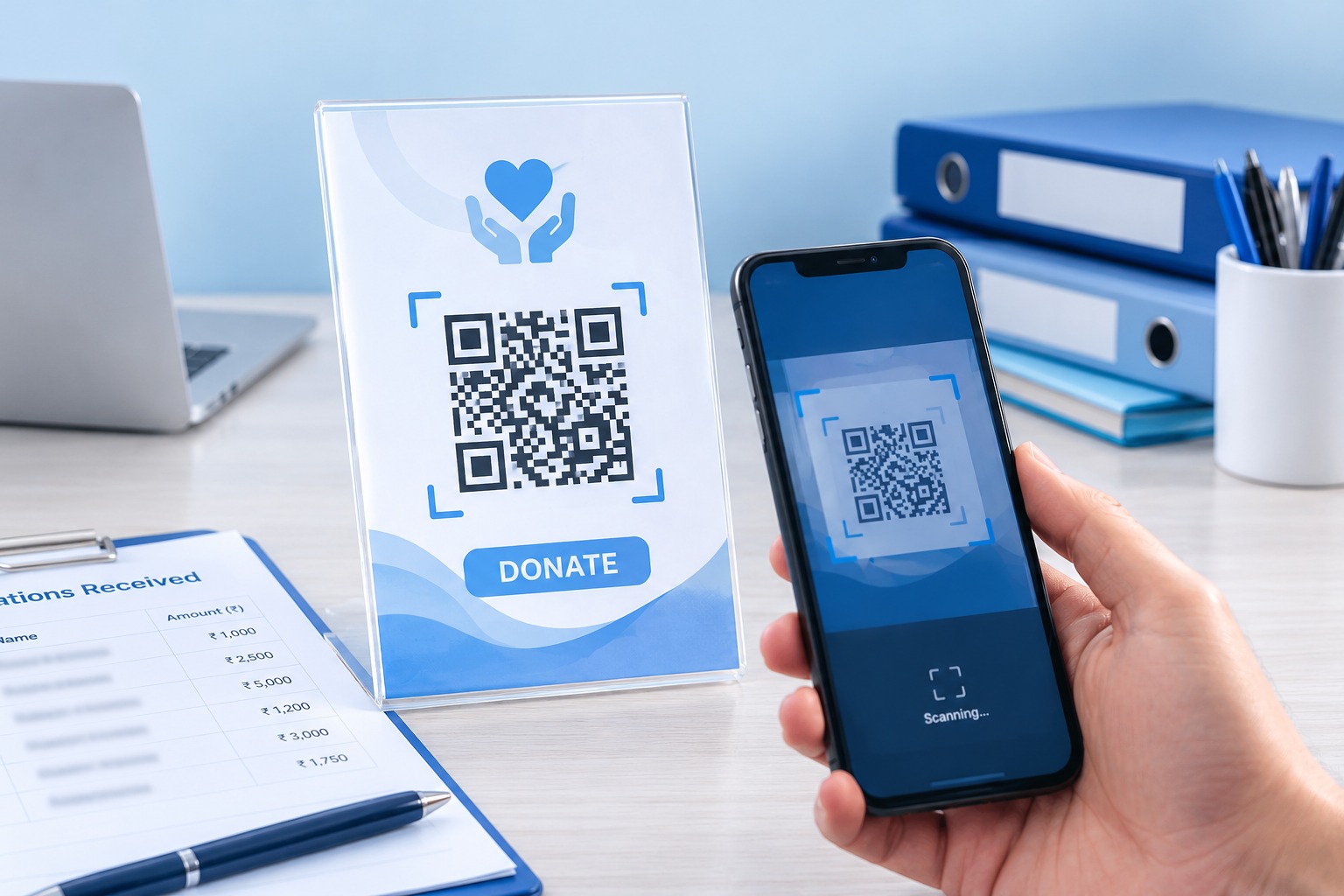
A QR-based donation campaign offers a simple way to connect offline and online fundraising. A QR code can be placed on posters, brochures, event materials, banners, social media creatives, notices, and other communication channels. When supporters scan it with their phone, they can be directed to the organisation’s chosen donation or payment process.
However, creating a QR code is only one part of a successful campaign. An effective QR-based donation campaign also needs a clear fundraising purpose, trustworthy communication, an easy donation journey, proper donor management, and a way to understand what happened after people contributed.
This guide explains how NGOs can plan, launch, manage, and improve a QR-based donation campaign.
What Is a QR-Based Donation Campaign?
A QR-based donation campaign uses a QR code to give supporters a quick digital route to make a donation or access donation information.
The QR code itself does not create a fundraising campaign. It acts as a bridge between a physical or digital message and the organisation’s chosen donation destination.
For example, an NGO could place a QR code on a community-event poster with a message such as:
“Support education initiatives in our community. Scan to contribute.”
A person can scan the code and continue to the relevant donation or payment page.
The campaign can therefore connect:
Campaign Message → QR Code → Donation Journey → Contribution → Donor Record → Welfare Activity → Reporting
Why Should NGOs Use QR Codes for Fundraising?
QR codes can make donation access more convenient, particularly when an NGO is communicating with supporters through physical materials or mobile-first channels.
Some potential uses include:
- Fundraising events
- Community programs
- Charity walks or awareness activities
- Posters and banners
- Brochures and leaflets
- Donation boxes
- Social media posts
- Digital campaign creatives
- Volunteer-led fundraising
- Emergency fundraising communication
The main advantage is convenience. Instead of asking supporters to manually type a long web address or search for a donation page, the organisation can provide a direct scanning option.
However, convenience alone does not guarantee donations. The message surrounding the QR code still needs to explain why the organisation is raising funds and what supporters are being invited to support.
How Can an NGO Create a QR-Based Donation Campaign?
An NGO can create a QR-based donation campaign by defining its fundraising objective, selecting an appropriate donation destination, generating and testing the QR code, designing clear campaign material, promoting it through suitable channels, and tracking contributions and donor information responsibly.
A practical process looks like this.
Step 1: Define the Purpose of the Campaign
Start by deciding exactly what the campaign is trying to support.
For example:
- Education support
- Healthcare assistance
- Food distribution
- Community development
- Emergency relief
- Welfare project expenses
- General organisational support
A specific purpose generally makes communication easier.
Instead of:
“Donate to our NGO.”
Consider:
“Help us continue our community education-support activities. Scan to contribute.”
The wording should accurately reflect what the organisation is actually doing.
Step 2: Decide Where the QR Code Should Lead
Before generating the QR code, determine the destination.
Depending on the organisation’s setup, the QR code may direct supporters to:
- A dedicated donation page
- An official payment page
- A campaign landing page
- Another appropriate digital donation mechanism
The destination should be trustworthy, mobile-friendly, and easy to understand.
If the QR code sends people to a page containing too much information or unnecessary steps, the convenience of scanning can quickly disappear.
Step 3: Create the QR Code
Once the destination is confirmed, generate a QR code that points to it.
Before publishing it, test the code using multiple mobile devices and scanning applications where practical.
Check that:
- The code scans correctly.
- The destination opens properly.
- The page works on mobile.
- The donation instructions are clear.
- The payment process works as intended.
- The organisation’s name and campaign purpose are visible.
- The QR code remains readable after printing.
A QR code that looks attractive but does not scan reliably can undermine the campaign.
What Information Should Be Included With a Donation QR Code?
A QR code should never be presented without context.
Supporters should understand what they are being asked to support before or immediately after scanning.
A useful QR campaign design can include:
1. Campaign Name
Give the initiative a simple and recognisable name.
2. Purpose
Explain what the fundraising supports.
3. Call to Action
Use a clear instruction such as:
Scan to Donate
or
Scan to Support This Welfare Project
4. Organisation Identity
Clearly show the NGO or charitable organisation’s name.
5. Trust Information
Where appropriate, provide relevant official organisation information so supporters can identify the campaign as genuine.
6. Contact Information
Provide a way for donors to contact the organisation if they have questions.
The objective is to give people enough information to make an informed decision without overcrowding the campaign material.
Where Can NGOs Place QR Codes for Donations?
NGOs can place donation QR codes wherever supporters are likely to encounter their fundraising message.
Physical Locations
QR codes can be included on:
- Posters
- Banners
- Brochures
- Flyers
- Event displays
- Donation boxes
- Information desks
- Community notice boards
- Volunteer materials
Events
Charity events provide a particularly useful environment for QR-based fundraising.
For example, an organisation conducting a community awareness event can display a QR code near the registration desk or event information area.
Digital Channels
QR codes can also appear in:
- Social media creatives
- Digital posters
- Presentations
- Online campaign materials
However, if someone is already viewing the content on their phone, a clickable donation link may be more convenient than asking them to scan a QR code from the same device.
How Can NGOs Make a QR Donation Campaign More Effective?
The QR code should be treated as one part of the donor journey rather than the entire campaign.
An effective campaign should answer three questions quickly:
Why should I care?
Explain the welfare need.
What can I do?
Tell the supporter exactly how to contribute.
What happens next?
Explain how the organisation will acknowledge or communicate about the contribution where appropriate.
For example:
Support Community Education
Your contribution can help support our ongoing education activities.
Scan to Donate
Learn more about our work and the program on the donation page.
This is generally more informative than displaying a QR code by itself.
Should NGOs Use One QR Code or Different QR Codes for Different Campaigns?
The right approach depends on how the organisation wants to manage its campaigns and track results.
A single QR code may be appropriate when an organisation has a general donation destination and does not need detailed campaign-level tracking.
Separate QR codes may be useful when an organisation wants to distinguish between fundraising sources or initiatives.
For example:
- Education campaign QR
- Healthcare assistance QR
- Food distribution campaign QR
- Event-specific QR
- Volunteer fundraising QR
If different QR codes are used, the organisation should maintain clear records of which code belongs to which campaign.
This can make campaign reporting more meaningful.
How Can NGOs Track Donations From QR Campaigns?
Tracking should extend beyond simply counting how many people scanned a QR code.
An NGO may want to understand:
- Which campaign generated the contribution
- Date of contribution
- Donation amount
- Donor information, where appropriately collected
- Contribution status
- Relevant welfare project
- Communication or acknowledgement status
If the donation process provides suitable campaign attribution, the organisation can compare different QR campaigns and identify which communication channels are producing useful results.
For example, an NGO might use different QR destinations for an event and a printed brochure. This can help the organisation understand how those fundraising activities perform.
How Does Donor Management Fit Into QR-Based Fundraising?
QR-based fundraising can generate contributions, but good donor management helps an NGO build relationships beyond the individual transaction.
When appropriate information is available, the organisation can maintain a structured donor record containing relevant details such as:
- Donor name
- Contact information
- Contribution history
- Campaign associated with the donation
- Donation date
- Communication preferences
- Relevant supporter notes
The organisation should collect and manage personal information responsibly and only gather information that is appropriate for its operational needs.
A QR campaign should therefore be viewed as an entry point into the donor relationship, not simply a payment mechanism.
How Can NGOs Build Trust Around QR Donations?
Trust is especially important when asking people to scan a code and make a digital contribution.
An NGO can strengthen donor confidence by making the campaign information clear and consistent.
Consider including:
- Official organisation name
- Clear campaign purpose
- Appropriate contact details
- Transparent information about the welfare initiative
- A recognised official donation destination
- Clear confirmation or acknowledgement processes
- Appropriate updates about the work being supported
Avoid vague messages that make it difficult for supporters to understand who is collecting the money or what the campaign is intended to support.
For printed materials, check the QR code carefully before distributing them.
What Are the Common Mistakes in QR-Based Donation Campaigns?
Several simple mistakes can reduce the effectiveness of a QR fundraising campaign.
Using a QR Code Without a Clear Message
A QR code alone does not explain why someone should donate.
Not Testing the QR Code
Always test before printing or publishing.
Sending Donors to a Confusing Page
The destination should make the next step obvious.
Making the QR Code Too Small
A QR code needs to remain easy to scan from its intended viewing distance.
Poor Contrast or Visual Clutter
Design elements should not interfere with QR-code readability.
Not Explaining the Campaign
Supporters should know what their contribution is intended to support.
Forgetting the Offline-to-Online Journey
A person who scans a poster should have a smooth experience from the physical message to the digital donation process.
Failing to Track Campaign Sources
Without appropriate tracking, an NGO may find it difficult to understand which QR campaigns are actually useful.
How Can NGOs Use QR Codes During Charity Events?
Charity events can provide a natural opportunity for QR-based fundraising.
Imagine a community organisation conducting an education-support event.
The organisation could display a QR code at:
- Registration areas
- Information desks
- Event signage
- Presentation screens
- Printed event materials
The campaign message might explain the purpose of the education program and invite attendees to contribute.
After the event, the organisation can review the contribution records, acknowledge supporters where appropriate, and report on the activities connected to the campaign.
This creates a broader process:
Event → Awareness → QR Scan → Donation → Donor Record → Welfare Activity → Update
The QR code is only one component of the overall fundraising system.
How Can NGOs Use QR Codes for Different Welfare Projects?
QR campaigns can also be connected to specific welfare initiatives.
Consider a community organisation working across education, food distribution, and healthcare assistance.
Instead of using one generic message for every activity, the organisation could create separate campaign materials that clearly explain each initiative.
For example:
Education Support
“Support our education activities. Scan to contribute.”
Community Food Program
“Support our food distribution initiative. Scan to donate.”
Healthcare Assistance
“Help support our healthcare assistance activities. Scan to contribute.”
The organisation should ensure that the fundraising message accurately represents how contributions will be managed and used.
How Can QR Fundraising Support Welfare Governance?
A successful donation campaign should eventually connect fundraising with the organisation’s wider welfare operations.
The relationship can be understood as:
Donors → Contributions → Funds → Welfare Projects → Beneficiaries → Outcomes → Reporting → Continued Support
Suppose an NGO uses a QR code to raise funds for an education-support project.
The QR code helps collect contributions, but the organisation still needs to manage what happens afterward:
- Who contributed?
- Which campaign generated the contribution?
- What project is being supported?
- How are resources allocated?
- Which beneficiaries are involved?
- What activities were completed?
- What information should be reported?
- How should supporters be updated?
This broader approach is part of Welfare Governance—the structured management of welfare activities, resources, projects, beneficiaries, accountability, reporting, and impact.
QR fundraising is therefore most useful when it fits into a larger welfare-management process.
How Can Technology Help Manage QR-Based Fundraising?
Technology can help NGOs bring different parts of a fundraising process into a more organised system.
Depending on the organisation’s requirements, digital tools may help with:
- Fundraising campaign management
- Donor management
- Contribution tracking
- Project management
- Beneficiary records
- Communication
- Reporting
- Campaign monitoring
- Transparency and accountability
For a small organisation, a simple setup may be sufficient. A larger organisation with multiple fundraising campaigns and welfare projects may require a more structured digital system.
The goal should be to reduce unnecessary manual work while giving the organisation better visibility into its activities.
How Can NGOs Measure the Success of a QR Donation Campaign?
A QR campaign should be evaluated using more than the number of QR codes printed.
Useful measures may include:
- Number of contributions
- Total contribution amount
- Average contribution amount
- Campaign source
- Number of returning donors
- Donor engagement after contribution
- Campaign-related communication
- Cost and effort involved in running the campaign
If the organisation can appropriately measure QR scans or visits separately from completed donations, that information can also help identify where supporters are dropping out of the donation journey.
For example, many scans but few completed contributions could indicate that the donation page or process needs improvement.
What Should NGOs Do After a QR Donation Is Received?
The donor experience should continue after the contribution.
Depending on the organisation’s processes, it can:
- Confirm the contribution.
- Maintain the appropriate donor record.
- Provide an acknowledgement where applicable.
- Connect the contribution to the relevant campaign or project.
- Share appropriate updates over time.
- Report on relevant activities and outcomes.
This turns a one-time digital transaction into an opportunity to build a longer-term relationship with the supporter.
How Can NGOs Build a Long-Term QR Fundraising Strategy?
A QR code should not be treated as a one-time promotional tool.
NGOs can incorporate QR-based fundraising into a broader digital fundraising strategy.
A long-term approach may include:
1. Create Campaign-Specific QR Materials
Develop clear QR campaigns for relevant fundraising initiatives.
2. Maintain Consistent Branding
Use recognisable organisation and campaign information across materials.
3. Track Campaign Performance
Record contribution information and, where possible, campaign source.
4. Follow Up With Supporters
Provide suitable acknowledgement and updates.
5. Review What Works
Compare campaign performance and improve future campaigns based on actual experience.
6. Connect Fundraising With Welfare Activities
Keep the relationship between contributions, projects, beneficiaries, and reporting visible within the organisation.
Frequently Asked Questions
How can an NGO create a QR code for donations?
An NGO can create a QR code that directs supporters to its official donation or payment destination. The code should be tested thoroughly and placed alongside a clear explanation of the campaign.
Can NGOs use QR codes for fundraising events?
Yes. QR codes can be displayed on event posters, banners, registration areas, presentation screens, and other materials to give attendees a convenient way to access the donation process.
What should a donation QR code link to?
A donation QR code should lead to an appropriate official donation or payment destination where supporters can clearly understand the organisation and complete the contribution process.
How can NGOs track donations from QR campaigns?
NGOs can track contributions using their donation records and, where available, campaign-specific attribution. Separate QR destinations or campaign tracking methods can help distinguish different fundraising sources.
Are QR codes useful for charity fundraising?
QR codes can make it easier for supporters to access a donation process, particularly in physical fundraising environments. Their effectiveness still depends on clear messaging, trust, a convenient donation journey, and proper follow-up.
How can NGOs build trust with QR donations?
NGOs can build trust by clearly identifying the organisation, explaining the fundraising purpose, using an appropriate official donation destination, providing contact information, and communicating responsibly about the use of funds and project activities.
Can a QR donation campaign support recurring donations?
It can, provided the linked donation process supports recurring contributions. The organisation should clearly explain the recurring arrangement before the donor confirms it.
How can technology help with QR-based fundraising?
Technology can help organisations organise fundraising campaigns, donor information, contribution records, project information, communication, and reporting around QR-based fundraising activities.
How NidhiMax Can Help
A QR code can make the first step of digital fundraising easier, but effective charity management extends well beyond collecting a contribution.
An organisation may need to connect fundraising, donors, contributions, welfare projects, beneficiaries, communication, reporting, transparency, and accountability as part of one broader operational process.
NidhiMax — Welfare Governance Platform is designed to help charitable organisations, NGOs, trusts, community organisations, and welfare institutions move toward a more organised digital welfare-management ecosystem.
For organisations using QR-based fundraising, a broader welfare governance approach can help connect relevant fundraising and donor activities with the organisation’s wider welfare processes. This can include areas such as fundraising management, donor management, contribution tracking, welfare project coordination, communication, reporting, transparency, and accountability, depending on the organisation’s needs.
The right technology approach will vary from one organisation to another. A small community initiative may need a simple process, while a larger welfare organisation may require more structured coordination across multiple campaigns and projects.