 Post by
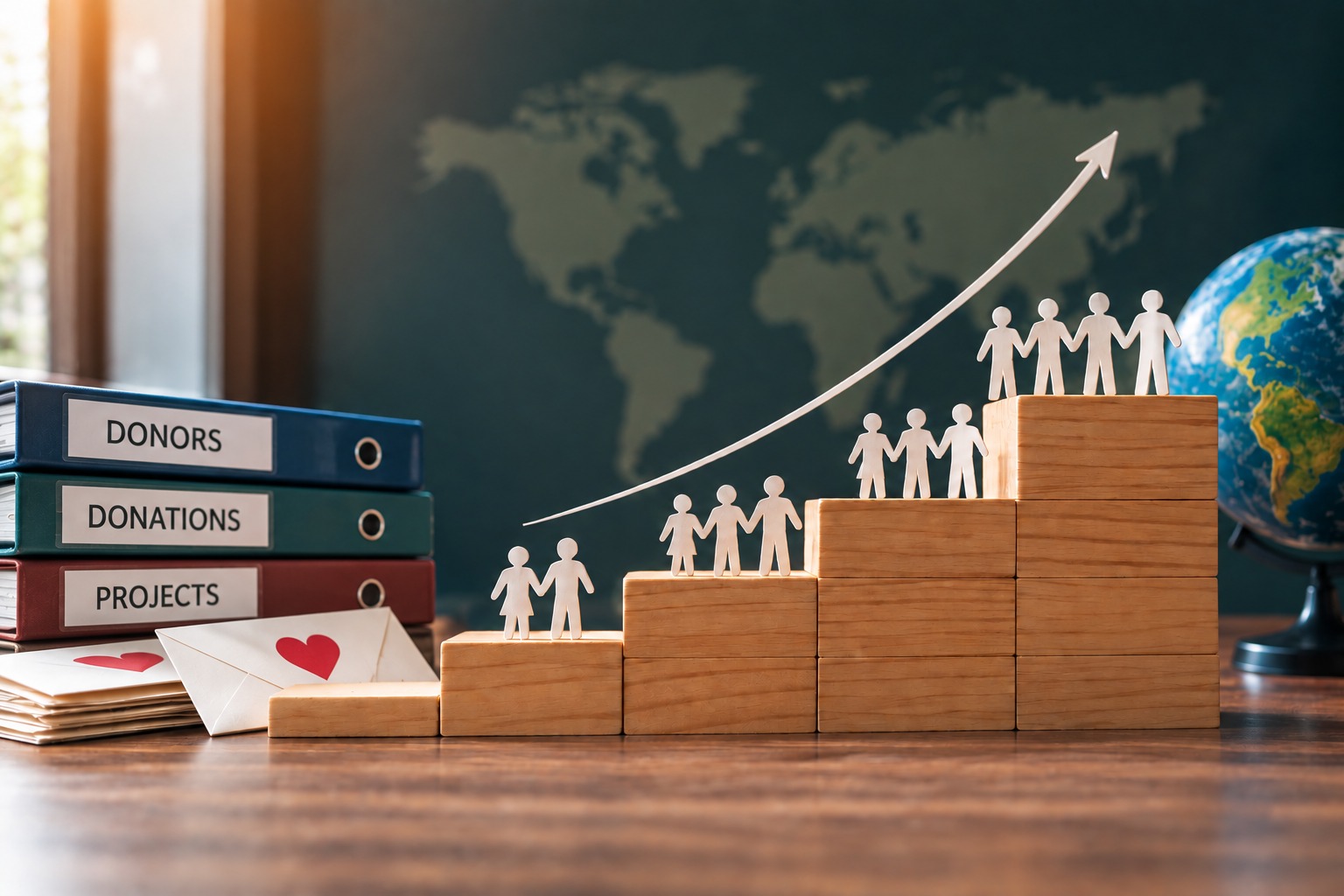
For an NGO, getting a donor to contribute once is valuable. Building a relationship that encourages them to support the organisation every month can create greater continuity for fundraising and welfare activities.
Monthly donors can help an NGO plan recurring expenses, maintain ongoing welfare projects, and build stronger relationships with supporters. However, people rarely commit to monthly giving simply because an organisation asks them to. They need to understand the cause, trust the organisation, see how their contribution is used, and have an easy way to continue supporting it.
So, how can an NGO increase monthly donors?
The answer starts with a clear monthly giving programme, relevant communication, simple donation processes, strong donor relationships, and consistent reporting. It also requires an organisation to treat monthly donors as long-term supporters rather than one-time contributors.
This guide explains practical ways NGOs, charitable trusts, welfare organisations, and community groups can encourage more supporters to become monthly donors.
What Are Monthly Donors and Why Are They Important for an NGO?
Monthly donors are supporters who agree to contribute a specific amount to an organisation on a recurring basis. Instead of making an occasional donation, they provide ongoing financial support according to a schedule that works for them.
For an NGO, monthly donors can provide a more consistent fundraising base. This can make it easier to plan recurring activities such as education support, food distribution, healthcare assistance, community programmes, or other welfare projects.
A monthly donor programme can also help an organisation:
- Build longer-term donor relationships
- Plan recurring welfare activities more effectively
- Reduce complete dependence on occasional fundraising campaigns
- Understand supporter preferences
- Communicate regularly with donors
- Develop a more structured fundraising process
- Connect contributions with ongoing welfare work
Monthly giving should therefore be viewed as a relationship-building strategy, not simply a payment arrangement.
How Can an NGO Increase Monthly Donors?
An NGO can increase monthly donors by making recurring giving easy to understand, easy to start, and meaningful to supporters. The organisation should clearly explain the purpose of monthly contributions, communicate their impact, make the donation process convenient, and continue engaging donors after they join.
A practical approach includes the following steps:
- Identify suitable existing and potential donors.
- Create a clear monthly giving programme.
- Explain what recurring support helps fund.
- Make the sign-up process simple.
- Ask existing one-time donors to consider monthly giving.
- Communicate consistently with supporters.
- Show how contributions support welfare activities.
- Recognise and appreciate monthly donors.
- Track donor information and contribution history.
- Review the programme regularly and improve it.
The goal is not simply to collect more recurring donations. It is to build a sustainable relationship between the NGO and its supporters.
Why Should NGOs Focus on Existing Donors First?
Existing donors are often an important starting point for a monthly donor programme because they have already demonstrated some interest in the organisation’s work.
Someone who has previously supported an education programme, emergency relief activity, healthcare initiative, or community project may already understand the organisation’s mission. A carefully timed invitation to become a monthly donor can be more natural than approaching someone with no previous connection.
An NGO can review its existing donor records and identify people who:
- Have donated more than once
- Regularly engage with the organisation
- Have supported a particular welfare project
- Have responded positively to previous campaigns
- Have shown interest in recurring programmes
- Have maintained a relationship with the organisation over time
The approach should remain respectful. A previous donation does not automatically mean someone wants to give every month.
How Should an NGO Create a Monthly Giving Programme?
A monthly giving programme should have a clear purpose, simple options, and an understandable explanation of how recurring contributions support the organisation’s work.
Instead of presenting monthly giving as simply another payment option, explain what the programme represents.
For example, an NGO working in education could communicate that monthly supporters help the organisation maintain ongoing education-related activities. A community welfare organisation could explain how recurring support contributes to the continuity of its programmes.
A monthly giving programme should clearly communicate:
1. Who the programme supports
Explain the beneficiaries or communities the organisation works with.
2. What the contributions support
Describe the type of welfare activities funded through the programme.
3. How supporters can participate
Make the process straightforward and explain the available contribution options clearly.
4. How donors will stay informed
Tell supporters how the organisation will communicate updates, reports, stories, or programme information.
5. How they can change or stop their contribution
Monthly giving should remain voluntary and transparent. Donors should understand how they can manage their recurring support.
How Can NGOs Convert One-Time Donors Into Monthly Donors?
One-time donors can be invited to become monthly donors after they have developed some familiarity with the organisation, provided the invitation is relevant and appropriately timed.
For example, after completing a welfare campaign, an NGO could thank supporters for their contribution and explain how ongoing support helps maintain related activities.
The message could focus on continuity:
“Your support helped us address an immediate need. If you would like to stay involved, monthly giving can help us continue this work throughout the year.”
The key is to connect the request to the donor’s existing relationship with the organisation.
Avoid repeatedly asking every donor to upgrade their contribution. Instead, use donor history and engagement information to make communication more relevant.
How Can an NGO Make Monthly Giving More Appealing?
Monthly giving becomes easier to consider when the organisation clearly communicates why recurring support matters.
Instead of focusing only on the amount, explain the value of consistency.
For example:
One-time support can help address an immediate need.
Monthly support can help an organisation plan ongoing activities with greater continuity.
An NGO can also create simple monthly giving levels that make the decision easier. The contribution levels should be realistic for the organisation’s supporter base rather than unnecessarily high.
For example:
- Monthly supporter
- Regular welfare supporter
- Education supporter
- Community programme supporter
The names and structure can vary depending on the organisation’s work.
The important point is to make the programme understandable without making donors feel pressured.
What Kind of Stories Help Encourage Monthly Donations?
Real stories about welfare activities can help donors understand why continued support matters. However, storytelling should respect the dignity, privacy, and consent of beneficiaries.
Instead of focusing only on emotional appeals, explain the connection between support and ongoing work.
For example, an NGO supporting education could describe how its programme operates over time: identifying beneficiaries, providing educational assistance, coordinating activities, monitoring participation, and reporting progress.
This helps donors see that welfare work is usually a continuing process rather than a single event.
Good donor communication can answer questions such as:
- What problem is the organisation addressing?
- Who benefits from the programme?
- What activities are being carried out?
- How does donor support contribute?
- What has the organisation learned?
- What happens next?
This type of communication can build understanding and trust.
How Important Is Transparency for Monthly Donor Retention?
Transparency is essential for maintaining long-term donor relationships because monthly donors need confidence that the organisation is managing contributions responsibly.
An NGO should communicate clearly about its activities, programmes, fundraising efforts, and progress. Reporting does not always need to be complicated. A useful donor update can simply explain what happened, what the organisation worked on, and what comes next.
For example, a monthly update might include:
- Welfare activities completed
- Beneficiaries reached
- Programme developments
- Volunteer involvement
- Relevant photographs or stories where appropriate
- Challenges encountered
- Plans for the next period
The purpose is not to overwhelm donors with information. It is to help them understand the work they are supporting.
How Can NGOs Improve the Monthly Donor Experience?
A donor experience includes every interaction a supporter has with the organisation, from the first donation page to ongoing communication.
A good monthly donor experience should be:
- Simple
- Respectful
- Transparent
- Consistent
- Easy to manage
- Relevant to the donor
Consider the entire journey:
Discover → Understand → Donate → Receive confirmation → Stay informed → See progress → Continue supporting
If the donation process is confusing or communication stops after the first contribution, the relationship can weaken.
Small improvements can make a difference. For example, an NGO can provide a clear confirmation after a donation, explain what happens next, and establish a predictable communication routine.
How Can NGOs Use Digital Fundraising to Increase Monthly Donors?
Digital fundraising can make it easier for supporters to discover an NGO, understand its work, and participate in recurring giving.
An organisation can use its digital channels to explain:
- Its mission
- Welfare programmes
- Monthly giving options
- Impact stories
- Programme updates
- Ways supporters can stay connected
A monthly giving option can be included in relevant digital fundraising campaigns rather than being presented as an unrelated request.
However, technology should support the fundraising strategy rather than replace donor relationships. A well-designed donation page cannot compensate for unclear communication or poor follow-up.
How Can Social Media Help NGOs Attract Monthly Donors?
Social media can help NGOs reach potential supporters and demonstrate their ongoing work, but the objective should be to build understanding and trust rather than constantly ask for money.
An NGO can use social media to share:
- Welfare project updates
- Beneficiary stories with appropriate consent
- Volunteer activities
- Behind-the-scenes programme work
- Educational content about the social issue
- Progress reports
- Monthly giving information
A simple call to action can invite interested supporters to learn about the NGO’s monthly giving programme.
The organisation should maintain a balance between fundraising requests and useful content. People are more likely to remain engaged when they understand the organisation beyond its donation appeals.
How Can NGOs Communicate With Monthly Donors Without Overwhelming Them?
Monthly donors should receive regular communication, but communication should have a clear purpose.
Too many messages can become repetitive. Too few messages can make supporters feel disconnected from the organisation.
A simple communication calendar can help.
For example:
Monthly:
A concise programme or welfare update.
Quarterly:
A more detailed progress report.
Occasionally:
Important project updates, campaigns, events, or specific opportunities to support the organisation.
The exact frequency should depend on the organisation and donor preferences.
Personalisation can also improve communication. A donor who regularly supports education-related activities may find an education programme update more relevant than a generic fundraising message.
What Should an NGO Track About Monthly Donors?
An NGO should maintain organised donor information so that its fundraising team can understand donor relationships and manage recurring contributions responsibly.
Useful information may include:
- Donor name
- Contact details
- Donation history
- Monthly contribution amount
- Start date of monthly support
- Supported programme or campaign, where applicable
- Communication history
- Donor preferences
- Follow-up information
- Changes or interruptions in recurring support
The organisation should collect and manage donor information responsibly and limit access to people who need it for their work.
Good donor management also reduces the risk of losing important information across spreadsheets, notebooks, email conversations, or individual staff records.
How Can Donor Management Support Monthly Giving?
Donor management helps an NGO maintain a clearer picture of its supporter relationships, contribution history, communication, and follow-up activities.
For a monthly donor programme, this can help the organisation answer practical questions such as:
- Who are our current monthly donors?
- When did they start supporting us?
- Which programmes are they interested in?
- How much recurring support is being received?
- Which donors need a follow-up?
- Which donors have stopped or changed their contributions?
- Have donors received appropriate updates?
The purpose is not simply to maintain a database. It is to help the organisation build better donor relationships.
What Are Common Reasons People Do Not Become Monthly Donors?
Potential supporters may hesitate to become monthly donors for several reasons.
They may:
- Not understand why recurring support is needed
- Be uncertain about how their money will be used
- Find the sign-up process complicated
- Prefer one-time donations
- Not feel sufficiently connected to the organisation
- Be concerned about managing a recurring payment
- Need more information before making a long-term commitment
Understanding these concerns can help an NGO improve its approach.
Instead of assuming that donors simply need stronger persuasion, organisations should examine the underlying experience.
Ask:
Is our purpose clear?
Is our monthly giving process easy to understand?
Do donors know how their support contributes to our work?
Are we communicating after the donation?
Can donors easily manage their support?
These questions often reveal practical improvements.
How Can NGOs Retain Monthly Donors for the Long Term?
Getting a donor to start monthly giving is only the beginning. Retention depends on maintaining a meaningful relationship over time.
NGOs can strengthen donor relationships by:
- Thanking donors appropriately.
- Sharing relevant updates.
- Reporting on welfare activities.
- Showing how recurring support contributes to continuity.
- Respecting donor communication preferences.
- Making it easy to contact the organisation.
- Recognising continued support without creating pressure.
- Reviewing donor feedback.
- Maintaining accurate contribution records.
- Communicating honestly when challenges arise.
A monthly donor should feel that they are part of an ongoing relationship with the organisation.
What Is a Good Example of a Monthly Donor Programme?
Imagine a community organisation running an education-support programme for 100 children.
The organisation needs continuing support for activities such as educational assistance, programme coordination, communication, and reporting.
Instead of running separate fundraising appeals whenever money is needed, the organisation creates a monthly donor programme.
The organisation can:
- Explain the purpose of the education programme.
- Invite interested supporters to become monthly donors.
- Record donor commitments.
- Track contributions.
- Connect funds with the relevant welfare programme.
- Maintain beneficiary records.
- Share regular programme updates.
- Report on activities.
- Thank supporters for their continued involvement.
This creates a clearer relationship between fundraising and welfare delivery.
The important point is that the monthly donation does not exist in isolation. It becomes part of a larger system connecting supporters, resources, welfare activities, beneficiaries, outcomes, and reporting.
How Does Monthly Giving Fit Into Welfare Governance?
Monthly fundraising is one part of a broader welfare management system. A strong approach connects:
Donors → Contributions → Funds → Welfare Projects → Beneficiaries → Outcomes → Reporting → Continued Support
This is where the idea of Welfare Governance becomes useful.
Welfare Governance refers to the structured management of an organisation’s welfare activities, resources, people, projects, beneficiaries, accountability, reporting, and impact.
For an NGO, this means looking beyond the question of “How do we collect more donations?”
The broader questions are:
- Who is supporting the organisation?
- What contributions are being received?
- Which welfare projects are being funded?
- Who are the beneficiaries?
- What activities are taking place?
- What outcomes are being observed?
- How is information being reported?
- How can supporters remain connected?
A monthly donor programme becomes stronger when these parts are connected rather than managed separately.
How Can Technology Help NGOs Manage Monthly Donors?
Technology can help NGOs organise donor information, fundraising activities, contributions, welfare projects, communication, and reporting in a more structured way.
For a monthly donor programme, a digital system can support areas such as:
- Donor management
- Contribution tracking
- Fundraising management
- Donor communication
- Welfare project coordination
- Beneficiary management
- Reporting
- Transparency and accountability
The right technology depends on the size, structure, processes, and needs of the organisation.
An NGO does not need to adopt technology simply because it is available. The more important question is whether the system helps the organisation manage its actual welfare processes more clearly.
What Are the Best Practices for Increasing Monthly Donors?
The most effective approach is usually a combination of clear communication, convenient giving, strong donor relationships, and organised management.
Key practices include:
Start with existing relationships
Look at donors who already know and support the organisation.
Explain the purpose of recurring giving
Show why ongoing support matters to the organisation’s welfare activities.
Keep the sign-up process simple
Avoid unnecessary steps or confusing instructions.
Communicate after the donation
Do not allow the relationship to end after the payment.
Report consistently
Help supporters understand what their continued involvement makes possible.
Respect donor preferences
Different supporters prefer different communication frequencies and channels.
Keep donor records organised
Accurate information makes follow-up and relationship management easier.
Connect fundraising with welfare delivery
Show the journey from contribution to activity, beneficiary support, and reporting.
Review and improve
Track what works operationally and listen to donor feedback.
A Practical 30-Day Plan to Increase Monthly Donors
An NGO that does not yet have a structured monthly donor programme can start with a simple 30-day plan.
Week 1: Understand your donor base
Review existing donor records and identify supporters who may be suitable for a monthly giving invitation.
Look for donation history, engagement, interests, and communication preferences.
Week 2: Build the monthly giving message
Clearly explain:
- Why monthly support matters
- What the programme supports
- How donors can participate
- How the organisation communicates updates
Keep the message simple and genuine.
Week 3: Launch communication
Reach out through appropriate channels such as email, social media, direct communication, or other established donor communication methods.
Focus on explaining the programme rather than repeatedly asking for donations.
Week 4: Follow up and learn
Review responses, questions, sign-ups, and donor feedback.
Identify where people encountered difficulty and improve the process.
The programme should then become an ongoing fundraising and donor-management activity rather than a one-time campaign.
What Should NGOs Avoid When Asking for Monthly Donations?
An NGO should avoid approaches that create confusion, pressure, or distrust.
Avoid:
- Repeatedly sending the same donation request
- Using unclear descriptions of where funds go
- Making unsupported impact claims
- Making donors feel guilty for declining
- Hiding important information about recurring contributions
- Ignoring donor questions
- Collecting unnecessary personal information
- Treating monthly donors as anonymous transactions
Long-term fundraising works better when supporters feel respected and informed.
Building a Sustainable Monthly Donor Programme
Increasing monthly donors is not simply about increasing the number of payment commitments. It is about creating a reliable relationship between an NGO and the people who choose to support its mission.
A sustainable programme combines:
Clear purpose + Easy giving + Donor trust + Regular communication + Good donor management + Transparent reporting
When these elements work together, monthly giving can become part of the organisation’s broader fundraising and welfare-management process.
For a growing NGO, this also means recognising that fundraising cannot be separated completely from programme delivery. Donors want to understand what their support contributes to, while the organisation needs reliable information about funds, projects, beneficiaries, and outcomes.
That is where a structured approach to Welfare Governance can provide a broader framework for managing the organisation’s work.
Frequently Asked Questions
How can an NGO increase monthly donors?
An NGO can increase monthly donors by creating a clear recurring giving programme, approaching suitable existing donors, simplifying the donation process, communicating regularly, and demonstrating how ongoing support contributes to welfare activities.
Why are monthly donors important for NGOs?
Monthly donors can provide recurring support that may help an NGO plan ongoing activities and maintain stronger long-term relationships with supporters.
How can NGOs convert one-time donors into monthly donors?
NGOs can invite suitable one-time donors to consider recurring support after establishing a relationship and explaining why consistent contributions are useful for ongoing welfare programmes.
How can an NGO retain monthly donors?
Regular communication, transparent reporting, appropriate appreciation, accurate donor records, and a positive supporter experience can help maintain long-term donor relationships.
How can technology help NGOs manage monthly donors?
Technology can help organise donor information, contribution records, communication, fundraising activities, welfare projects, and reporting in a more structured way.
What should an NGO include in a monthly giving programme?
A monthly giving programme should clearly explain its purpose, the type of welfare work supported, how people can participate, how donors receive updates, and how they can manage their recurring support.
How does donor management help monthly fundraising?
Donor management helps NGOs maintain organised information about supporters, contribution history, communication, preferences, and follow-up, making ongoing donor relationships easier to manage.
What is Welfare Governance for an NGO?
Welfare Governance is the structured management of an organisation’s welfare activities, resources, people, projects, beneficiaries, accountability, reporting, and impact.
How NidhiMax Can Help
Increasing monthly donors is one part of building a stronger and more organised fundraising system. The larger challenge is connecting donors and contributions with the welfare work they support.
NidhiMax — Welfare Governance Platform is designed to help charitable organisations, NGOs, trusts, community organisations, and welfare institutions move toward a more organised digital welfare-management ecosystem.
For organisations working to strengthen their fundraising and donor relationships, a structured welfare governance approach can bring areas such as donor management, contribution tracking, welfare projects, beneficiary information, communication, reporting, transparency, and accountability into a more connected operational framework.
Every organisation has different programmes, people, processes, and reporting requirements. Technology should therefore support the organisation’s actual way of working rather than add unnecessary complexity.
If your organisation is looking to build a more organised approach to fundraising, donor relationships, and welfare management, explore how NidhiMax can support your broader Welfare Governance journey